Blog
How to Start Nail Manufacturing Business
New nail manufacturing startups consistently make the same sequencing mistake: they buy a nail making machine first, then figure out everything else. The result is a machine sitting idle while they scramble for wire rod suppliers, polishing equipment, three-phase power connections, and a trade license. That sequencing error costs weeks and creates cash flow strain before a single kilogram of nails is sold. Nail manufacturing is a genuinely practical entry-level industrial business—nails are a consumable product with recurring demand from construction, furniture, carpentry, and packaging sectors, and regional supply gaps give local producers a built-in transport-cost advantage over distant competitors. This guide sequences the setup process correctly: market entry logic first, then investment sizing, machinery selection, licensing, facility layout, production process, staffing, and a phased scaling roadmap. Follow the sequence and you avoid the stalls that derail most first-time setups.
Market Opportunity
Wire nails are consumed continuously across sectors that don’t slow down at the same time. When housing construction dips, furniture and packaging pick up. This demand spread makes nail manufacturing more resilient than single-sector manufacturing businesses.
Why Regional Supply Matters
Nails are heavy relative to their value. A producer serving a 100–200 km radius undercuts distant suppliers on freight cost alone, which creates a durable pricing advantage without competing on scale. Identify your nearest supply gap—construction-dense districts, furniture manufacturing clusters, or packaging hubs—before finalising your location.
Startup Investment
Size your investment to your scale, not to the most impressive machine available.
Scale-Wise Cost Ranges
- Small scale (100–300 nails/min): ₹5–10 lakh total, covering machinery, working capital, and facility setup
- Medium scale (300–500 nails/min): ₹15–25 lakh total
- Larger integrated setup: ₹30 lakh and above
Working capital for 2–3 months of wire rod procurement, labour, and utilities typically runs 20–25% of total investment. Most startups underfund this and face a cash crunch before reaching break-even—not because of poor sales, but because wire rod procurement cycles don’t align with customer payment cycles.
Machinery and Equipment
Every functional nail line needs five pieces of equipment, not one:
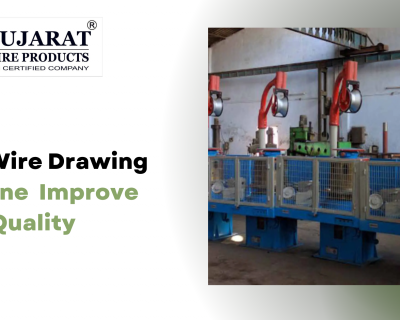
- Wire drawing machine: Reduces MS wire rod from 6–8mm to your target nail wire diameter
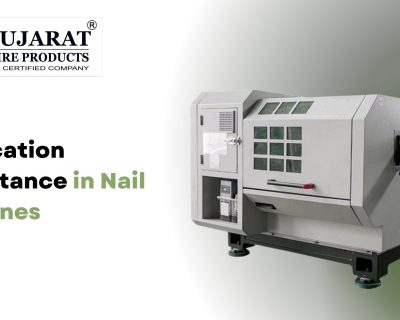
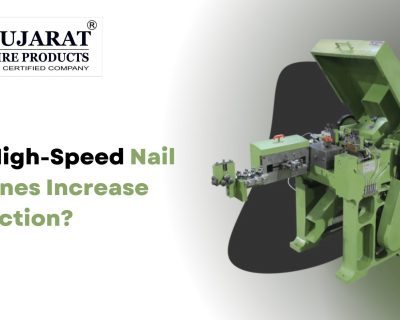
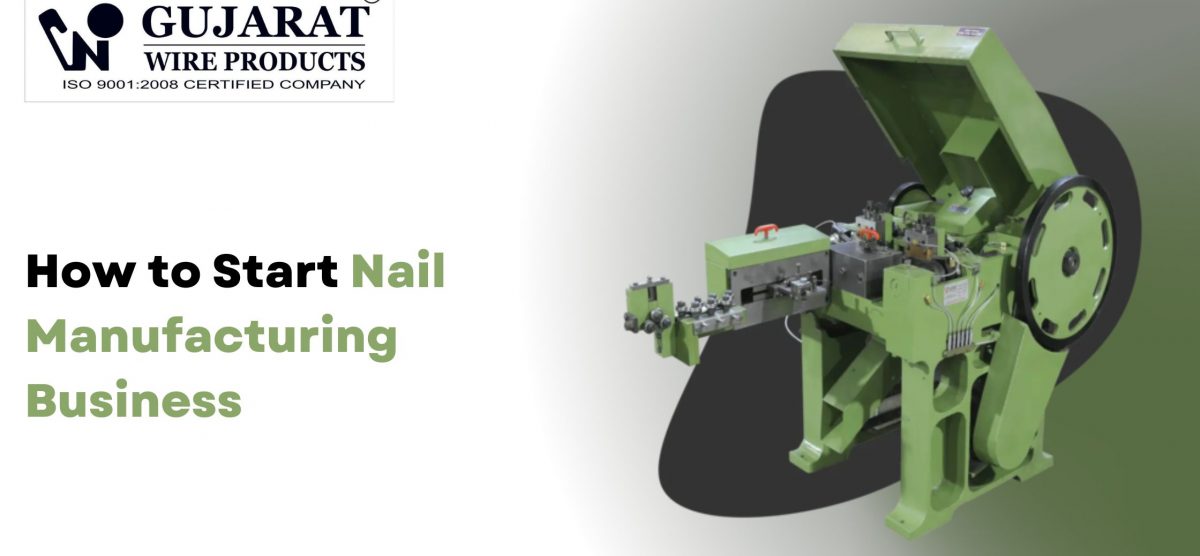
- Nail making machine: Forms head, shank, and point in a continuous automated cycle
- Polishing drum: Tumbles nails with sawdust and paraffin for bright, smooth surface finish
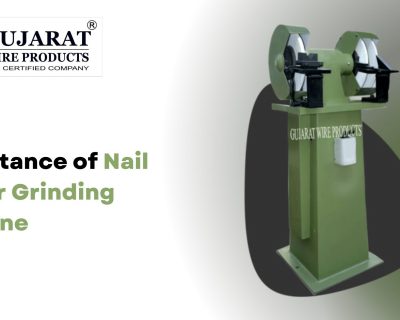
- Cutter and die grinding machine: Reconditions worn tooling on-site to maintain nail quality
- Payoff stand and wire straightener: Controls wire tension and alignment entering the nail machine
The grinding machine is the most commonly skipped item in startup budgets. Skipping it means outsourcing tooling reconditioning or buying replacement dies every few weeks—both significantly more expensive than grinding on-site.
Why Line Balance Matters
A nail machine rated at 400 nails/min starved by a drawing machine that only feeds 250 nails/min worth of wire runs at 250 nails/min effective output. Match drawing, forming, and polishing capacity to each other before purchasing any individual machine.
Raw Materials
Low-carbon mild steel wire rod at 6–8mm diameter is your primary input. Source from suppliers with consistent diameter tolerances—variation in rod diameter causes feed jams in the nail machine and accelerates die wear. Establish at least two suppliers before commissioning to avoid production halts from single-supplier disruptions.
Licenses and Registration
Complete these in parallel with equipment procurement, not after:
- Udyam/MSME registration: Enables PMEGP loan eligibility, priority sector lending, and government procurement access
- GST registration: Required for B2B invoicing and interstate material movement
- Local trade license: Required by most municipal bodies before commencing manufacturing
- Factory license: Required above state-specific worker and power thresholds—check your state’s limits
PMEGP and Mudra financing cover nail manufacturing units under MSME-eligible categories. Prepare a basic project report with equipment list, layout, and capacity estimate—most equipment suppliers help you draft this for bank submission.
Site and Facility Setup
Space Requirements
- Small unit: 200–500 sq ft ground floor with three-phase power
- Medium unit: 800–1,500 sq ft with dedicated zones for drawing, forming, polishing, and packing
Layout Planning
Arrange machines in production sequence: wire drawing → nail forming → polishing → weighing and packing. A straight-line flow eliminates material handling backtracking and reduces labour movement per kilogram of output. Ceiling height of 10–12 feet accommodates wire rod coil storage and payoff stand clearance.
Production Process
Follow this sequence for consistent daily output:
- Receive MS wire rod at 6–8mm diameter from supplier
- Draw wire to target nail diameter on multi-die drawing machine
- Feed drawn wire through payoff stand and straightener into nail machine
- Nail machine cuts length, strikes head, forms point in continuous cycles
- Collect formed nails and load into polishing drum with sawdust and paraffin
- Sort polished nails by visual inspection; weigh and pack in 1 kg, 5 kg, or 25 kg bags
Quality checks at step 6 should include length verification, head formation consistency, and point sharpness. Run these per batch, not just at shift end.
Labor and Operations
Staffing for Small Scale
A 2–4 person team covers the full operation:
- Machine operator: Runs nail machine, monitors wire feed and output quality
- Helper: Loads wire rod, manages polishing drum, assists with packing
- Packing and dispatch: Weighs, bags, and labels finished nails
Train operators specifically on two skills: recognising setup drift (length variation, bent nails) and executing die changes. These two capabilities prevent most production stoppages that small units blame on machine problems.
Marketing and Sales
Target Customers
Build your first sales base from three customer types:
- Local hardware wholesale distributors who supply construction retailers
- Direct accounts with construction contractors and site procurement managers
- Furniture workshops and carpentry contractors in your district
Distribution Approach
Offer consistent delivery on fixed days rather than just lowest price. Construction and furniture buyers pay a small premium for reliable supply that doesn’t require them to manage inventory. Reliability as a supply-chain partner builds repeat accounts faster than price competition.
Scaling Roadmap
Phase 1: Prove the Baseline
Single machine line at 70–80% utilisation, local sales, consistent two-shift operation. Confirm that wire procurement, production output, and customer payment cycles are stable before adding capacity.
Phase 2: Add Speed and Automation
Upgrade to a high-speed nail machine and automate polishing drum loading. This doubles effective capacity without proportionally increasing headcount.
Phase 3: Integrate the Full Line
Add a second drawing line, introduce galvanizing capability for outdoor nails, and set up collation for coil and strip nails targeting pneumatic tool users. At this stage, your customer base shifts from hardware distributors to project-level construction procurement.
FAQs
How long does it take to set up and commission a small nail unit?
From equipment order to first production, plan for 6–10 weeks: 3–4 weeks for machinery delivery, 1–2 weeks for installation and electrical connection, and 1–2 weeks for commissioning and operator training. Delays happen most often in electrical connection and licensing—start both immediately after placing equipment orders.
Can I run a nail unit from a rented shed?
Yes, at small scale. A ground-floor shed with three-phase stable power, 200–500 sq ft of space, and adequate ceiling clearance for wire rod coil storage works for a single-machine setup. Confirm the landlord permits manufacturing use and that the power supply can support your machine’s starting current draw.
What’s the most common reason new nail units fail to reach profitability?
Insufficient working capital for wire rod procurement, not poor machinery or weak demand. Wire rod must be purchased before nails are made and sold. Operations that start with only enough capital for equipment run out of raw material cash within 30–60 days.
Do I need a pollution clearance certificate?
For micro and small units below state-specific power and worker thresholds, Udyam registration typically suffices. Above those thresholds, a Consent to Establish from your State Pollution Control Board is required. Verify your state’s current thresholds before filing any other registration.
Conclusion
A nail manufacturing business succeeds when setup is properly sequenced, line capacity is matched across all stages, and working capital is funded adequately from day one. Getting the first three months right determines whether the unit scales or stalls. Contact us today for a complete equipment list, layout recommendation, and project report template matched to your target output and budget.
Gujarat Wire Products helps first-time and expanding nail manufacturers build production lines that match their investment scale and local market opportunity. We supply complete line equipment—wire drawing machines, nail making machines, polishing drums, and grinding machines—sized and balanced for your target daily output. Our team supports project report preparation for PMEGP financing, on-site machine installation, operator training, and maintenance planning so your unit reaches production targets without the trial-and-error delays that most new setups absorb in the first quarter. Visit gujaratwireproducts.com or call us directly to schedule a free setup consultation and receive a fully costed equipment proposal for your nail manufacturing unit.