Blog
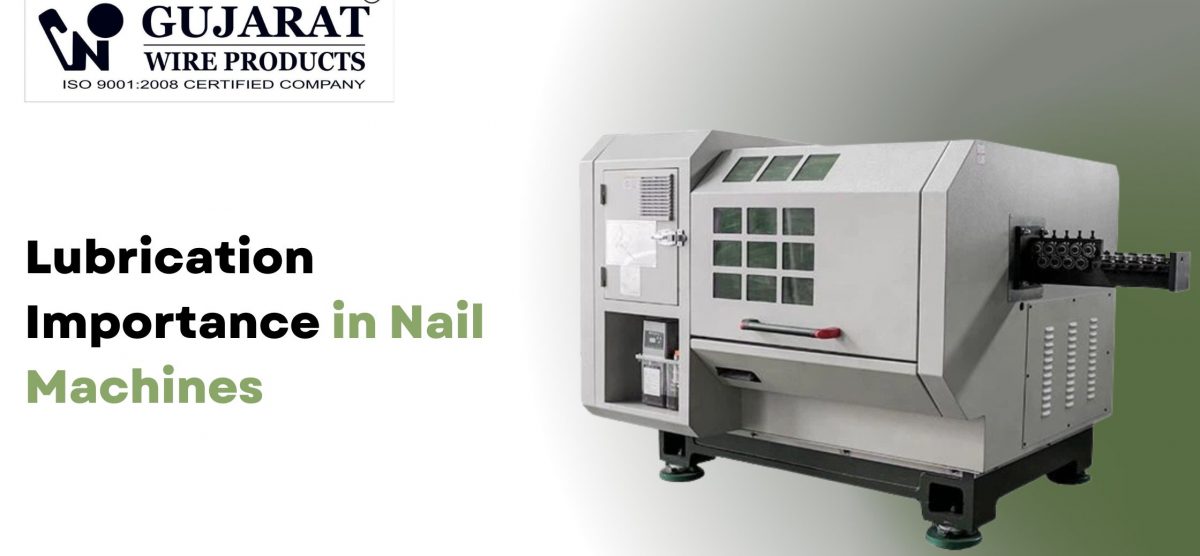
Lubrication Importance in Nail Machines
Introduction
Most nail machine breakdowns don’t start with a broken part. They start with a dry bearing that nobody checked for three weeks. A high-speed nail making machine runs thousands of cycles per hour, and every one of those cycles puts metal against metal at points most operators never look at. When lubrication slips down the priority list, friction builds quietly, heat climbs, and wear sets in long before anyone hears a strange noise or sees a drop in output.
At Gujarat Wire Products, we’ve spent years watching what separates a machine that runs for a decade from one that needs constant repair — and it almost always comes down to how seriously a plant treats lubrication. This post breaks down why lubrication matters so much in nail machines, which parts need attention, how often to service them, and the warning signs that tell you something’s already gone wrong. By the end, you’ll have a practical routine you can hand straight to your maintenance team.
Why Lubrication Matters So Much
The Friction Problem
Every moving part in a nail machine — shafts, cams, gears, cutting dies — grinds against another surface at high speed. Without a proper film of oil or grease between them, that grinding generates heat and shaves off microscopic layers of metal every single cycle. Over weeks, those shavings turn into visible wear, loose tolerances, and parts that no longer sit where they should.graco+1
The Hidden Cost of Skipping It
Here’s the uncomfortable pattern plant managers rarely talk about: machines that run lubrication checks only when something sounds off already have accumulated damage by that point. Noise and heat are late-stage signals, not early warnings. By the time you hear a grind, the bearing surface has likely already pitted.
Parts That Need Regular Attention
A nail machine has several high-friction zones that demand consistent care:
- Bearings — carry the rotational load and wear fastest without lubrication
- Shafts and cams — control timing and movement precision
- Gears and drive assemblies — transmit power under constant stress
- Cutting and forming heads — face direct metal-on-metal contact with wire stock
- Sliding guides — keep wire feed aligned through the forming process
Each of these fails differently, but the root cause is almost always the same: a missed lubrication cycle.
Choosing the Right Lubricant
Oil-Based vs. Grease-Based
Oil-based lubricants flow easily and reach tight, fast-moving parts like gears and chains, making them ideal for high-speed operation. Grease-based lubricants sit thicker and stay put longer, which makes them better suited for bearings and slower-moving joints that need sustained protection. Using the wrong type in the wrong spot either wastes lubricant or leaves parts under-protected.
Matching Lubricant to Machine Speed
Faster machines generate more heat, which thins oil-based lubricants faster and shortens their effective window. If your machine runs continuous high-speed cycles, shorten your lubrication intervals rather than switching to a heavier lubricant that can’t reach the smaller gaps.
Building a Lubrication Schedule
- Identify every lubrication point on the machine using the manufacturer’s diagram.
- Set a daily check for high-friction points like bearings and cutting heads.
- Schedule weekly grease application for slower-moving joints.
- Log every lubrication event with date, part, and lubricant type.
- Review the log monthly to catch parts that need more frequent attention.
Consistency matters more than volume here. A small amount applied on schedule beats a large amount applied late.
Signs Your Machine Is Under-Lubricated
Watch for these patterns before they turn into downtime:
- Rising surface temperature on bearings or shafts
- New or louder operating noise
- Slower cycle speed without a clear mechanical cause
- Visible metal shavings near moving joints
- Inconsistent nail dimensions coming off the line
Any one of these on its own is worth investigating. Two or more together usually mean lubrication has already fallen behind.
FAQs
How often should I lubricate a high-speed nail machine?
Daily checks on bearings and cutting heads, with weekly grease application on slower joints, covers most high-speed setups. Machines running continuous shifts may need more frequent checks depending on load and ambient temperature.
Can over-lubrication cause problems?
Yes. Excess lubricant attracts dust and metal particles, which turns into an abrasive paste that accelerates wear instead of preventing it.
What happens if I use the wrong lubricant type?
Oil in a slow-moving joint drains away too fast to protect it, while grease in a fast-moving gear can’t flow into tight spaces quickly enough. Both scenarios leave parts running dry despite regular application.
Does lubrication really affect nail quality?
Yes. Worn dies and misaligned guides — both caused by poor lubrication — directly affect nail dimension consistency and finish.
Conclusion
Lubrication isn’t a maintenance afterthought — it’s the difference between a machine that runs for years and one that needs constant parts replacement. Gujarat Wire Products builds nail making equipment designed for consistent, long-term performance, and we back every machine with practical maintenance guidance to help you get there. Reach out to our team today to talk about your production line, or subscribe to our updates for more hands-on maintenance guidance.