Blog
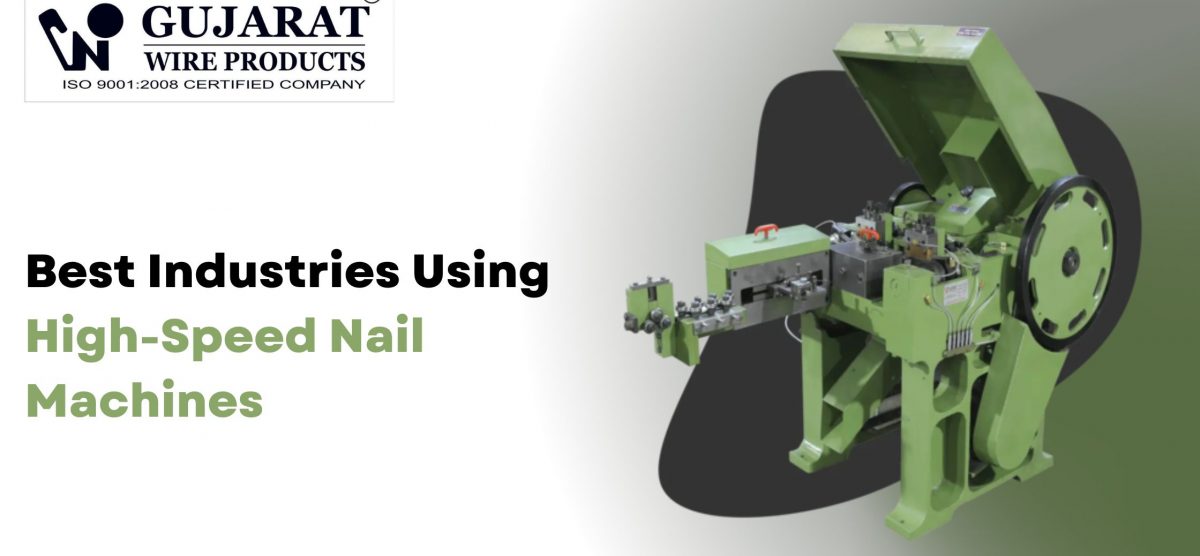
Best Industries Using High-Speed Nail Machines
Introduction
Buying a high-speed nail machine without understanding your target industry’s specific demands is the fastest way to underuse an expensive asset. A machine calibrated for construction-grade common nails performs poorly when a furniture manufacturer needs finer finishing tolerances, and a packaging operation running high-volume crate nails has different changeover needs than a specialty roofing nail producer. The global high-speed nail making machine market, valued between $494 million and $1.1 billion depending on segment definition, is growing at 6.2–8.1% CAGR precisely because manufacturers across construction, furniture, packaging, and industrial assembly are discovering that generic machine specifications rarely match their actual production reality. The uncomfortable pattern: buyers who select machines based on maximum rated speed alone consistently underperform buyers who match machine capability to their specific industry’s nail portfolio and volume pattern.
This guide covers the industries generating the highest nail demand, what each sector actually requires from equipment, and how to select machines that fit your production reality rather than a generic catalog spec.
Construction and Infrastructure
Construction absorbs the highest volume of nails globally, driven by structural fastening across residential, commercial, and civil projects. This sector demands heavy-duty, weather-resistant nails produced at sustained high volume with minimal size variation across long production runs.
Construction buyers prioritise output consistency over size flexibility—most orders concentrate on a handful of standard lengths and diameters run in large batches. Machines serving this sector benefit most from high sustained speed and long die life rather than rapid changeover capability.
Furniture and Woodworking
Furniture manufacturing requires fasteners for cabinets, frames, pallets, and joinery work, with far greater size and head-type variety than construction. Uniform head shape and consistent shank length matter more here because visible or structural joints in furniture reveal dimensional inconsistency immediately.
This sector typically runs smaller batch sizes across more nail specifications. Machines with quick die-change capability and stored parameter settings serve furniture producers better than pure speed-maximised equipment, because changeover frequency—not peak output—determines daily throughput.
Packaging and Logistics
Nails for crates, boxes, pallets, and shipping structures demand high repeatability across enormous production volumes. Packaging producers need machines that integrate directly into high-throughput production lines without creating bottlenecks between nail forming and downstream assembly.
This industry rewards machines with strong inline compatibility—conveyor integration, automatic collection, and consistent output speed matching packaging line cycle times.
Manufacturing and Industrial Assembly
General industrial fastening across workshops and production plants relies on steady, repetitive nail orders rather than seasonal demand spikes. High-speed machines suit this sector particularly well because continuous, predictable orders let manufacturers run machines near rated capacity without the frequent changeovers that erode efficiency elsewhere.
Plants in this category benefit most from low reject rates and minimal supervision requirements, since industrial buyers measure supplier reliability by consistency across months, not single batches.
Wood Product and Pallet Industries
Pallet and wood product manufacturers consume common wire nails and heavier construction-grade fasteners in high, predictable volumes. Production runs concentrate on a narrow set of standard sizes, making this sector similar to construction in its demand pattern but typically smaller in scale per operation.
Faster machines directly reduce bottlenecks in pallet assembly lines where nail supply gaps stall the entire production sequence. Buyer priority here is uninterrupted supply reliability over size versatility.
Specialty Nail Applications
Concrete nails, roofing nails, umbrella head nails, and collated coil nails each demand distinct hardness, point geometry, and head-forming specifications that standard wire nail machines cannot replicate. Concrete nails require significantly higher heading force; roofing nails need wider, flatter heads; collated nails require strip or coil compatibility for pneumatic tool use.
Selecting machines by end-use application—not by generic speed rating—determines whether specialty nail producers can actually serve their target market or face constant rejection issues.
What Each Industry Actually Needs
Matching machine capability to industry demand requires evaluating four factors together:
- Output volume vs. size variety: High-volume, low-variety sectors (construction, pallets) prioritise sustained speed; high-variety sectors (furniture, specialty nails) prioritise changeover speed
- Wire diameter and length range: Confirm the machine’s economical window covers your industry’s typical specifications without operating at the extremes
- Changeover frequency: Sectors with mixed daily orders need quick-change die systems; single-specification producers can prioritise raw speed instead
- Automation and labour fit: Continuous industrial demand justifies higher automation investment faster than seasonal or batch-driven sectors
How to Select the Right Machine
- Identify your industry’s typical order pattern: batch size, size variety, and seasonal fluctuation
- Match machine capacity to sustained demand, not peak theoretical output
- Choose automation level based on shift structure and how frequently orders require size changes
- Balance rated speed against dimensional consistency requirements—furniture and specialty applications tolerate less drift than construction-grade common nails
- Confirm tooling life data for your specific wire grade before committing to a model, since specialty applications wear dies faster than standard mild steel production
FAQs
Which industries generate the highest nail demand?
Construction and infrastructure account for the largest global nail volume, followed by pallet and wood product manufacturing. Furniture and packaging follow with smaller per-order volumes but greater size variety requirements.
Are high-speed machines the best choice for every industry?
Not universally. High-speed machines deliver the strongest returns for sectors with continuous, predictable demand and limited size variety—construction, pallets, and general industrial assembly. Furniture and specialty nail producers often benefit more from changeover flexibility than from maximum rated speed.
What nail types differ most between construction and furniture applications?
Construction relies heavily on standard common wire nails and concrete nails in a narrow size range run at high volume. Furniture manufacturing requires finer finishing nails, varied head types, and tighter dimensional tolerance across a much wider size range with smaller individual batch runs.
Can one machine serve multiple industries effectively?
Yes, provided the wire diameter and length range covers both target markets and die-change time fits your order mix. Operations serving both construction and furniture clients typically need either a highly flexible machine with fast tooling changes or two complementary machines optimised for each demand pattern separately.
Conclusion
High-speed nail machines deliver the greatest value when matched precisely to the industry they serve—construction and pallet production reward sustained speed, while furniture and specialty applications reward changeover flexibility and dimensional precision. Understanding your target sector’s actual order pattern, not just chasing the highest rated speed, determines whether your equipment investment performs to its full potential.
Gujarat Wire Products builds high-speed nail machines matched to the real production patterns of construction, furniture, packaging, and industrial manufacturing clients across India. Our engineering team evaluates your target industry’s order mix, size variety, and volume pattern before recommending a machine configuration—not a generic catalog spec. Ready to find the right machine for your industry’s actual demand? Visitgujaratwireproducts.com and share your target market and nail portfolio for a tailored recommendation from our application engineering team.