Blog
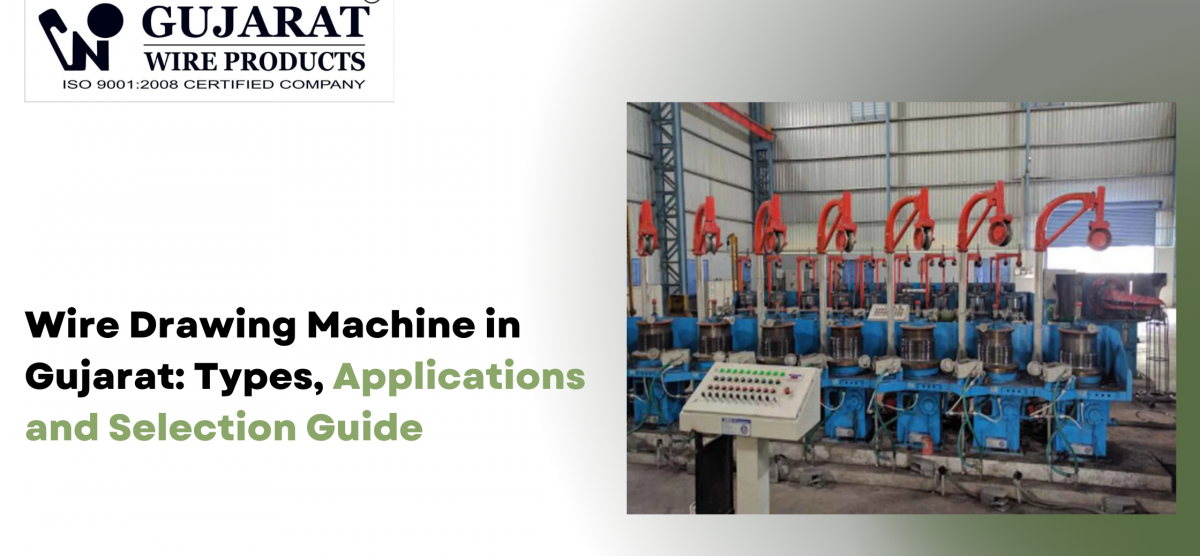
Wire Drawing Machine in Gujarat: Types, Applications and Selection Guide
Wire is the single largest cost in a nail or wire products plant. Buying it ready drawn is simple, but it hands part of your margin to the supplier. A wire drawing machine lets you buy cheaper rod and draw it to exactly the size you need.
The catch is choosing the right machine. Pick one that is too small and it starves your nail machines. Pick one built for the wrong wire range and it wears dies without delivering the tonnage you planned. This guide covers how wire drawing works, the main machine types, where each is used and a step-by-step method to select one. It draws on our experience building wire drawing and nail machinery in Rajkot since 1975.
What Is a Wire Drawing Machine
A wire drawing machine reduces the diameter of metal wire by pulling it through one or more dies. Each die is slightly smaller than the wire entering it. The wire comes out thinner, longer, stronger and with a smoother surface.
Drawing is a cold process. The work hardening it causes is what gives drawn wire its extra strength.
How Wire Drawing Works
Dies
A drawing die is a hard insert, usually tungsten carbide, with a tapered hole. The wire enters the wide side and leaves through the narrow bearing section at the target size.
Capstans or Blocks
A capstan is a driven drum that pulls the wire through the die. It also stores a few wraps of wire before passing it to the next die. Machines are often described by their number of blocks and block diameter.
Draft
Draft is the reduction in cross-section at each die. Too much draft in one pass breaks wire or overheats dies. Our GWP 400 works at about 25% reduction per pass.
Lubrication
Drawing soap powder sits in a die box ahead of each die. The wire picks up a coating as it passes through, which cuts friction in the die.
Cooling
Drawing generates heat. Water cooling inside the capstan drum and die box keeps wire and dies at working temperature.
Types of Wire Drawing Machines
Single Block Machine
One die and one capstan. Often used for heavy reductions on thick wire, or as a first stage before a multi-block machine. Simple to run, but each coil needs several passes to reach fine sizes.
Multi-Block Over-the-Top (OTO) Machine
Several blocks in a row. The wire passes over the top of each block on its way to the next die. This design lets each block run at its own speed and gives some buffer between stages. Our GWP 400 is a 4-block OTO machine with 400 mm blocks.
Straight-Line Machine
The wire runs in a straight path from block to block, with electronic control keeping tension in balance. These suit high-speed continuous drawing in larger plants.
Wet and Dry Drawing
- Dry drawing uses powder lubricant and suits most low-carbon wire for nails, mesh and binding wire.
- Wet drawing runs dies and wire in liquid lubricant and is used mainly for fine wire.
Applications
Low-carbon steel wire drawn on these machines goes into:
- Wire nails of every size
- Barbed wire
- Chain link and welded mesh
- Binding wire for construction
- Fencing and general wire products
The GWP 400, for example, is built to draw wire from 8 mm or 6 mm rod down to 2 mm for barbed wire, mesh and nails.
How to Select a Wire Drawing Machine
Work through these steps in order.
- Fix your inlet size. Most plants buy 5.5 mm or 6.5 mm rod. Some use 8 mm. The machine must accept your rod.
- List your finished sizes. Write down every wire diameter your nail machines or products need, with monthly tonnage for each.
- Count the passes. Work out how many die reductions each finished size needs from your inlet rod, at a safe draft per pass. This sets the number of blocks.
- Size the blocks. Larger blocks handle thicker wire and heavier coils. Smaller blocks suit thinner wire.
- State capacity in kg per shift at your wire size. A figure quoted for a different size can be misleading.
- Check power, cooling and floor space. Note the motor rating, water supply needs and layout length.
- Check build quality. Look at drum surface finish, gearbox type, bearing quality and guarding.
- Plan for descaling and pointing. Rod needs scale removed and a pointed end before it can enter the first die.
GWP 400 at a Glance
| Feature | Detail |
| Type | OTO wire drawing machine |
| Blocks | 4 |
| Block diameter | 400 mm |
| Typical sample run | 2.65 mm in, 1.65 mm out |
| Speed | 188 m/min |
| Reduction per pass | About 25% |
| Rated output | About 3,000 kg per 12-hour shift at 1.65 mm, 75% efficiency |
| Construction | Close-grain cast iron, metalized and ground drums, worm reduction gearing, splash lubrication |
| Cooling | Water cooling in drum and die box |
Matching Drawing Output to Nail Machines
This is where many plants get the numbers wrong. Drawing capacity and nail capacity must be compared in kilograms per shift, at the same wire size.
Why Wire Size Changes Everything
Wire weight per metre rises with the square of the diameter. One metre of 3.25 mm wire weighs about 65 g. One metre of 1.65 mm wire weighs about 17 g. At the same drawing speed, the thicker wire delivers almost four times the weight.
A Worked Example
Our GHS90 nail machine makes about 1,350 kg of 3.25 mm × 75 mm nails per 8-hour shift. Two of them need about 2,700 kg of 3.25 mm wire per shift. Your drawing section must deliver at least that, at that size, with a margin for coil changes.
Run this check for each main wire size before you finalise either machine.
Why Buy a Wire Drawing Machine in Gujarat
- Engineering cluster: Rajkot has foundries, machine shops and component suppliers close together, which keeps lead times and spare costs down.
- Matched lines: a Gujarat maker that builds both drawing and nail machines can size the two together.
- Ports: Mundra and Kandla make export shipments straightforward.
- Factory trials: buyers can see machines run before dispatch.
FAQs
What is a wire drawing machine used for?
It reduces wire rod to the exact diameters needed for nails, barbed wire, mesh and binding wire. Drawing also makes the wire stronger and gives it a smoother surface. Plants that draw their own wire usually cut raw material cost.
How many blocks does a wire drawing machine need?
It depends on your inlet rod size and the finished size you need. Each block gives one reduction, typically around 20 to 25% in cross-section. More reduction needs more blocks or more passes.
What is the difference between single block and multi-block machines?
A single block machine has one die and one capstan, so fine sizes need several passes. A multi-block machine draws through several dies in one pass. Multi-block machines give higher continuous output.
Do I need a wire drawing machine to make nails?
No. You can buy wire already drawn to size. A drawing machine becomes worthwhile when your volume is steady enough that the saving on rod pays for the machine.
What models of wire drawing machine do you offer?
We build the GWP 300, GWP 400 and GWP 600 wire drawing machines. The right model depends on your inlet rod, finished sizes and target tonnage. Share those details and we will recommend one.
Conclusion
Choose a wire drawing machine by inlet size, finished sizes, number of passes and kilograms per shift at your actual wire size. Then check that it can keep your nail machines fully fed.
Send us your rod size, finished wire sizes and nail machine plan, and we will size a drawing machine to match.
About Gujarat Wire Products
Gujarat Wire Products has manufactured wire drawing machines and wire nail making machines in Rajkot since 1975. Our GWP range draws wire for nails, barbed wire and mesh, and pairs with our conventional and high speed nail machines, grinders and polishing drums. We are ISO 9001 certified and supply buyers across India and in Africa, the UK, Europe and Asia.
Our promise: a drawing machine sized to your nail line, so neither side waits on the other.