Blog
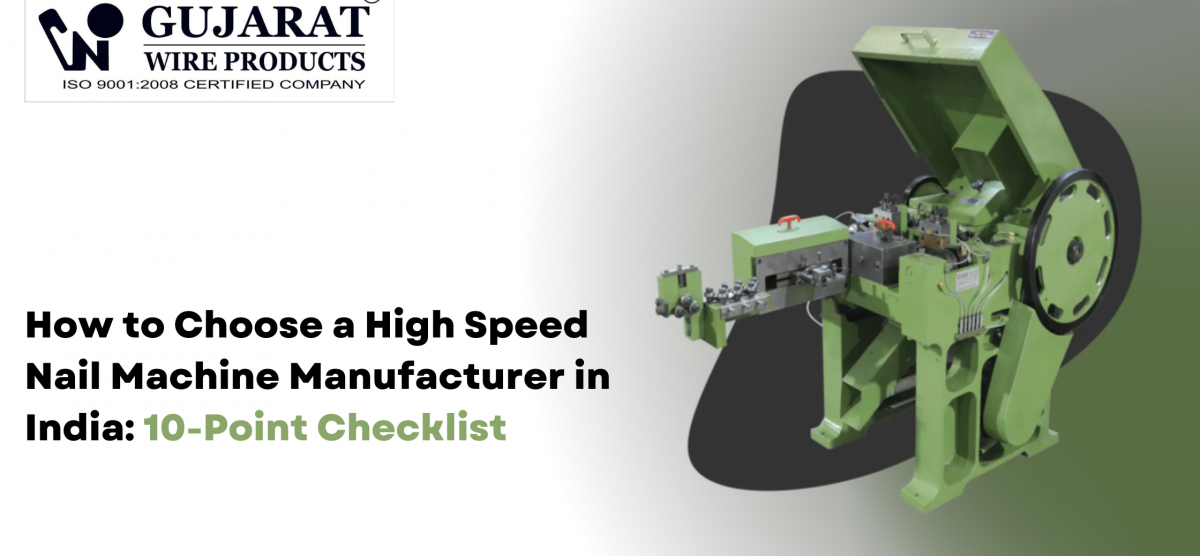
How to Choose a High Speed Nail Machine Manufacturer in India: 10-Point Checklist
A high speed nail machine is only as good as the company standing behind it. Two machines can share the same speed figure on paper, yet one runs for fifteen years and the other spends half its life waiting for parts. The difference usually comes down to the manufacturer, not the brochure.
This checklist helps you tell them apart. We have built nail machines in Rajkot since 1975, and these are the points we would check if we were in your seat. You will get ten clear checks, the red flags to look for in a quotation, and the questions to ask before you release an advance.
Why the Manufacturer Matters as Much as the Machine
High speed machines push every part harder. Slides, bearings, dies and cutters all work at more strokes per minute, so small errors in machining or assembly show up faster.
A capable manufacturer controls these risks at the source. They machine critical parts in-house, make matched tooling, test before dispatch and stock spares. A trader or assembler often cannot do all four.
The 10-Point Checklist
1. Manufacturing Depth
Visit the workshop. Look for machining, assembly and testing under one roof. Ask which parts are made in-house and which are bought in. A manufacturer that machines its own frames, crankshafts and slides can control alignment and fix problems at the root.
2. Track Record in Nail Machinery
Ask how long the company has built nail machines specifically, not general engineering. Years of building one product type means more feedback from the field. Ask how many machines of the model you want are already running.
3. Honest, Complete Specifications
A proper spec sheet lists:
- Wire diameter range
- Nail length range
- Maximum nails per minute, and the nail size it applies to
- Motor rating
- Net weight
- Floor area
If the speed is quoted without a nail size, ask. Speeds always fall as wire gets thicker.
4. Trial Run on Your Wire
Ask for a trial on wire of your gauge, ideally your own coil. Check the trial nails for head diameter, head centring, point shape and length tolerance. A good manufacturer will set this up without fuss.
5. Tooling Made In-House
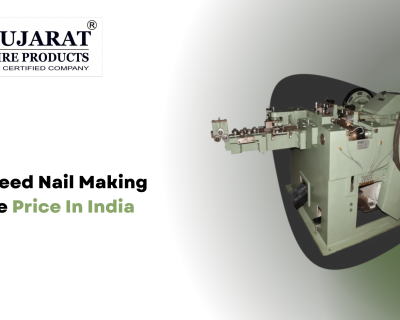
Gripping dies, cutters and header punches decide nail quality and running cost. A manufacturer that makes its own tools matches them to the machine and keeps them in stock. Ask about tool material too. Carbide tools, as used on our GHS90, last much longer than standard tool steel at high speed.
6. Spare Parts Availability
Ask for a list of common spares and their prices. Ask how quickly they ship and from where. A machine waiting a week for a small part loses far more output than the part costs.
7. Installation and Training
Find out who installs the machine, who sets it for the first run, and who trains your operators and setter. Get this in writing. High speed machines need correct first settings to hold their output.
8. Service Reach
Ask how service works in your region and how fast someone can attend. Ask whether remote help over video or phone is available for quick diagnosis. A nationwide dealer or service network shortens response time.
9. Full-Line Capability
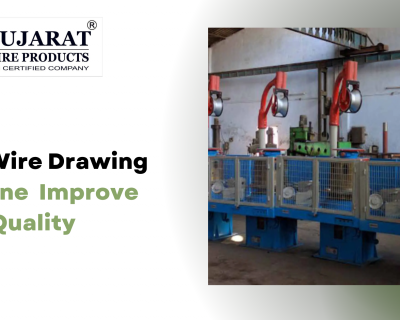
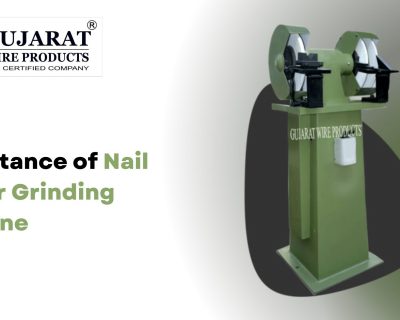
A nail plant also needs wire drawing, polishing and tool grinding. A manufacturer that builds the full line can size each stage to match the nail machines. It also gives you one point of contact for the whole plant.
10. Documentation and Export Experience
Ask for a manual, a parts list and wiring drawings. If you are importing into another country, check the manufacturer’s export experience with packing and shipping documents. Our machines already run in Africa, the UK, Europe and Asia.
How to Score Manufacturers Side by Side
Gut feel after a factory visit is hard to compare across three or four suppliers. A simple score sheet keeps the decision grounded.
Give each of the ten points a score from 1 to 5. Then weight the points that matter most to your plant:
| Checklist point | Suggested weight |
| Manufacturing depth | 3 |
| Track record | 2 |
| Honest specifications | 2 |
| Trial run on your wire | 3 |
| In-house tooling | 3 |
| Spare parts availability | 3 |
| Installation and training | 2 |
| Service reach | 2 |
| Full-line capability | 1 |
| Documentation and export | 1 |
Multiply each score by its weight and add them up. The highest total is your strongest candidate, before price.
Then bring price in. If two manufacturers are close on score, the cheaper quote may be the better buy. If one scores far lower, a lower price rarely makes up for slow spares and weak tooling over ten years of running.
Adjust the weights to your situation. An exporter in Africa should weight documentation and spares higher. A first-time buyer should weight training higher.
Red Flags in Quotations
Watch for these signs when comparing offers:
- Speed quoted without nail size. A figure that cannot be tested is hard to hold anyone to.
- No weight stated. Machine weight reflects frame strength. A much lighter machine at the same rating deserves a closer look.
- Tooling left vague. “Standard tools included” should be backed by a list.
- No delivery date in writing. Open-ended timelines often slip.
- Large advance with no factory visit offered. A genuine manufacturer is usually happy to show you the works.
- Price far below the market. Ask what is missing: tooling, testing, installation or casting quality.
Questions to Ask Before You Pay
Use this list in your final meeting:
- Which nail size does the quoted speed apply to?
- Can I see the machine running on my wire gauge?
- What tools come with the machine, and what does a replacement set cost?
- How long does a tool set last on wire like mine?
- Who installs and trains, and is it included?
- Where are spares stocked, and how fast do they ship?
- How many of this model are already running, and can I speak to a buyer?
- What is the payment schedule, and what is the delivery date?
A Note on Labour Planning
High speed machines change how many people you need. On our GHS90, one skilled operator can run up to eight machines. Ask each manufacturer for their operator ratio, because it affects your running cost more than most buyers expect.
FAQs
What should I look for in a high speed nail machine manufacturer?
Look for in-house manufacturing, a long track record in nail machinery, complete specs, trial runs on your wire, in-house tooling and reliable spares. Installation, training and service reach matter just as much after delivery.
Is it better to buy from a manufacturer or a trader?
A manufacturer usually offers better control over machine quality, tooling and spares. Traders can offer convenience, but they depend on someone else for parts and technical answers. Ask any seller directly whether they build the machine.
How can I verify a nail machine manufacturer’s claims?
Visit the factory, watch a trial on your wire, and speak to existing buyers. Ask for written specs that state nail size against speed. Check the company’s years in business and its export history.
Should I choose the cheapest high speed machine?
Compare cost per kilogram over the machine’s life instead. A cheaper machine with short tool life, slow spares or more labour can cost more each month. Ask what each quote includes before comparing prices.
Conclusion
Run every high speed nail machine manufacturer through the same ten checks. Get specs, tooling, training and delivery in writing, and see a trial on your wire before you pay.
Use this checklist on your next factory visit, starting with ours.
About Gujarat Wire Products
Gujarat Wire Products has manufactured high speed and conventional wire nail making machines in Rajkot since 1975. We machine, assemble and test our machines in-house, and make our own gripping dies, cutters and header punches. Our range runs up to the PLC-controlled GHS90 at 760 nails per minute, supported by wire drawing machines, grinders and polishing drums for the complete line. We are ISO 9001 certified and serve buyers across India and in Africa, the UK, Europe and Asia.
Our promise: we will answer every point on this checklist in writing, before you pay.