Blog
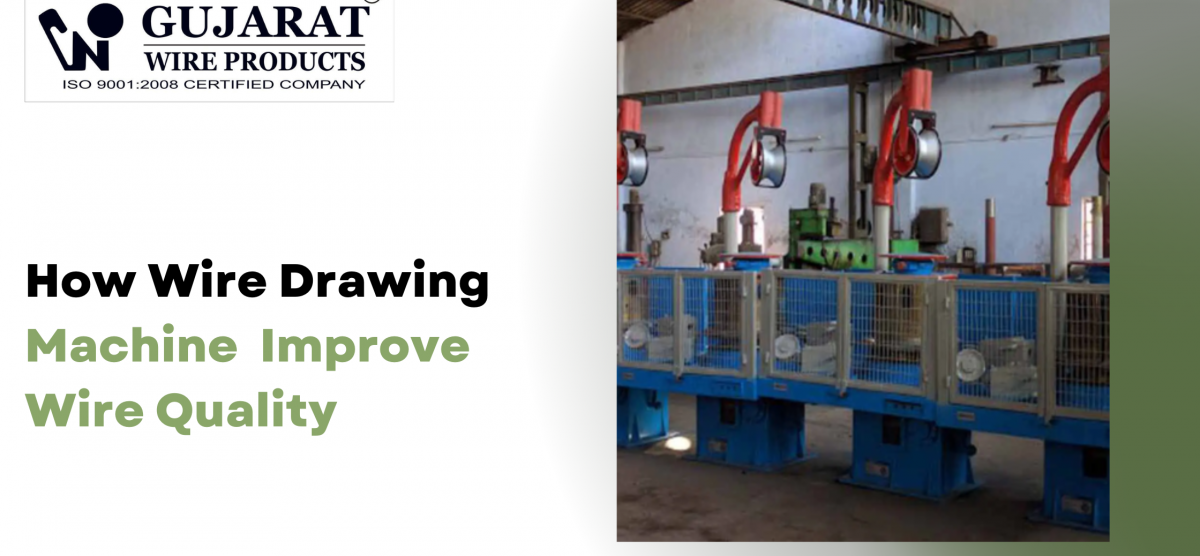
How Wire Drawing Machines Improve Wire Quality
Wire manufacturers who chase output speed while ignoring die angle, lubrication temperature, and tension control end up with a familiar problem: high volume, inconsistent quality. Surface scratches, diameter drift, and unpredictable tensile strength don’t announce themselves until a customer rejects a batch or a downstream process—welding, coating, fastener forming—fails because the wire wasn’t as uniform as the spec sheet claimed. The fix isn’t slowing down production; it’s understanding exactly how a wire drawing machine builds quality into wire at the mechanical level, then controlling those specific variables.
This guide walks through how drawing improves tensile strength and surface finish, what dimensional accuracy actually depends on, which process parameters matter most, how raw material condition sets the ceiling for final quality, and which equipment features separate a quality-focused line from a volume-only one. You’ll leave knowing exactly where to look when quality slips.
How Wire Drawing Improves Mechanical Properties
Wire drawing doesn’t just make wire thinner—it fundamentally changes the metal’s internal structure in ways that improve performance.
Grain Structure Refinement
As wire passes through a die, metal grains elongate and align along the drawing axis instead of sitting in random orientations. This alignment is what improves tensile strength and reduces brittleness compared to the starting rod. Work hardening achieves this strength gain without changing the wire’s chemical composition at all—it’s purely a mechanical transformation.
Tensile Strength Enhancement
Every reduction in cross-sectional area through a die pass increases strength and durability in the finished wire. Controlled, staged deformation through a die sequence produces measurably more reliable wire than a single aggressive reduction attempt—consistency in the process produces consistency in the output.
Ductility Control
Drawing conditions can maintain or even enhance ductility depending on material type and how the process is managed . When wire becomes too brittle for further reduction, intermediate annealing restores ductility, letting the drawing sequence continue toward the target diameter without risking fracture .
Surface Quality Improvements
Surface condition determines how wire performs in secondary operations and how it looks to a buyer inspecting a coil.
Surface Finish Enhancement
Dies exert a polishing effect as wire passes through, producing progressively smoother surfaces with each pass. This same mechanical action strips away surface impurities—dirt, light rust, and mill scale—that were present on the incoming rod.
Defect Reduction
Surface defects trace back to specific, fixable causes:
- Longitudinal scratches often come from carbide buildup in the die’s sizing zone
- Poor lubrication temperature control disrupts the friction film that protects the wire surface
- Contaminated lubricant introduces abrasive particles that score the wire as it draws
Two-stage filtration—coarse followed by fine—combined with tight lubricant temperature control materially improves surface roughness outcomes. This is a maintenance discipline, not a machine upgrade, which makes it one of the most cost-effective quality levers available.
Aesthetic and Functional Benefits
Smooth wire surfaces aren’t just about appearance. They directly improve how well wire accepts coating, welding, and other secondary treatments. A rough surface that looks acceptable to the eye can still cause coating adhesion problems or weak weld points downstream.
Dimensional Accuracy and Consistency
Diameter control is where buyer trust gets built or broken, batch after batch.
Diameter Control
Modern wire drawing machines achieve tolerance levels as tight as ±0.01mm. Automated control systems hold this tolerance across the full production run, not just at the start when the machine is freshly calibrated—that consistency over time is the real test.
Uniformity Across Length
Diameter fluctuation along a single wire length usually traces to inconsistent speed or tension control during drawing. Automatic tension balancing systems correct for this in real time, maintaining roundness and surface finish uniformly from the start of the coil to the end .
Repeatability
PLC controls and touch-screen interfaces standardize settings across operators and shifts, which is what actually produces batch-to-batch consistency. A skilled operator running a machine without automated controls can hit good numbers once; automated systems hit them every time.
Process Control Factors
Three adjustable variables account for most quality outcomes in a drawing operation.
Die Angle Optimization
For low-carbon wire, an inlet cone angle of 12–16 degrees prevents surface micro-tearing during the draw. Area reduction per pass should stay within a scientifically set range—typically 10–15% for single passes—to avoid metal galling at the die surface. Push past that range chasing speed, and surface quality degrades even if diameter measurements still look fine.
Lubrication Management
Lubricant performs two jobs simultaneously: reducing friction and carrying away heat. Keeping lubricant temperature in the 20–28°C range preserves its protective film properties. Filtration at 100μm (coarse) followed by 20–50μm (fine) removes metal particles before they become abrasive contaminants scoring the next length of wire.
Speed Optimization
Variable frequency drives adjust motor speed dynamically based on load, improving both quality and energy efficiency simultaneously . Sensor-based monitoring systems can calculate the optimum drawing speed for a given wire and die combination rather than relying on operator guesswork —removing a variable that’s traditionally been trial and error.
Raw Material Quality Impact
No drawing machine, however well-calibrated, can fully compensate for poor starting material .
Wire Rod Inspection
Best-practice operations conduct 100% inspection of incoming wire rod for diameter, out-of-roundness, and surface condition before it ever reaches the drawing machine . Adherence to recognized dimensional standards ensures the starting material gives the drawing process a fair chance to deliver quality output .
Pretreatment Requirements
Pickling and mechanical shot blasting remove oxide scale from rod before drawing begins. Skipping this step means the drawing dies are fighting scale contamination from the first pass, which shows up as accelerated die wear and surface defects in the finished wire.
Equipment and Technology Factors
The equipment itself sets the ceiling for achievable quality, regardless of operator skill.
Advanced Control Systems
PLC automation maintains consistent speed and tension without relying on manual adjustment. Sensor-based monitoring can detect lubricant loss in real time, catching a quality problem before it produces a full batch of defective wire.
Die Technology
Polycrystalline diamond dies and oscillating die designs both improve wire quality by reducing friction and wear at the contact surface . Regular die maintenance—inspection after every 50 tons drawn, polishing when surface roughness exceeds 0.05μm Ra—keeps quality consistent as dies age rather than letting degradation creep in unnoticed.
Energy Efficiency
VFD technology cuts energy consumption by up to 50% during partial-load operation . The uncomfortable insight here: machines built for energy efficiency often deliver better quality too, because the same variable-speed control that saves power also stabilizes drawing tension—efficiency and quality aren’t competing goals, they’re the same engineering problem solved once.
Quality Monitoring and Standards
In-Process Inspection
Checking wire size and surface quality every two hours during production catches drift before it accumulates into a rejected batch . Die installation should include centerline deviation calibration to within 0.05mm—misalignment this small is invisible to the eye but shows up as measurable quality variation .
Testing and Documentation
Following recognized metallurgical testing standards, combined with batch documentation and traceability, gives you the paper trail to isolate a quality problem to its actual source rather than guessing.
FAQs
Can a wire drawing machine fix poor-quality raw material?
No, not fully. A well-calibrated machine minimizes the impact of minor rod imperfections, but rust, scale, or significant diameter variation on the incoming rod will still show up as defects or excess die wear in the finished wire. Pretreatment and rod inspection remain necessary regardless of machine quality.
Why does my wire pass diameter checks but still show surface defects?
Diameter and surface quality are controlled by different variables. Diameter depends on die sizing and tension control; surface finish depends on lubrication, die condition, and area reduction per pass. A machine can hold tight diameter tolerance while still producing scored or rough surfaces if lubrication or die wear issues exist.
How often should drawing dies be inspected for quality reasons?
Best practice is inspection after every 50 tons of wire drawn, with polishing or replacement triggered once surface roughness exceeds roughly 0.05μm Ra. Waiting until visible defects appear in the wire means you’ve already produced scrap before catching the problem.
Does higher drawing speed always reduce quality?
Not inherently, but speed increases beyond what your lubrication and cooling system can support will degrade both surface finish and strength consistency. Variable frequency drives that adjust speed to load conditions, paired with sensor-based monitoring, let you run faster without sacrificing quality.
Conclusion
Wire quality is built through a chain of controllable factors—grain refinement, surface finish, dimensional accuracy, and process discipline—not through any single machine setting. Get die angle, lubrication, and raw material inspection right, and consistent quality follows. Contact us today to review your current drawing process and identify where quality gains are available.
Gujarat Wire Products designs wire drawing machines with quality control built in from the start—automated tension balancing, precision die technology, and advanced lubrication systems that hold tolerance and surface finish batch after batch. We help you optimize die angle, lubrication parameters, and drawing speed for your specific wire material, and we support raw material inspection and pretreatment practices that give your drawing process the best possible starting point. Our commissioning and training cover in-process quality checks so your team catches drift before it becomes scrap. Visit gujaratwireproducts.com or call us directly to schedule a process review and get a quality-focused recommendation for your wire drawing operation.