Blog
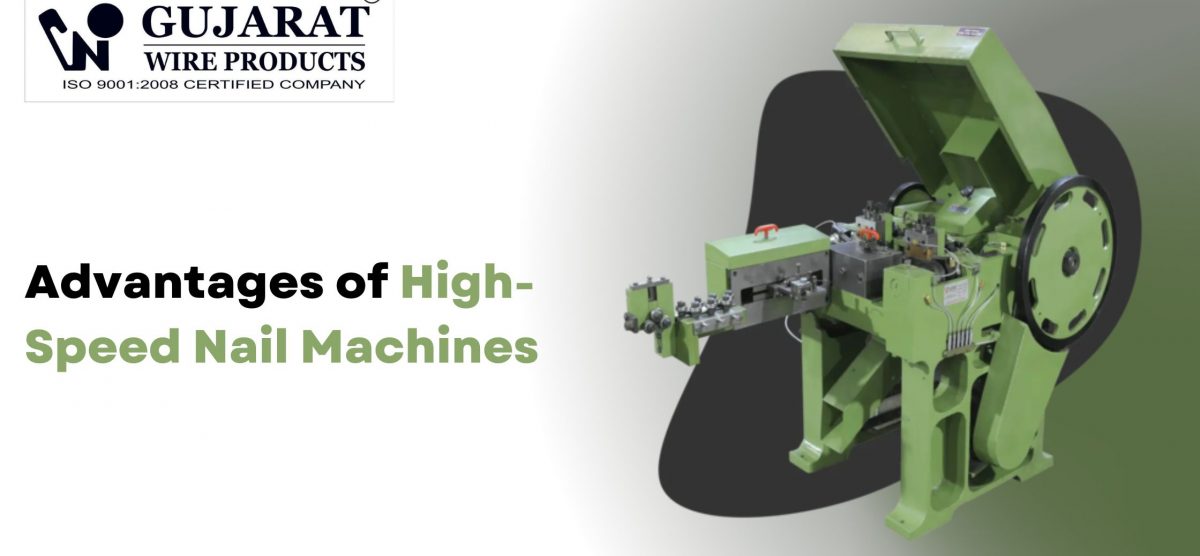
Advantages of High-Speed Nail Machines
Introduction
Standard automatic nail machines cap out at 300–350 nails per minute under real production conditions. That ceiling creates a specific problem: when construction contracts require 3–5 tonnes of nails per week from a single plant, standard machines either fall short or multiply the number of machines, operators, and floor space required. High-speed nail machines run at 400–800 nails per minute, and the high-speed nail making machine market is projected to grow from USD 1.25 billion in 2024 toward USD 2 billion as demand from bulk construction and export markets accelerates. The output difference isn’t just faster production—it reshapes the economics of the entire plant. One high-speed machine replaces two standard machines, one operator monitors ten machines simultaneously, and defect rates drop below 1 per 100,000 nails on well-configured setups. This guide covers every production advantage of high-speed machines: output rates, quality benchmarks, labor ratios, energy efficiency, spatial footprint, maintenance patterns, versatility, and operational safety—with the specific numbers that determine whether upgrading makes sense for your plant.
Production Speed and Output
What High Speed Delivers in Practice
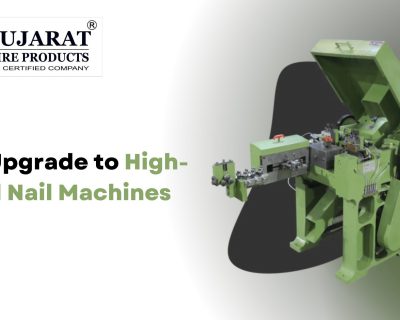
High-speed nail machines produce 400–800 nails per minute continuously across three-shift operations. At 600 nails per minute producing 2-inch nails, a single machine delivers approximately 1,800–2,000 kg per shift. Two such machines running three shifts produce 10+ tonnes daily—output that requires six to eight standard machines to match.
The output advantage compounds for bulk contract supply. A construction contractor placing a 50-tonne monthly order can be served by two high-speed machines rather than six standard ones, halving the capital and floor space required to fulfill the contract.
Product Quality Benefits
Dimensional Stability at High Cycle Rates
High-speed enclosed machines maintain length tolerance within ±0.3mm and head diameter consistency within ±0.2mm across full production runs. Standard machines drift at these tolerances because mechanical play in the drive system accumulates as components heat up through the shift. High-speed machines use precision-ground components and active cooling that stabilize dimensions at elevated cycle rates.
Defect rates below 1 per 100,000 nails are achievable on correctly configured high-speed machines—versus typical defect rates of 0.5–2% on standard equipment. That quality gap matters for pallet manufacturers and pneumatic nailer users where dimensional inconsistency jams automated tools on job sites.
Labor and Staffing Advantages
One Operator, Multiple Machines
A skilled operator manages 8–10 high-speed machines simultaneously because the machines incorporate sensor systems that detect and stop on wire breaks, jam conditions, and dimensional drift without human intervention. Standard machines require more frequent manual monitoring because they lack these automated diagnostic layers.
Labor cost savings per tonne produced run 50–55% compared to standard machine setups at equivalent output volumes. That saving reflects both fewer operators per machine and reduced supervision overhead when machines self-diagnose faults.
Cost and ROI Advantages
Lower Cost Per Nail Across Volume
High-speed production reduces cost per kg through three simultaneous levers: fewer operators per tonne, lower energy consumption per nail due to efficient drive systems, and reduced scrap rates that improve raw material yield. Plants switching from standard to high-speed equipment typically see per-tonne production costs drop 25–35% within the first quarter of consistent operation.
The capital premium for high-speed machines over standard models recovers faster than most buyers expect—not through increased selling price but through the ability to fulfill larger contracts that standard capacity couldn’t serve.
Energy and Efficiency Benefits
Smart Drive Systems Reduce Power Draw
High-speed machines with VFD-controlled motors consume 40–55 kWh per tonne of nails produced, compared to 70–90 kWh for older fixed-speed standard machines. The energy gap grows at higher production volumes—running two high-speed machines at 80% utilization uses less electricity than running five standard machines to produce the same monthly tonnage.
Closed-loop lubrication systems further reduce operating costs by eliminating manual oiling cycles and preventing lubricant waste that inflates consumable costs.
Space and Plant Layout
Maximum Output Per Square Meter
High-speed machine footprints typically measure 1,350mm × 1,050mm—smaller than many standard machines—while producing twice to three times the output. This compact-high-output ratio means a 200 square meter factory floor running eight high-speed machines outproduces a 400 square meter facility running sixteen standard machines.
Multi-machine layouts benefit from this footprint efficiency. Grouping eight to ten high-speed machines in a U-shaped arrangement lets one operator monitor the full bank from a central position, making supervisory coverage practical at scale.
Reliability and Maintenance
Built for Sustained High-Cycle Operation
Enclosed high-speed machine designs contain lubrication within the cutting zone, reducing die wear rates compared to open-frame standard machines where lubrication consistency depends on operator discipline. Tooling life benchmarks show punch pins lasting 50+ tonnes of nail production before replacement, and cutters lasting 20+ tonnes before requiring sharpening.
Seven-sensor alarm systems on current high-speed models detect dimensional drift, wire breaks, overloads, and lubrication failures before they cause mechanical damage. This predictive fault detection reduces unplanned downtime to near zero on well-maintained installations.
Versatility and Business Growth
Serving Multiple Market Segments From One Machine
High-speed machines cover the 1–3 inch wire nail range that accounts for the majority of construction and pallet nail demand. Size changeovers complete in 15–20 minutes through cutter adjustment and die swaps. This flexibility lets a single machine serve framing contractors, pallet manufacturers, and hardware distributors from the same production run schedule.
Export market access expands with high-speed capability. African and Middle Eastern bulk buyers—who often require 20-tonne minimum shipments—specify suppliers with documented production capacity before placing orders. High-speed machines create that capacity credibility.
Safety and Operational Control
Enclosed Design Reduces Operator Exposure
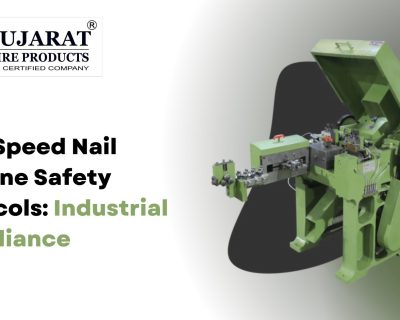
Enclosed high-speed frames contain metal fragments within the cutting zone rather than projecting them into operator space—a design difference that reduces eye and face injury risk compared to open-frame standard machines. Operating noise drops from 85–90 dB on standard machines to 72–78 dB on enclosed high-speed models, moving below the mandatory hearing protection threshold for single-machine operations.
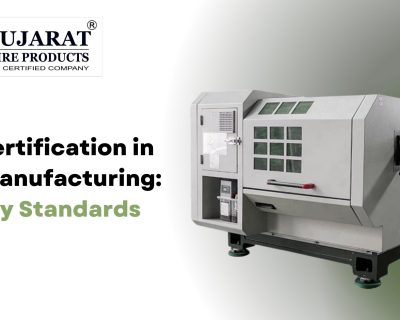
Touch-panel HMI controls and automated fault diagnosis reduce the technical expertise required for daily operation. Operators monitor production quality rather than manually adjusting machine parameters throughout the shift.
FAQs
At what production volume does upgrading to high-speed make economic sense?
Operations producing above 3 tonnes per shift consistently—or facing contract requirements they can’t fulfill with standard equipment—benefit from high-speed machines. Below 1.5 tonnes per shift, standard machines offer adequate capacity at lower capital cost. The transition point depends on your specific nail size mix and contract commitments rather than a fixed volume number.
Do high-speed machines require higher quality wire input?
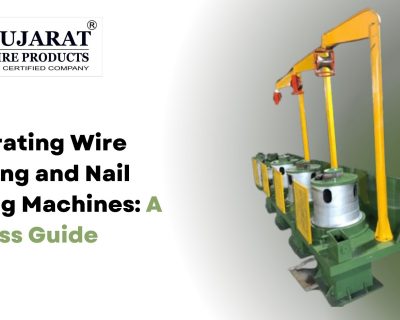
Yes. Diameter consistency within ±0.05mm (tighter than the ±0.1mm acceptable for standard machines) and clean, scale-free surfaces prevent the feed jams that interrupt high-speed cycles and defeat the throughput advantage. Invest in consistent wire sourcing before commissioning a high-speed line.
How does tooling cost compare between high-speed and standard machines?
Per-machine tooling costs run higher for high-speed equipment due to precision-ground components, but per-tonne tooling costs are lower because each die set lasts longer in proportion to output volume. Punch pins producing 50+ tonnes before replacement on high-speed machines compare favorably to standard machine punch pins replaced every 15–20 tonnes.
What floor space and electrical infrastructure does a high-speed machine require?
Plan for 1,350mm × 1,050mm machine footprint plus 1.5 meters clear on three sides for wire loading and maintenance access. Electrical requirement is typically 5.5 kW three-phase supply at 380–440V. Multi-machine installations require electrical load calculations confirming adequate transformer capacity before commissioning.
Can one operator genuinely manage ten high-speed machines simultaneously?
Yes, with proper plant layout and functional sensor systems. The U-shaped multi-machine layout with central operator position is standard for 8–10 machine banks. Sensor alarms that auto-stop machines on fault conditions make this operator ratio safe and practical. Operations without functional sensor systems should not attempt this ratio—faulty nails run undetected without automated quality monitoring.
Conclusion
High-speed nail machines redefine plant economics at every level—output per shift, cost per tonne, operators per machine, and contracts per factory. The advantages stack when production volumes exceed what standard equipment can efficiently serve. Contact our team today for a high-speed machine recommendation matched to your nail sizes and daily output targets.
Gujarat Wire Products has manufactured high-speed nail making machines since 1975, serving production operations across India, Africa, Europe, and Asia. Our ISO 9001:2008 certified high-speed enclosed machines deliver 400+ nails per minute with integrated sensor systems, VFD energy controls, and precision-ground tooling built for three-shift industrial operation. Full commissioning, operator training, and stocked spare parts ship from our Rajkot facility.
Visit gujaratwireproducts.comor contact our engineering team today to discuss your production requirements and receive a high-speed machine specification matched to your nail mix, wire input, and daily volume targets.