Blog
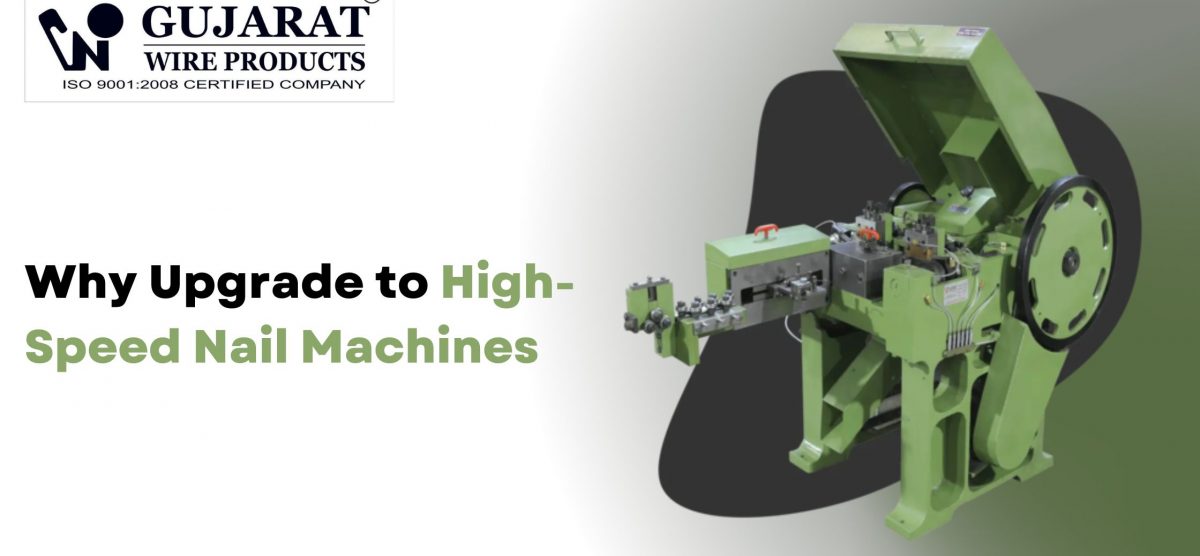
Why Upgrade to High-Speed Nail Machines
Introduction
Most nail plant operators know their current machines are a bottleneck—but they underestimate how wide that bottleneck actually is. A conventional cut-and-head machine running at 300–400 nails per minute doesn’t just produce fewer nails than a high-speed machine. It consumes more labour per ton, generates higher reject rates as speed increases, and ties up floor space that a high-speed line could use to produce three times the output. The contrarian insight most buyers miss: high-speed machines don’t just run faster—they change the entire cost structure of a nail line by compressing labour, floor space, and per-unit energy consumption simultaneously. The upgrade decision is rarely about speed alone. It’s about whether your current setup can serve the volume and quality demands your customers now place on you. This guide covers what high-speed machines actually are, where the gains show up in real production, the features that justify the investment, and the four operational triggers that signal the upgrade is overdue.
What High-Speed Machines Are
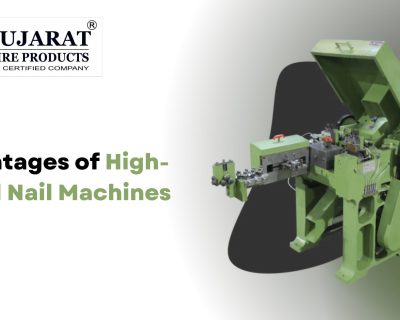
Conventional nail machines use a reciprocating cut-and-hammer cycle—one punch stroke per nail. High-speed machines use rotary forming principles that allow continuous material flow without the deceleration-and-reversal motion that limits conventional designs. This architectural difference, not just motor power, determines why high-speed machines reach 800 to 2,500 nails per minute while maintaining dimensional consistency that reciprocating machines cannot sustain at equivalent speeds.
These machines suit large-scale wire nail production, export-grade quality lines, and automated in-line setups where downstream polishing, weighing, and packing equipment must keep pace with forming output.
Production Gains
Sustained Output Across Full Shifts
Rated speed on a high-speed machine reflects real production conditions—not laboratory optimums. The rotary forming process generates lower peak mechanical stress per cycle than reciprocating designs, which means components maintain alignment and timing consistency across 16-hour shifts without the gradual drift that characterises conventional machines under sustained load.
High-speed lines also require significantly less floor space per unit of output. A single high-speed machine producing 1,200 nails per minute occupies roughly the same footprint as two conventional machines producing a combined 700 nails per minute—while requiring fewer power connection points and less operator access clearance.
Quality and Precision Gains
Dimensional consistency improves because rotary forming applies uniform force through continuous motion rather than impact-and-release cycles. Head centering tolerances hold within ±0.1mm across full production batches. Length variation stays below ±0.3mm on properly calibrated high-speed machines versus ±0.5–0.8mm on worn conventional equipment running at production speed.
Smart sensor systems on advanced high-speed models monitor wire tension, head formation, and output dimensions in real time. These systems flag deviation before reject rates climb—catching a die alignment drift of 0.05mm before it produces 10,000 off-spec nails rather than after.
Labour and Operating Gains
One skilled operator can supervise two to three high-speed machines simultaneously. Conventional machines requiring frequent jam clearing, manual tension adjustment, and visual quality checks typically need dedicated operator attention per machine. At 30 tons monthly production, this ratio difference reduces direct labour costs per ton by 50–60%.
Operating interfaces on modern high-speed machines use digital controls with parameter storage for each nail specification. Changeovers between sizes load saved settings rather than requiring manual recalibration from scratch—reducing size-change time from 45–60 minutes to 15–20 minutes on machines with stored parameter sets.
Features That Justify the Upgrade
High-speed machines include engineering that conventional models cannot match:
- PLC control with AC variable frequency drives for real-time speed adjustment and motor protection
- Automatic lubrication pumps eliminating manual greasing dependency that causes 60–70% of bearing failures on conventional machines
- Multi-point fault detection: wire break, overload, low oil, and die jam sensors stop the machine before damage propagates
- Enclosed cast frame construction holding 80–88 dB noise levels versus 90–100 dB on open-frame conventional machines
- Dual punch die structures on advanced models doubling effective output without increasing machine footprint
Where the Payoff Shows Up
The production gains from upgrading concentrate in four measurable areas:
- Daily tonnage per square metre: Higher output from smaller footprint compresses facility cost per ton
- Downtime reduction: Fault alarms and monitoring cut unplanned stoppages by 60–70% versus reactive maintenance on conventional machines
- Changeover efficiency: Stored parameter sets reduce size-change time when serving customers with varied nail specifications
- Operator utilisation: Multi-machine supervision converts labour cost from a per-machine fixed expense into a scalable variable
When to Upgrade
Four operational patterns signal the upgrade timing has arrived:
- Output ceiling hit: Current machines cannot increase daily tonnage without adding more machines and proportionally more operators and floor space
- Reject rates climbing: Conventional machines running above 70% of rated speed show reject rate increases above 3–5% as timing drift and die wear compound
- Labour pressure: When operator headcount per ton cannot decrease further without compromising quality on current equipment
- Shift planning disruption: Maintenance cycles, noise levels, or reliability issues force scheduling workarounds that limit production flexibility
A fifth trigger most operations miss: when customer specifications tighten—tighter length tolerances, smoother surface finish, or consistent head geometry—conventional machines often cannot meet new requirements at production speed regardless of maintenance investment.
FAQs
How much faster are high-speed machines than conventional models?
High-speed machines produce 800 to 2,500 nails per minute depending on model and nail size. Conventional reciprocating machines peak at 300–500 nails per minute under ideal conditions. The practical output gap widens further during extended shifts as conventional machine timing drifts while high-speed rotary designs maintain consistency.
Do high-speed machines require more operators or fewer?
Fewer—typically one operator per two to three machines. Digital controls, automatic lubrication, and fault detection reduce the manual intervention that conventional machines demand. Operator skill requirements shift from mechanical adjustment to monitoring and quality verification.
What safety features matter most in upgraded machines?
Enclosed frames preventing contact with high-speed moving components, multi-point emergency stops accessible from all sides, and automatic shutdown on fault conditions are the three most critical features. Noise reduction below 85 dB also matters for shift duration and hearing protection compliance in plants running 16-hour operations.
Can one high-speed machine support an automated production line?
Yes—when output speed matches downstream polishing drum, weighing station, and packing line capacity. Line integration planning must confirm that all downstream equipment handles the peak output of the high-speed machine without creating bottlenecks that negate the forming speed advantage.
Conclusion
Upgrading to high-speed nail machines changes the economics of a nail plant across output, labour, quality, and floor space simultaneously. The decision point isn’t whether faster machines are better—it’s whether your current production ceiling is costing you more than the upgrade investment to break through it.
Gujarat Wire Products engineers high-speed nail machines built for Indian production conditions: variable power supply, extended shifts, and diverse nail portfolios. Our machines deliver the sustained output rates, fault detection systems, and operator-friendly controls that make high-speed production practical rather than theoretical. Ready to calculate what an upgrade changes in your operation? Visit gujaratwireproducts.com and share your current output, nail range, and shift structure for a direct comparison and machine recommendation from our engineering team.