Blog
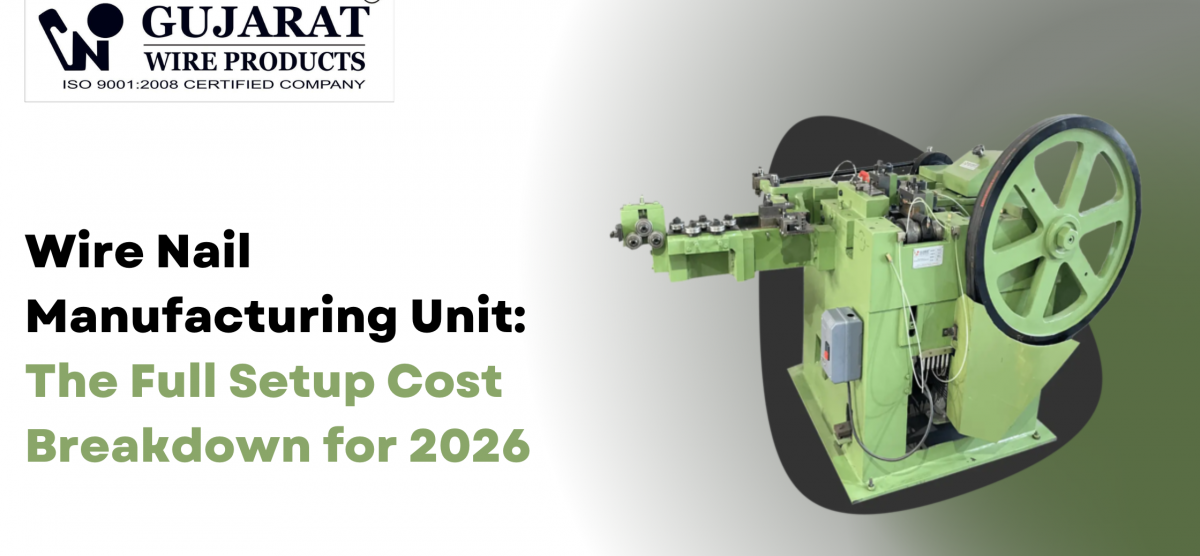
Wire Nail Manufacturing Unit: The Full Setup Cost Breakdown for 2026
Most people who look into a wire nail unit come away with a number that is four years out of date. They read that wire costs ₹32 a kilo, that nails sell for ₹45, and that the gap is profit. Then they buy a machine and find the maths does not hold. This guide gives you the current cost of every part of a nail unit — machinery, wire, shed, power, licences, people — and shows you where the published figures go wrong. We build these machines, so the numbers come from what our customers actually spend.
What a Wire Nail Unit Is Made Of
Strip away the jargon, and a nail unit has five cost heads. Get all five right and the business works. Get one badly wrong, and it does not.
- Machinery — the nail-making machine, plus a polishing barrel, a cutter grinder, and wire stands.
- Raw material — HB wire, bought by the tonne, drawn down from steel wire rod.
- Premises — a covered shed with a hard floor, three-phase power, and room to stack.
- Compliance — Udyam registration, GST, state pollution board consent, trade licence.
- Working capital — enough to hold wire and finished stock for 30 to 45 days.
The last one is where new units get caught. They budget for the machine and forget that nails are heavy, slow-moving and paid for late.
Machinery Cost and What Changes the Price
A single automatic nail-making machine is the anchor purchase. Market rates in 2026 sit roughly like this:
| Setup | Machines | Typical outlay |
| Single-machine unit | 1 nail machine + polishing drum + grinder | ₹4–6 lakh |
| Small plant | 2–3 nail machines, shared finishing | ₹8–14 lakh |
| Integrated line | Wire drawing + 3–5 nail machines | ₹18–30 lakh+ |
Three things move the price inside those bands.
Nail Size Range
A machine rated for ½” to 2″ nails runs a smaller motor and costs less than one rated to 4″ or 6″. Buying narrow to save two lakh is the most common early mistake, because the larger sizes carry the better margin.
Speed
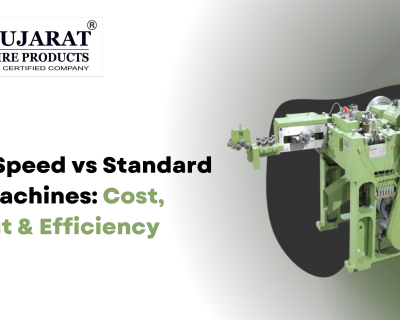
Standard machines run around 250 to 300 nails a minute. High-speed machines push well past that. The extra output is not linear with price, which is why the second machine most owners buy is a high-speed one.
Whether You Draw Your Own Wire
Buying HB wire ready-drawn is simpler. Drawing it yourself adds a wire drawing machine to the bill but takes a middleman out of every tonne you consume. At sustained volume, that single decision moves margin more than anything else on this list.
Raw Material: Where the Old Numbers Break
Here is the uncomfortable part. Almost every guide on this subject quotes a wire at ₹30,000 to ₹35,000 a tonne and a selling price of ₹45 to ₹50 a kilo. Those figures were roughly right several years ago.
In August 2026, mill-level steel wire rod trades around ₹42,000 to ₹43,000 a tonne, and retail wire rod sits between ₹52 and ₹58 a kilo depending on grade and city. HB wire, already drawn, sits above the rod.
Run the old model against today’s input cost, and the ₹10–15 per kilo margin those guides promise becomes much thinner. That does not mean the business fails. It means the assumptions have to be rebuilt from current rates, and it means wastage and uptime matter far more than they used to.
Two practical consequences:
- Buy wire against firm orders where you can. Holding a large stock in a volatile steel market is a bet, not an efficiency.
- Track your yield per tonne from day one. A unit losing four per cent of every tonne to cropping, jamming, and rejects gives away most of its margin without you seeing it.
Space and Power Requirements
A single-machine unit runs comfortably in 400 to 600 square feet. Two or three machines with a finishing area and stock space want 1,000 to 1,500 square feet. Anything larger, plan for 2,000 and up.
Do not take the smallest shed that fits the machine. Nails need room to move: wire coils in, drums turn, sacks stack, and a cramped floor slows everything.
On power, a single automatic machine draws around 3 to 5 HP; add a polishing drum and grinder, and you want a stable three-phase connection. Two points people miss:
- Voltage stability matters more than headroom. Fluctuation eats motors and throws off the header.
- Load-shedding kills unit economics quickly, because a nail machine earns only while it is running. Cost a generator into the plan if your supply is unreliable.
Manpower
A single-machine unit runs on two people — one operator, one for finishing, packing, and loading. You need one more person as you run two machines, and you need somebody selling.
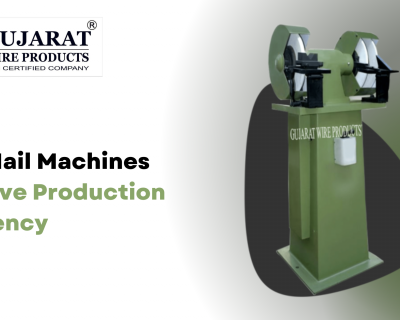
The skill that pays for itself is grinding. An operator who keeps the cutter ground to the right angle produces clean points and fewer rejects. One who does not will quietly hand back your margin in scrap.
Licences and Registration
Nothing here is difficult. Budget a few weeks, not a few months.
- Udyam (MSME) registration — free, online, and the gateway to most subsidised credit schemes.
- GST registration — mandatory for selling to dealers and hardware distributors.
- State pollution control board consent — nail units generate noise and metal dust, so consent to establish and operate is required in most states.
- Shop and establishment/trade licence — from your local authority.
- Trademark — optional, worth doing if you plan to brand your sacks.
What Actually Decides Whether You Make Money
Setup cost is the number everyone asks about. It is not the number that determines the outcome. Four things do.
Machine Uptime
A nail machine earns per running minute. A unit at 60% uptime and a unit at 85% uptime have identical setup costs and completely different P&Ls.
Die and Punch Life
Gripping dies and header punches wear. Run them past their life, and nail quality falls before the machine ever stops — bent shanks, poor heads, more rejects. Replacing them on schedule is cheaper than running them into the ground.
Wire Wastage Per Tonne
Measure it. Most first-year units do not, and most first-year units lose more than they think.
Who You Sell To
Nails are heavy and low-value per kilo, which caps how far you can profitably ship. A unit with two reliable regional dealers beats a unit chasing distant orders on price.
How to Size Your First Unit
Start with demand, not with capacity. Find out what your nearest dealers actually move each month, in which sizes, and at what rate.
- One machine is right if you have no committed off-take yet and want to learn the process on real orders.
- Two to three machines make sense if you already have a dealer relationship and can keep them fed.
- An integrated line is a second-stage decision, taken once you know your monthly tonnage — not a starting point.
The common error runs the other way. People buy capacity first, then look for demand, and pay interest on idle machines while they find it.
FAQs
How much money do I need to start a wire nail unit? A workable single-machine unit lands between ₹6 and ₹9 lakh all-in for 2026 — roughly ₹4–6 lakh of machinery, plus deposits, electrification, licences and working capital. Machinery alone is not the budget.
Can I run a nail machine on single-phase power? No. An automatic nail-making machine and its finishing equipment need a stable three-phase supply. Plan the connection before the machine arrives.
Should I buy a used nail-making machine? Only after inspecting die seats, header alignment, and gearbox play. A cheap machine with worn tooling produces rejects from day one, and the tooling costs more to replace than you saved.
Do I need my own wire drawing machine? Not at the start. Buy drawn HB wire while you establish volume. Once you are consuming steadily, drawing your own wire is usually the single largest margin improvement available to you.
How long before the unit pays back? Depends almost entirely on uptime and offtake, not on setup cost. Units that run consistently and sell locally recover machinery cost within one to two years; units that run intermittently take much longer.
Conclusion
Build your plan on today’s wire rate, not the numbers circulating from four years ago. Size the unit to demand you can name it. Then protect margin with uptime, tooling discipline and measured wastage.
If you are working out what your unit will cost, tell us the nail sizes and monthly tonnage you are aiming at, and we will send you a specification and price for the right machine — not a bigger one.
About Gujarat Wire Products
We have built wire nail-making machines, wire-drawing machines, grinders, and tooling in Rajkot since 1975 and supplied them to nail units across India and overseas. Fifty-one years of installations means we have watched a lot of first units succeed and a few fail, and we would rather tell you which one you are planning.
Talk to us before you buy. Send us your target nail sizes and monthly output, and we will tell you exactly what machine you need — and what it costs.