Blog
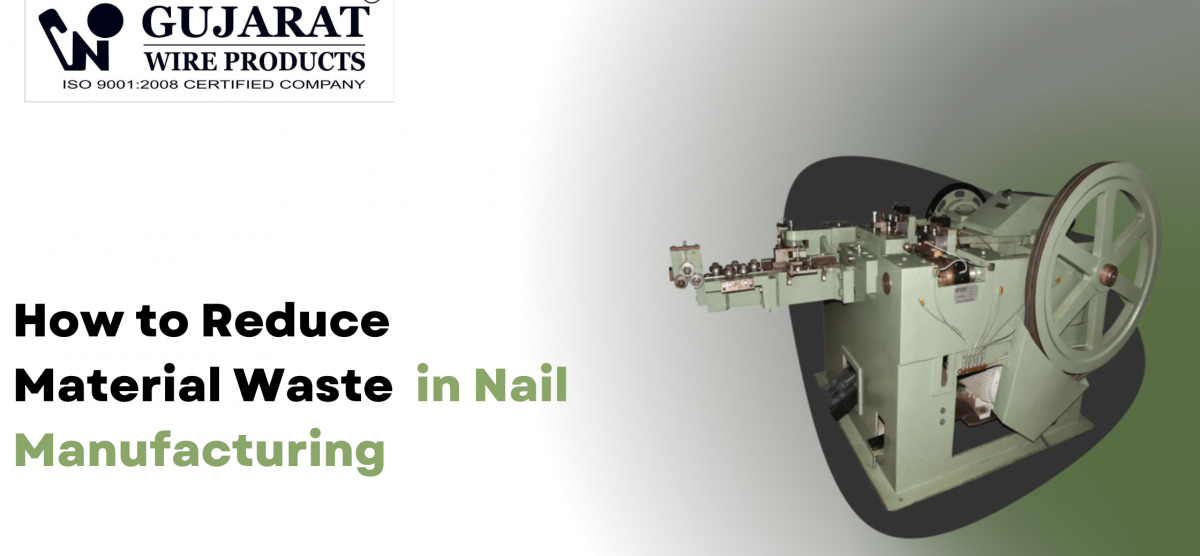
How to Reduce Material Waste in Nail Manufacturing
Wire rod is the single largest cost in nail production—often 70–75% of total manufacturing expense—which means every percentage point of scrap directly erodes margin before you’ve sold a single nail. Most producers accept a certain scrap rate as normal without ever measuring where it actually originates: a worn cutter here, an inconsistent wire coil there, a changeover that generates twenty trial pieces before the first good nail comes off the line. The uncomfortable truth is that most nail manufacturing waste isn’t one big problem—it’s a dozen small, fixable leaks scattered across the process, and none of them show up clearly until you map the full production chain and measure each stage separately. This guide walks through where waste actually originates in nail manufacturing, how to reduce it at each production stage, and how to recover value from the scrap you can’t eliminate. Work through this systematically and you’ll cut material cost without touching your selling price.
Types of waste in nail manufacturing
Before fixing waste, identify what kind you’re dealing with. Nail production generates several distinct waste streams:
- Wire-end offcuts: Trimming losses at coil joins and setup
- Drawing breaks: Rejected wire from tension failures during drawing
- Defective nail blanks: Heads, points, or shanks that fail spec
- Tip scrap: Metal splinters generated during the cutting and pointing cycle
- Lubricant and polishing media: Consumed material that needs proper disposal or reuse
- Excess inventory: Wire or packaging purchased ahead of confirmed demand
Each category needs a different fix. Treating them as one undifferentiated scrap problem is why most cost-reduction efforts stall.
Map your complete production process
Waste hides at handoff points between stages, not usually within a single machine’s operation. Trace material flow through: wire rod preparation, drawing, feeding and straightening, heading and cutting, collection, polishing, inspection, and packaging.
Walk your own line stage by stage and note where material visibly changes hands—operator to machine, machine to bin, bin to next station. Waste accumulates fastest at these transitions because nobody owns the loss.
Improve raw material selection
Control incoming wire quality
Wire rod problems compound downstream faster than any other waste source. Check every incoming batch for:
- Correct grade and chemical composition (carbon content under 0.12% for standard heading)
- Diameter tolerance within ±0.05mm
- Clean, scale-free surface condition
- Proper coil winding and dry storage
A single coil with diameter drift can generate hours of downstream feeding jams before anyone traces the cause back to the wire itself.
Reduce purchasing waste
Qualify suppliers on documented material certificates, not just price. Use first-in-first-out coil rotation, and buy wire against confirmed production orders rather than speculative stock—oxidized wire sitting too long in inventory becomes scrap before it ever reaches the machine.
Reduce waste during wire drawing
Drawing-stage waste often gets blamed on the nail machine when the real cause sits upstream.
- Descale and point the rod correctly before the first pass
- Plan die reduction in controlled 15–20% steps per pass
- Apply drawing lubricant consistently to reduce friction-driven breaks
- Control tension and speed to prevent snap-offs mid-coil
- Inspect and replace worn dies before they cause diameter drift
- Match drawing output to actual nail machine consumption—overproducing wire just creates inventory that sits and oxidizes
Improve nail machine material efficiency
Fix feeding and straightening first
Coil set left uncorrected by straightening rollers causes length variation at the forming stage. Set roller gap to 0.1–0.2mm above wire diameter and check tension on the uncoiler regularly—inconsistent unwind tension is a frequently overlooked source of feeding-related scrap.
Reduce cutting and forming defects at the source
Most defective nail blanks trace to one of three causes:
- Dull cutting knives producing barbed or asymmetric points
- Worn heading dies causing off-centre or cracked heads
- Wrong wire diameter for the target nail size
Fixing tooling condition before it visibly affects output prevents entire batches from needing rework.
Separate tip scrap at the source
Metal splinters generated during pointing shouldn’t mix with finished nails. Machines with built-in scrap separation reduce cleaning time downstream and produce cleaner steel scrap that recyclers pay more for—dirty mixed scrap is worth significantly less per kilogram than sorted clean scrap.
Reduce changeover waste
Every product changeover generates trial pieces before output stabilizes. Cut this loss by:
- Using standardized setup sheets recording proven settings for each nail size
- Pre-staging dies, cutters, and gauges before the changeover starts
- Batching similar nail sizes together to minimize the number of changeovers per shift
- Logging changeover time and trial-piece count to identify which transitions waste the most material
Use automation to catch defects early
Sensor-based systems flag defects before they accumulate into a full rejected batch. Automatic defect detection removes flawed nails from the line immediately, while PLC-stored parameters eliminate the guesswork that causes changeover scrap.
The contrarian insight here: manufacturers who install basic defect-detection sensors often discover their acceptable scrap rate was actually masking a specific, fixable machine fault—not random process variation. Data reveals patterns that visual inspection alone consistently misses.
Maintain equipment on a fixed schedule
Daily checks
Clean the wire path and cutting zone, verify lubrication delivery, and pull sample nails to check for dimensional drift before it becomes a full batch problem.
Weekly checks
Inspect cutter and die sharpness, clear accumulated debris, and review scrap records by shift to spot emerging trends.
Monthly checks
Verify forming alignment, calibrate sensors, and update your preventive maintenance schedule based on what the data actually shows—not a fixed calendar assumption.
Recover value from unavoidable scrap
Some waste can’t be eliminated—but it can be recovered.
- Separate clean steel scrap from contaminated waste at the point of generation
- Recycle nail blanks, offcuts, and rejected finished nails through metal recyclers
- Recover tip scrap for resale rather than discarding it with general waste
- Track used polishing media and lubricant for proper disposal or reuse
Clean, sorted scrap can recover 60–80% of raw material value versus mixed, contaminated scrap—the sorting effort pays for itself quickly.
Measure waste to keep improving
You can’t reduce what you don’t measure. Track these metrics by machine, shift, and wire batch:
- Scrap percentage at each production stage
- Material yield per tonne of wire rod input
- Wire-break frequency during drawing
- Defective nails per machine-hour
- Recovered scrap value versus total scrap generated
Review this data monthly and address the largest single source first—chasing every small waste stream simultaneously dilutes effort without moving the total number.
FAQs
What’s typically the largest source of material waste in nail manufacturing?
Wire drawing breaks and diameter inconsistency usually account for the largest recoverable waste, because they cascade into feeding jams, defective heads, and rejected batches downstream. Fixing wire quality control at the source addresses more waste than any single downstream intervention.
How much does cutter sharpness actually affect scrap rate?
Significantly—a cutter running past its sharpening interval produces progressively more barbed and asymmetric points, and this defect rate accelerates rather than staying constant. Regular grinding on a fixed schedule (every 8–12 hours on continuous production) prevents this compounding effect.
Can nail production scrap actually be recycled profitably?
Yes, provided it’s kept clean and sorted. Mixed scrap contaminated with oil, polishing media, or non-ferrous material sells for considerably less than clean, sorted steel scrap. The sorting infrastructure cost is usually recovered within months through better scrap pricing.
Does automation eliminate the need for manual quality checks?
No. Automated defect detection catches obvious dimensional and visual faults in real time, but manual sampling still catches subtler issues—surface marks, coating adhesion problems, packaging errors—that sensors aren’t configured to detect. The two approaches work together, not as replacements for each other.
Reduce waste as a system, not a single fix
Material waste in nail manufacturing rarely comes from one obvious source—it accumulates across wire selection, drawing control, tooling condition, changeover discipline, and maintenance consistency. Fixing all of these together, and measuring the results, is what actually moves your yield numbers rather than a single equipment upgrade in isolation.
Gujarat Wire Products manufactures wire drawing and nail making equipment engineered for yield control—matched machine capacities, tooling guidance, and automation options that catch defects before they become batch-level waste. Our technical team helps you assess your current scrap sources and recommend the specific equipment or process changes that address them.
Ready to reduce material waste on your nail production line? Visit gujaratwireproducts.com or contact our team for a production yield assessment and equipment recommendation matched to your current output and waste patterns.