Blog
Troubleshooting Nail Grinders & Tools: Maintenance Guide
Introduction
Most grinding tool failures in nail production environments are not mechanical surprises—they are the predictable outcome of skipped daily checks and delayed component replacement. Grinding stones glaze over, bearings run dry, and motor vents pack with metal dust while operators keep production running until the tool stops completely. The uncomfortable pattern: reactive maintenance on grinders costs three to four times more than scheduled upkeep, because a seized bearing takes the surrounding spindle assembly with it. For nail manufacturing plants where grinders shape cutting edges, sharpen dies, and finish wire points, unplanned tool downtime halts upstream production within hours. This guide covers grinder types and their wear patterns, daily and weekly maintenance routines, systematic troubleshooting by symptom, and the safety discipline that prevents the majority of tool failures before they occur.
Grinder Types and Components
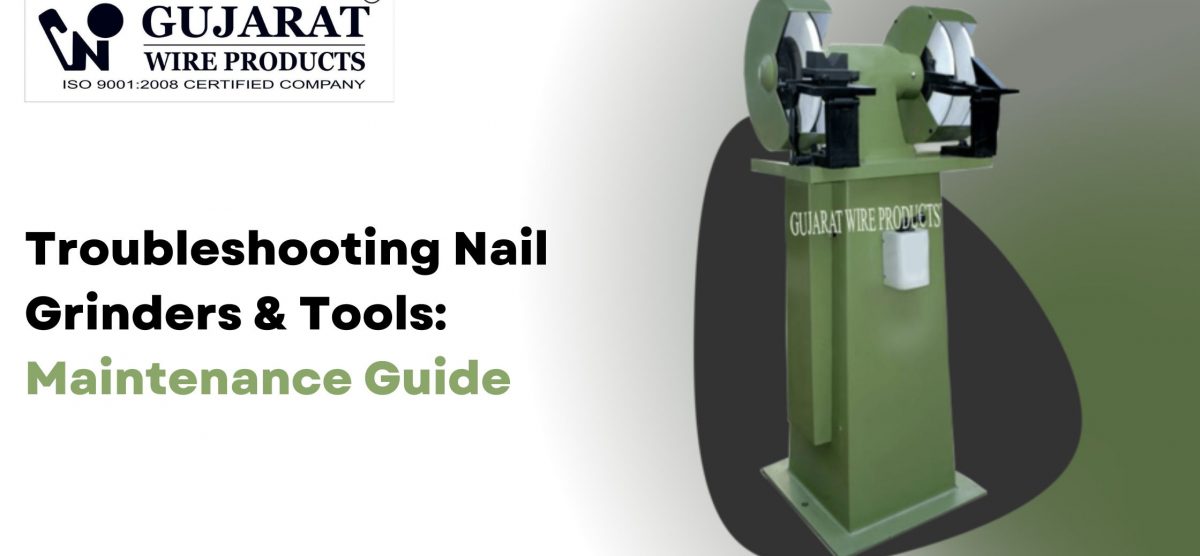
Nail production environments use two primary grinder configurations:
- Bench and pedestal grinders: Fixed units used for sharpening cutting dies, pointing tools, and dressing worn edges; typically fitted with aluminium oxide or silicon carbide wheels
- Angle grinders: Handheld units used for surface dressing, deburring, and component grinding during setup and maintenance
- Electric nail files and finishing tools: Precision rotating tools used for fine surface work on nail heads and tooling components
Key wear components across all types include grinding wheels or stones, motor brushes, spindle bearings, collet chucks, and ventilation filters. Each component has a distinct failure mode and replacement interval that planned maintenance addresses before failure occurs.
Daily Maintenance Routines
Ten minutes daily prevents the majority of tool failures:
- Remove metal dust from housing vents, wheel guards, and grinding surfaces using compressed air or a soft brush—accumulated dust blocks cooling airflow and causes motor overheating
- Check grinding wheel surface for glazing: a shiny, smooth wheel face has stopped cutting efficiently and needs dressing before next use
- Inspect all fasteners, wheel flanges, and guard positions for looseness caused by vibration
- Verify lubrication points on spindle bearings and adjustable tool rests—dry bearings generate heat that destroys races within hours of running
- Run tools briefly and listen for new vibration, grinding noise, or speed irregularity before committing to production use
Weekly and Monthly Checks
Weekly Inspection Tasks
- Dress grinding wheels using a diamond dresser to restore flat, true cutting surfaces and remove glazed layers
- Check belt tension on belt-driven models—slack belts slip under load and cause inconsistent wheel speed
- Inspect grinding wheel for cracks by tapping it with a wooden handle; a dull thud instead of a clear ring indicates internal cracking requiring immediate replacement
- Verify guard clearances between wheel and tool rest: maximum 3mm gap prevents workpiece jamming
Monthly Component Review
- Replace motor brushes on corded angle grinders when worn to 6mm or less—running beyond this causes arcing that damages commutators
- Inspect spindle bearings for play and heat; replace at first signs of roughness rather than waiting for noise-level failures
- Clean and repack grease-lubricated bearings where the design permits
- Review coolant filter condition on wet grinding systems and replace saturated elements
Common Troubleshooting by Symptom
Grinding Performance Issues
- Burnt or discoloured workpiece surfaces indicate wheel glazing, excessive feed pressure, or inadequate coolant flow. Dress the wheel first; if burning continues, reduce feed rate and increase coolant delivery.
- Chatter marks and vibration patterns on finished surfaces point to wheel imbalance or loose spindle bearings. Balance the wheel, check flange seating, and inspect bearing play before resuming production grinding.
- Uneven or rough finish typically results from wheel loading—metal particles filling the abrasive pores. Dress the wheel and verify that the abrasive grade matches the material being ground.
Motor and Power Problems
- Motor overheating traces to blocked ventilation in 80% of cases. Clear dust from all vents and run the tool unloaded for two minutes to verify temperature returns to normal.
- Failure to start indicates power supply issues, worn brushes, or tripped safety interlocks. Check power connections first, then brush condition; inspect thermal cutout reset positions before electrical components.
- Reduced running speed under load signals bearing wear or lubrication failure causing drag. Do not continue grinding—bearing failure under load causes wheel mounting stress that can release wheel fragments.
Tool-Specific Faults
Electric nail files and precision grinding tools develop bit wobble from worn collet chucks or bent shanks. Replace the collet before replacing the bit—a worn chuck damages new bits within minutes. Manual nippers and clippers with misaligned cutting edges require professional sharpening or pivot replacement; forcing misaligned cutters accelerates jaw distortion.
Safety During Maintenance
Every maintenance task begins with the same first step: isolate power completely before touching any moving component. Lockout-tagout procedures prevent accidental restart during inspection or component replacement.
Mandatory safety practices during grinding tool maintenance:
- Wear face shield and gloves when changing or dressing wheels—wheel fragments travel at high velocity
- Never use a grinding wheel beyond its rated RPM—overspeed causes catastrophic wheel failure
- Store wheels in dry, protected conditions; moisture weakens bonding agents and reduces burst resistance
- Test replacement wheels at operating speed for 60 seconds with the guard in place before applying workpiece contact
Maintenance Checklists
Daily 10-minute routine:
- Clear dust from vents and guards
- Check wheel surface condition
- Verify lubrication points
- Listen and feel for new vibration on startup
Weekly inspection:
- Dress grinding wheels
- Check belt tension and fasteners
- Inspect wheel integrity
- Verify guard clearances
Replacement schedule by component:
- Grinding wheels: dress at first glazing; replace when worn to manufacturer minimum diameter
- Motor brushes: replace at 6mm length or 500 operating hours
- Spindle bearings: replace at first roughness, typically 2,000–3,000 operating hours on continuous-duty tools
FAQs
How often should grinding stones and bits be replaced?
Dress grinding wheels at first signs of glazing—typically every 8–12 operating hours depending on material and feed rate. Replace wheels when worn to the minimum diameter marked on the flange, or immediately if cracking is detected. Precision bits on electric files should be replaced when they show visible wear on the cutting edges or cause surface burning.
What causes most industrial grinder failures?
Dust accumulation blocking motor cooling vents accounts for the largest share of failures, followed by missed lubrication on spindle bearings. Both are preventable with the daily 10-minute routine. Wheel imbalance from improper mounting or uneven wear causes the next largest category of failures—vibration-related bearing damage that operators often attribute to normal wear.
How do maintenance approaches differ between manual and electric tools?
Manual tools—nippers, clippers, and files—require edge sharpening and pivot lubrication rather than motor or electrical maintenance. Electric tools need motor brush inspection, ventilation cleaning, and bearing checks that manual tools do not. Both categories share the requirement for proper storage away from moisture and metal dust contamination.
How often should lubrication be applied to grinding tool bearings?
Sealed bearings in most angle grinders and bench grinders do not require added lubrication—replacement is the correct response when they fail. Open bearing designs on older or heavy-duty equipment need greasing every 200–300 operating hours or at monthly intervals in continuous-duty production environments.
Conclusion
Grinding tool reliability depends entirely on maintenance discipline applied consistently—not on tool quality alone. Daily dust removal, weekly wheel dressing, and scheduled bearing inspection prevent the failures that halt production and compound downstream in nail manufacturing lines.
Gujarat Wire Products supports complete nail production line reliability—from wire drawing and nail forming through the grinding and tooling maintenance that keeps cutting components performing to specification. Our technical team provides maintenance guidance, spare tooling recommendations, and service protocols for the equipment our machines depend on. Ready to build a maintenance programme that eliminates unplanned grinding tool failures in your plant? Visit gujaratwireproducts.com and contact our technical team for a tooling assessment and maintenance schedule tailored to your production environment and shift pattern.