Blog
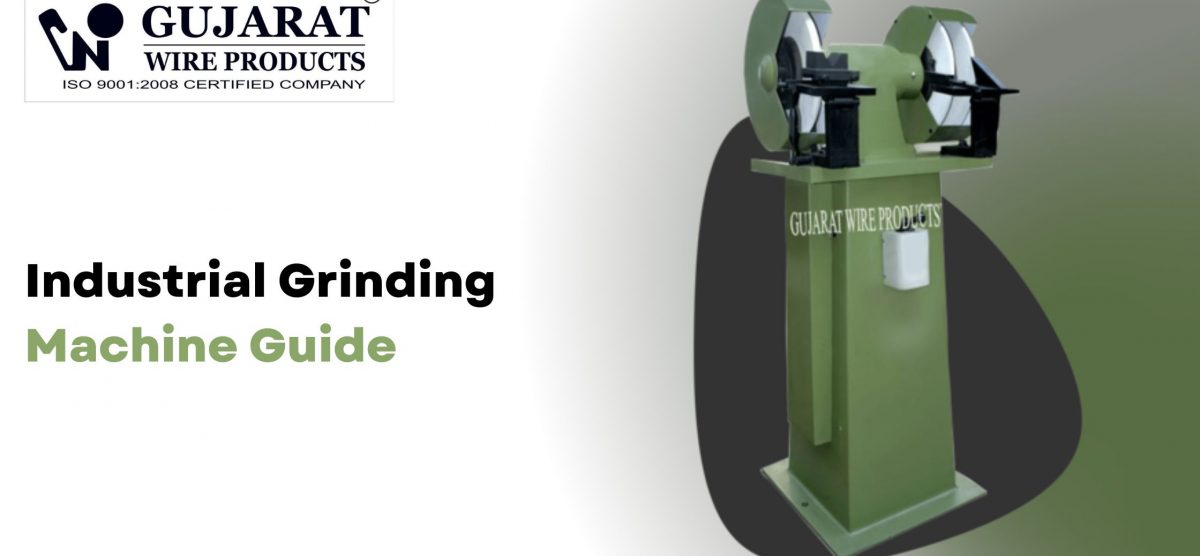
Industrial Grinding Machine Guide
Introduction
Most buyers approach grinding machine selection backwards—they compare motor horsepower and price before defining what their parts actually require. That often leads to machines that perform well in demonstrations but struggle to maintain tolerance once real production volumes, material variation, and extended operating hours come into play.
Grinding occupies a critical stage in the manufacturing process, refining surfaces after milling or turning to achieve the dimensional accuracy and surface finish that primary machining alone cannot deliver.
This guide explains what industrial grinding machines do, the major machine types, their applications, the factors that should drive your purchasing decision, the key specifications worth comparing, and the maintenance practices that keep machines accurate for years.
What Grinding Machines Do
Grinding machines use rotating abrasive wheels to remove small amounts of material while producing highly accurate dimensions and smooth surface finishes.
Grinding is typically the final machining operation, correcting minor dimensional deviations and improving surface quality before components move to assembly or service.
Manufacturers commonly use grinding after milling or turning whenever tighter tolerances and improved surface finishes are required.
Main Machine Types
Industrial grinding machines are designed for different part geometries and production requirements.
- Surface Grinders – Produce flat, smooth surfaces using magnetic chucks and are widely used for tool and die work.
- Cylindrical Grinders – Finish shafts, rods, bushings, bearing races, and other cylindrical components.
- Centerless Grinders – Handle high-volume production of round parts without using traditional workholding.
- Internal Grinders – Finish bores and internal diameters that external grinders cannot access.
- Tool and Cutter Grinders – Sharpen cutting tools, drills, milling cutters, and dies.
- Bench, Belt, Angle, and Die Grinders – Portable or workshop machines used for lighter grinding, finishing, and maintenance tasks.
Selecting the correct machine type based on part geometry is far more important than comparing brands or motor power alone.
Industrial Applications
Grinding machines are widely used across manufacturing industries, including:
- Precision metal finishing
- Tool and die maintenance
- Automotive component manufacturing
- Construction and fabrication
- Machining hardened materials
- High-precision engineering applications
Each application demands different machine capabilities, wheel types, and operating parameters.
How to Choose the Right Grinding Machine
Material and Finish Requirements
Material hardness, abrasiveness, and heat sensitivity determine the appropriate grinding wheel and operating conditions.
The required surface finish and dimensional tolerance will also determine whether a conventional grinder is sufficient or a CNC grinding machine is necessary.
Production Volume and Repeatability
Manual grinders work well for low-volume jobs where flexibility matters more than speed.
Automatic and CNC grinders become more economical when production volume increases and consistent repeatability is required across long production runs.
Part Size and Geometry
The size and shape of the workpiece determine which grinding machine should be used.
- Flat components require surface grinders.
- Cylindrical parts require cylindrical or centerless grinders.
- Internal features require internal grinding machines.
Matching machine design to part geometry is essential for productivity and accuracy.
Power, Speed, and Workholding
Evaluate:
- Motor power
- Spindle speed
- Feed rate
- Torque
- Workholding compatibility
Magnetic chucks, vises, and custom fixtures should all be compatible with the machine before purchase to avoid expensive modifications later.
Service Support and Machine Footprint
After-sales support, spare parts availability, maintenance accessibility, floor space, and power requirements all influence long-term operating costs.
A machine that is easy to maintain often delivers better productivity than one with slightly higher specifications but poor service support.
Key Specifications to Compare
When comparing grinding machines, focus on these specifications:
- Motor power and load capacity
- Grinding wheel type and grit compatibility
- Spindle speed range
- Feed control accuracy
- Repeatability and machining tolerance
- Safety features such as overload protection and wheel guards
Machines that list only horsepower and speed without stating accuracy or repeatability are generally intended for general-purpose work rather than precision manufacturing.
Setup and Maintenance
Proper installation begins with accurate machine alignment and grinding wheel dressing before production starts.
Regular maintenance should include:
- Daily cleaning and inspection
- Wheel dressing
- Wheel balancing
- Bearing inspection
- Lubrication
- Belt tension checks
- Timely grinding wheel replacement
Consistent maintenance prevents vibration, chatter, premature wear, and dimensional inaccuracies.
FAQs
Which grinding machine is best for flat surfaces?
Surface grinders are the standard solution for producing flat, parallel surfaces with high dimensional accuracy.
How do I choose between manual and CNC grinders?
Manual grinders suit low-volume production where flexibility is important. CNC grinders are better suited for high-volume manufacturing that demands repeatability and consistent quality.
Which specifications matter most for hard materials?
Grinding wheel material and grit selection are generally more important than motor power. Diamond and CBN wheels are commonly used for hardened steels and carbide components.
How often should grinding wheels be dressed or replaced?
Dress grinding wheels whenever glazing begins to affect cutting performance. Replace wheels once they reach the manufacturer’s minimum safe diameter or immediately if cracks or other damage are detected.
Conclusion
Selecting the right industrial grinding machine depends on matching machine type with part geometry, material properties, production volume, and required accuracy—not simply comparing horsepower or purchase price.
Making the right choice improves productivity, extends machine life, maintains consistent quality, and lowers long-term manufacturing costs.
Gujarat Wire Products applies precision grinding principles throughout our manufacturing operations to ensure wire drawing dies, nail machine tooling, and production components meet demanding industrial standards.
Contact our technical team to discuss the most suitable grinding solution for your materials, production volume, and machining requirements.