Blog
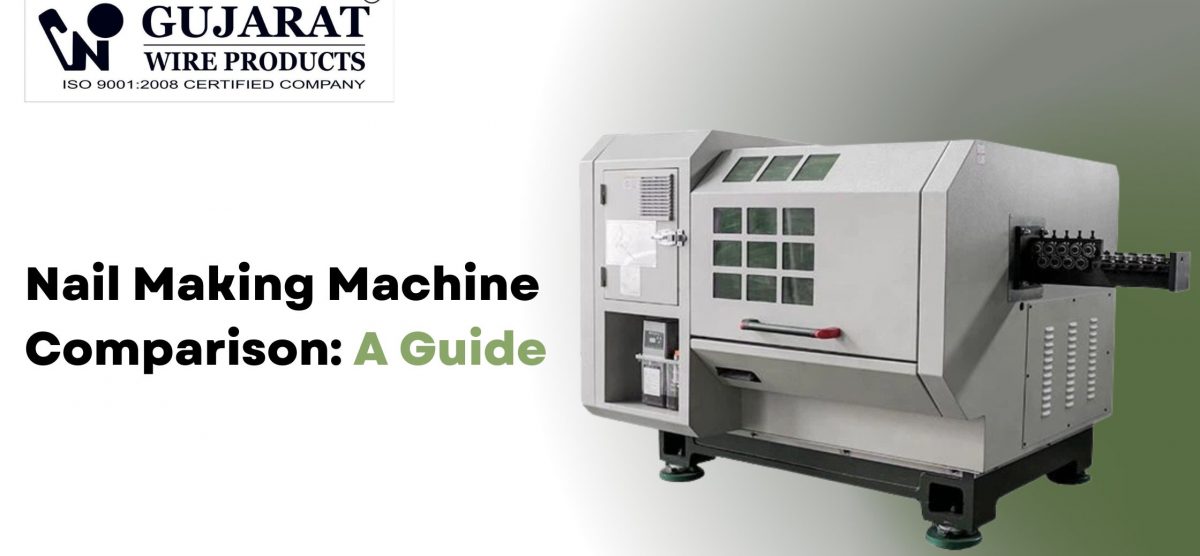
Nail Making Machine Comparison: A Guide
Introduction
Comparing nail making machines by price alone is the single most consistent buying mistake in this category. Buyers who select on upfront cost discover within the first year that die consumption, unplanned downtime, and changeover losses have made the “cheaper” machine significantly more expensive per ton of finished nails than a better-specified alternative. The less obvious pattern: high rated speeds on catalog sheets routinely overstate practical output by 25–40% once real nail sizes, wire grades, and shift conditions are applied. Effective comparison requires evaluating process fit, lifecycle cost, and integration capability—not just motor power and peak cycle rate. This guide covers the four main machine types and how they differ, the specifications that actually separate performance levels, the feature gaps that determine maintenance and operating costs, and a structured selection framework that prevents the mismatches most buyers only discover after commissioning.
Machine Types Overview
Four distinct machine categories serve industrial nail production, each built around different forming requirements and output targets:
- Common-type automatic machines: 200–450 nails per minute on standard mild steel wire; lower equipment cost; wide availability of spare parts; suited for workshops and mid-volume operations producing construction and packaging nails
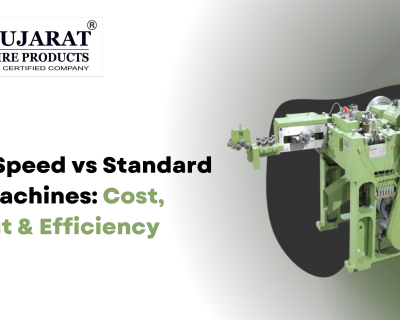
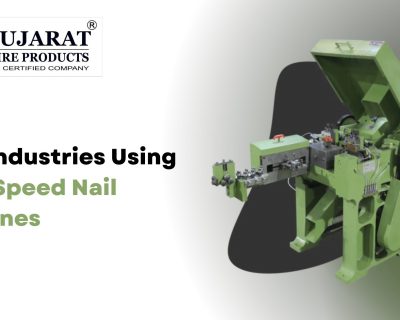
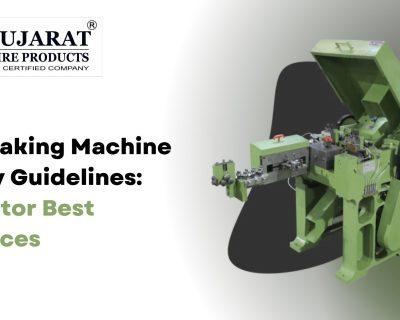
- High-speed automatic machines: 600–1,500 nails per minute; precision cam systems and servo drives; higher frame rigidity for continuous 24/7 duty; suited for large-volume commercial production and export-grade quality requirements
- Fully automatic integrated lines: Wire drawing, nail forming, polishing, and packing in a single controlled system; eliminates inter-process handling losses; best suited for operations targeting end-to-end efficiency at scale
- Specialty machines: Concrete nail, roofing, coil, and umbrella head configurations with application-specific heading force and die geometry
Choosing the wrong category—most commonly buying a common-type machine for high-speed continuous production targets—creates a performance ceiling that tooling upgrades and maintenance cannot overcome.
Key Specifications Compared
Production Capacity and Speed
Rated speed applies at optimal conditions: mid-range wire diameter, mid-range nail length, clean wire, and freshly calibrated tooling. Practical output drops by 25–40% from rated figures in sustained production. A machine rated at 450 nails per minute on 2-inch nails at 2.5mm wire typically delivers 260–320 nails per minute on 4-inch nails at 4mm wire. Always request speed data for your specific nail sizes from the manufacturer—not the catalog maximum.
Wire Diameter and Nail Length Range
Standard machines cover 0.9mm to 6.0mm wire diameter and 6mm to 150mm nail length, but individual models operate optimally within narrower sub-ranges. Running at the absolute limits of a model’s stated range—thinnest wire or longest nail—drops usable output by 25–35% and accelerates tooling wear. Changeover time between nail sizes ranges from 15 minutes on quick-change die systems to 60+ minutes on standard configurations—a real throughput differentiator for operations producing multiple sizes daily.
Power, Dimensions, and Build Quality
Motor ratings span 1.5kW to 10kW depending on machine category and heading force requirements. Verify voltage compatibility with your plant supply—415V three-phase 50Hz for Indian installations. Frame construction separates performance tiers more than motor power does: cast iron frames on high-speed machines absorb sustained impact loading without alignment drift; fabricated steel frames on entry-level machines develop dimensional inconsistency within the first 18 months of hard use.
Feature Comparison
Automation, Safety, and Fault Management
| Feature | Common-Type | High-Speed Automatic |
| Speed control | Manual dial | PLC with real-time adjustment |
| Lubrication | Manual greasing | Automatic programmed pump |
| Fault detection | Operator observation | Wire-break and overload sensors |
| Auto-stop on fault | Basic overload only | Multi-point fault stop |
| Safety guarding | Partial enclosure | Full perimeter with interlocks |
| Noise level | 90–100 dB | 80–88 dB enclosed |
The automation gap between categories matters most during multi-shift operations. Manual lubrication dependency causes 60–70% of premature bearing failures in common-type machines running extended shifts.
Cost Structure Comparison
Initial price is one line item. Total cost per ton of finished nails includes:
- Die and cutter consumption: Tungsten carbide dies last 500,000+ cycles; standard steel dies last 150,000–200,000 cycles on the same wire grade
- Energy cost: VFD-equipped machines draw 20–25% less power than fixed-speed motors at equivalent output
- Labour per ton: High-speed machines support one operator per two to three machines; common-type machines typically require one operator per machine for jam clearing and adjustment
- Downtime cost: Each unplanned stoppage hour costs the full margin value of that hour’s production—not just repair parts
- First-pass yield: A 3% reject rate difference between machine categories translates to 900kg of material waste per month at 30 tons monthly production
The contrarian reality: a machine costing 40% more upfront frequently delivers lower cost per ton within 12–18 months through die life, yield, and labour differences alone.
Selection Framework
Match machine category to production requirements before evaluating individual models:
- Define your full nail portfolio: all sizes, wire grades, head types, and volumes
- Identify your top three nail specifications by monthly tonnage—these drive machine selection, not occasional specialty orders
- Calculate required daily output with 20–25% buffer for growth and maintenance windows
- Confirm integration needs: wire drawing, polishing, and packing capacity must match nail machine output
- Verify manufacturer references at comparable operating conditions—installed base in your production environment validates catalog claims
- Request speed data specifically at your nail sizes, not rated maximum
One decision that saves significant cost: if your nail range spans both fine wire (below 2.5mm) and heavy wire (above 4mm), two complementary machines consistently outperform one stretched machine in yield, tooling life, and daily output.
FAQs
When should a buyer choose a common-type machine over high-speed automatic?
Common-type machines suit operations producing under 20 tons monthly with limited nail size variety and a budget constraint that makes high-speed equipment uneconomical. High-speed machines pay back their premium at volumes above 25–30 tons monthly through labour savings and die life alone. If your growth trajectory points toward continuous two-shift production within two years, the high-speed category is the more economical long-term choice even if current volumes are modest.
How do you verify a manufacturer’s rated speed claim for your specific nail size?
Request a speed-versus-nail-size performance table for the specific model, not just the headline figure. Apply a 25–30% reduction to account for wire breaks, die wear, and normal production rhythm. Ask for contact details of reference plants producing your target nail size and call them directly—real output data from operating plants is the only reliable verification.
How does lifecycle cost compare between machine categories?
Total lifecycle cost over five years typically favours high-speed machines at moderate-to-high volumes once die consumption, energy, labour, and downtime are included. The upfront price gap narrows within 18–24 months in most production scenarios. Operations that only track raw material and machine payment miss 35–45% of their actual production cost.
When does a single machine justify replacement with multiple units?
When unplanned downtime on a single machine stops the entire plant, the risk profile of single-machine dependency outweighs the capital cost of a second unit. Two mid-range machines running staggered maintenance schedules deliver more reliable daily tonnage than one high-capacity machine with no backup during service windows.
Conclusion
Nail machine comparison works when it moves beyond speed and price to cover process fit, lifecycle cost, and the production conditions machines must sustain daily. That framework prevents the expensive mismatches most buyers discover only after their first year of operation.
Gujarat Wire Products builds nail making machines engineered around honest specifications—rated at your wire grades, your nail sizes, and your shift demands. Our application engineering team compares machine categories against your actual production portfolio before recommending models, and our lifecycle cost transparency covers die consumption, energy draw, and service intervals without catalog optimism. Ready to compare machines against your real production requirements? Visit gujaratwireproducts.com and share your nail portfolio and volume targets for a direct technical comparison and model recommendation from our team.