Blog
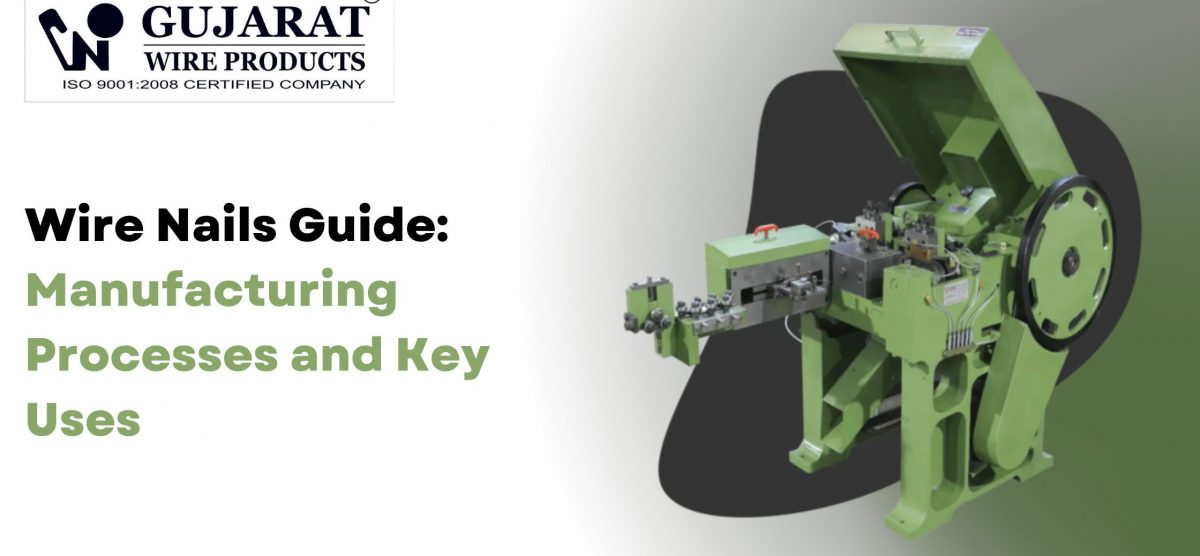
Wire Nails Guide: Manufacturing Processes and Key Uses
Introduction
Wire nails account for over 80% of all nails used in global construction and packaging, yet most buyers make purchasing decisions based on price per kilogram without understanding what determines nail performance. A nail that bends on impact wastes more in labor rework than the few rupees saved on cheaper stock. Surface rust appearing within three months signals polishing failures, not climate conditions. The global wire nails market stood at USD 8.5 billion in 2024, expanding across India, Africa, and Southeast Asia where construction activity drives sustained demand. Understanding how wire nails get manufactured—from rod to finished fastener—helps buyers assess quality before problems surface on the job site. It also helps manufacturers identify which production inputs drive output quality and which shortcuts create liability. This guide covers nail types and specifications, the full manufacturing process, machinery requirements, quality indicators, and industrial applications across construction, packaging, and furniture sectors.
Wire Nail Types and Specifications
Common Nail Varieties
Different construction applications require different nail geometries. Using the wrong type causes joint failure, splitting, or inadequate holding power.
- Common nails: Smooth shank, diamond point, flat head—standard framing and general carpentry
- Finishing nails: Small brad head, designed to countersink without splitting trim material
- Roofing nails: Large umbrella head distributes load across roofing felt and shingles
- Concrete nails: Hardened, fluted shank penetrates masonry without bending
- Ring shank nails: Annular rings grip wood fibers, providing 40% higher withdrawal resistance than smooth shank
- Coil nails: Collated for pneumatic nailers, speeding framing by 300% over hand nailing
Size and Gauge Standards
Nail length runs from ½ inch to 6 inches. Shank diameter ranges from 20 SWG (thin finishing nails) to 6 SWG (heavy construction spikes). Matching gauge to application prevents both splitting light timber and inadequate holding in structural work.
Raw Materials
Steel Wire Specifications
Q195 and Q235 low-carbon steel wire delivers the ductility needed for cold heading without cracking. Higher carbon content produces harder nails but risks brittle fracture during driving. Wire diameter at the drawing stage must match target nail specifications—diameter variation beyond ±0.1mm affects both head formation quality and shank strength.
Galvanized wire inputs produce hot-dip or electro-galvanized nails for exterior applications. Plain bright wire suits interior work where corrosion resistance isn’t required.
The Manufacturing Process
Step 1: Wire Drawing
Steel rod (typically 5.5-6.5mm diameter) gets drawn through tungsten carbide dies to nail-wire diameter. Each die reduces cross-section by 20-25%, with annealing between stages restoring ductility for fine gauges. Wire surface cleanliness at this stage directly affects die wear rates in the nail making machine downstream.
Step 2: Wire Preparation
Coils feed through automatic uncoilers maintaining consistent tension. Straightening rollers remove coil set across multiple contact points. Kinked or unevenly tensioned wire produces nails with angled tips and off-center heads—problems that trace back to this stage, not the heading mechanism.
Step 3: Nail Forming
- Grip mechanism pulls precise wire length into the cutting zone
- Cutter shears wire to nail length (±0.5mm tolerance)
- Heading die and hammer strike the rear end, forming the nail head in a single stroke
- Pointing die simultaneously shapes the front end into a diamond point
- Ejector releases the finished nail into the collection chute
Modern automatic machines complete this five-step sequence at 300-500 cycles per minute. The entire forming cycle happens faster than a camera shutter.
Step 4: Polishing
Fresh nails carry machining oil and metal burrs from cutting and forming. Rotating drums loaded with sawdust or leather pieces tumble nails for 20-40 minutes, removing surface contamination and creating the smooth, bright finish that slows rust onset. Under-polished nails retain oil that attracts moisture. Over-polished nails develop thin shanks below specification.
Step 5: Quality Inspection and Packing
Operators sample nails every 30 minutes for dimensional compliance. Defect categories include:
- Bent shanks (feed alignment issue)
- Off-center heads (worn heading dies)
- Incomplete points (dull pointing dies)
- Length variance beyond ±0.5mm (cutter wear)
Passed nails get weighed, counted, bagged, and lightly oiled for rust prevention during storage and transit.
Key Production Machinery
A complete wire nail production line requires four core machines working in sequence:
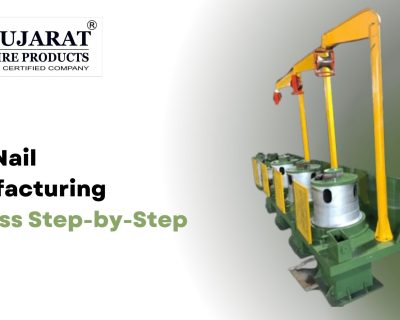
- Wire drawing machine: Rod-to-wire diameter reduction
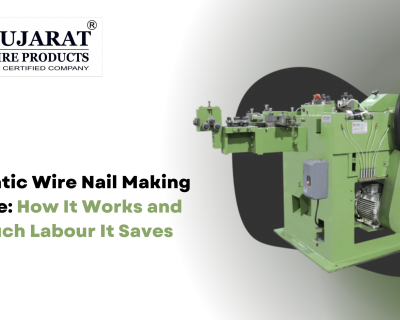
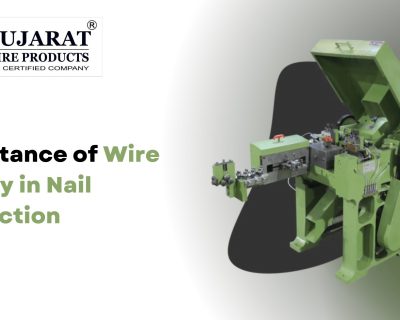
- Nail making machine: Cutting, heading, pointing in one continuous cycle
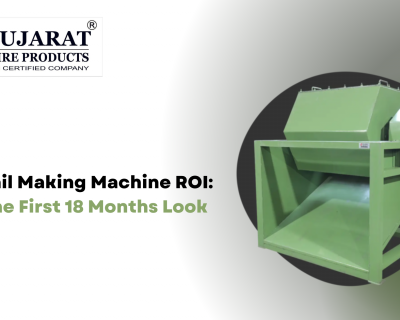
- Polishing drum: Surface finishing and burr removal
- Cutter grinder: Die sharpening to maintain cutting accuracy
The weakest machine in the sequence limits the entire line’s output. Wire drawing capacity must exceed nail machine consumption rates by 15-20% to prevent production gaps during coil changeovers.
Quality Factors
What Separates Good Nails from Bad Ones
Three factors determine nail performance in use:
- Wire tensile strength: Q195/Q235 wire at 380-500 MPa handles standard driving without bending
- Head concentricity: Off-center heads crack under hammer impact; die alignment prevents this
- Polishing completeness: Surface oil removal determines rust onset timeline—properly polished nails stored dry resist rust for 6-12 months
A surprising production pattern: most nail quality problems originate in wire preparation, not heading or cutting. Straightness deviation at the feed stage propagates through every subsequent operation.
Key Applications and Uses
Construction and Framing
Common nails dominate structural framing, roof sheathing, and floor decking. Indian construction standards specify minimum shank diameter and head geometry for load-bearing connections. Concrete nails handle formwork assembly where standard wire nails buckle on impact.
Packaging and Industrial Use
Wire nails assemble wooden shipping crates, pallets, and export packaging. Pallet manufacturers consume nails by the tonne—volume buyers who care primarily about consistent length and head diameter that their pneumatic nailers accept without jamming.
Furniture Manufacturing
Brad nails and finishing nails join furniture frames and attach upholstery backing without visible fastener heads. Splitting-free driving into dry hardwood requires sharp points and consistent diameter—the two quality factors furniture makers test on incoming shipments.
FAQs
What wire grade produces the strongest nails for construction use?
Q235 low-carbon steel wire with 420-500 MPa tensile strength balances driving toughness with head forming ductility. Higher carbon grades above 0.25% carbon create harder nails that resist bending but risk cracking during pneumatic driving, making them unsuitable for standard framing.
Why do some nails bend during manual driving?
Bending during driving traces to two causes: undersized shank diameter for the application, or point geometry errors that deflect the nail off axis on initial impact. Diamond points with 15-25 degree included angles drive straight. Flattened or asymmetric points cause deflection from the first hammer strike.
What’s the difference between bright and galvanized wire nails?
Bright nails suit interior dry applications. Electro-galvanized nails add 5-25 microns of zinc coating for moderate moisture resistance. Hot-dip galvanized nails carry 45-85 microns of zinc for exterior and ground-contact applications. Specifying the wrong coating type causes premature rust in exposed installations.
How does production speed affect nail quality?
Machines running above rated capacity generate excess die heat that causes dimensional drift—nail lengths creep longer and head diameters shrink as components expand. Quality-conscious operations run at 85-90% of rated speed to maintain tolerance consistency across full shifts.
What’s the standard packaging for wire nail exports?
Export nails typically pack in 1kg, 5kg, or 25kg boxes with moisture-barrier poly lining. Coil nails for pneumatic tools ship in manufacturer-standard coil counts (120-300 nails per coil) compatible with common nailer magazines. Packaging specification mismatches cause expensive returns from overseas buyers.
Conclusion
Wire nail quality starts with raw wire specifications, runs through precise machine alignment, and ends with thorough polishing. Buyers who understand these production factors make better purchasing decisions; manufacturers who control them produce nails that command better prices. Request a detailed production consultation to match your nail specifications with the right manufacturing setup.
Gujarat Wire Products has manufactured wire nail making machines and wire drawing equipment since 1975, serving production operations across India, Africa, Europe, and Asia. Our ISO 9001:2008 certified machines deliver consistent nail dimensions across three-shift production with minimal tooling wear. We provide complete installation support, operator training, die selection guidance, and spare parts availability that keeps production lines running at specification.
Visit gujaratwireproducts.com or contact our engineering team today to discuss your wire nail production requirements and get machine specifications matched to your target nail range and daily volume.