Blog
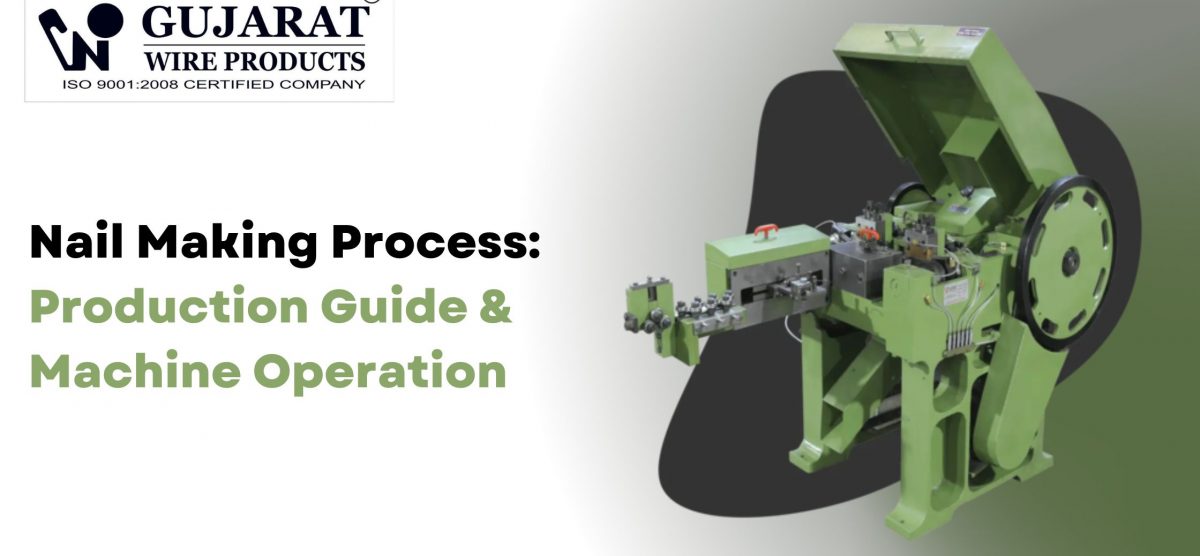
Nail Making Process: Production Guide & Machine Operation
Introduction
Most nail manufacturers blame slow production on machine speed ratings while ignoring the real bottleneck: stoppages from poor wire preparation and operator confusion during size changes. A nail making line rated at 500 nails per minute sounds productive until wire breaks, head misalignment, and changeover delays cut actual output to 320 nails per minute across a full shift. The uncomfortable pattern industry data reveals: 70% of “low output” complaints trace back to wire quality issues and setup drift, not inadequate motor power. Process discipline—not peak speed—determines daily tonnage. This guide walks through the complete nail making process from wire preparation through finished product collection, explains how machines coordinate feeding, heading, and cutting in continuous cycles, outlines the operation steps that prevent common failures, and identifies the maintenance routines that separate consistent production from chronic stoppages.
Raw Material Preparation
Wire rod selection determines 60% of final nail quality before machines even start. Diameter consistency within ±0.05mm prevents feed jamming and head formation problems. Surface rust and scale contamination cause die wear that accelerates 40% faster than clean wire processing.
Wire drawing reduces thick rod stock to the exact diameter nail machines require. This preparation step removes surface defects and establishes uniform material hardness. Mills that skip proper decoiling and straightening before feeding create coil memory problems—wire curves persist and cause alignment issues during heading.
Pay-off stands unwind wire coils while maintaining consistent tension. Sudden tension drops create slack that jams in feed mechanisms. Operators must verify wire path alignment from decoiler through straightener before loading production quantities.
The Nail Making Process Steps
Wire Feeding and Straightening
Straightening units contain multiple rollers positioned at alternating heights that bend wire in opposing directions, canceling coil memory. Feed boxes or gripper mechanisms pull straightened wire into the cutting zone at precisely timed intervals. Wire diameter and target nail length together determine maximum stable feed speed—operators pushing beyond these limits create 80% of wire breakage incidents.
Head Forming Operation
Cold heading punches compress the wire end while dies grip the shank, forming flat, checkered, or duplex heads depending on punch geometry. The punch must strike perfectly centered on the wire axis. Misalignment of just 0.3mm produces off-center heads with rejection rates exceeding 15% in quality-sensitive applications.
Die wear gradually shifts head position over thousands of cycles. Visual inspection catches this drift before reject rates spike—waiting for customer complaints wastes entire production batches.
Point Formation and Cutting
Cutting blades shear wire to length while angled dies simultaneously form the nail point. This combined operation happens in milliseconds during each machine cycle. Blade dullness shows up first as rough cut surfaces, then progresses to incomplete shearing that jams the ejection sequence.
Timing coordination between heading and cutting determines whether the process flows smoothly or stops every few minutes for jam clearing. Mechanical cam systems provide more reliable timing than older linkage designs, especially during the voltage fluctuations common in many manufacturing areas.
Ejection and Collection
Dies open, releasing the finished nail into collection chutes or containers. Poorly designed collection systems allow nails to bend on impact or different sizes to mix together. This creates sorting problems and customer complaints that undermine the precision achieved during forming.
Machine Working Principle
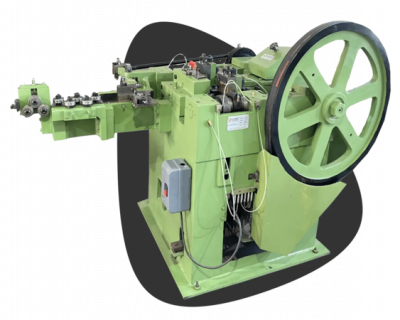
Each production cycle executes five coordinated motions: feed wire forward, clamp the shank, punch the head, shear and form the point, release the finished nail. Cam-driven mechanisms synchronize these actions through rigid mechanical connections that maintain timing even when motors slow under load.
One nail forms per machine cycle. A machine running 450 cycles per minute produces 450 nails—there’s no separation between cycle speed and output rate. This direct relationship means vibration, noise, and component wear all scale with production speed.
Machine Operation Guide
Pre-Start Verification
Check wire path alignment from decoiler through straightener to feed box. Verify die and cutter condition—worn tooling produces defects immediately. Confirm lubrication reservoirs contain adequate supply for the planned production run.
Match wire diameter precisely to die specifications. Running 4mm wire through dies designed for 3.5mm creates heading failures and possible die damage.
Startup and Tuning Sequence
- Set nail length adjustment to target specification
- Run 10 test pieces and measure actual length with calipers
- Adjust feed distance in 0.5mm increments until specification is met
- Verify head centering and point formation on test pieces
- Gradually increase speed while monitoring wire feed stability
Starting at maximum speed immediately causes wire breakage and misfeeds. Ramping speed over 5-10 minutes allows operators to catch problems before they multiply.
Size Changeover Steps
Diameter changes require die replacement, feed mechanism adjustment, and punch selection—typically 45-60 minutes total. Length changes only need feed distance adjustment when staying within the same diameter—15-20 minutes with experienced operators.
Quick-change die systems cut changeover time by 40% but add equipment cost. Operations producing 5+ nail sizes daily recover this investment within 18 months through reduced setup time.
Quality Control Points
In-process checks should verify length (±1mm tolerance), head centering (visual assessment), point sharpness (consistent angle), and overall straightness every 30 minutes. Catching dimensional drift early prevents batch rejections.
Track three efficiency metrics: reject percentage, unplanned stoppage causes, and die/cutter cycle life. These numbers reveal whether problems stem from wire quality, operator technique, or equipment wear patterns.
Finishing Operations
Polishing or tumbling removes burrs and creates smooth surface finish required for construction and packaging applications. This step typically happens offline in rotating drums with polishing media. Duration ranges from 30-90 minutes depending on initial surface quality and target finish.
Sorting separates any bent or malformed nails before weighing and packing. Skipping this final quality gate allows defects to reach customers—the most expensive place to discover production problems.
Maintenance Protocols
Daily tasks take 15 minutes: lubricate moving parts, clean die/cutter area, visually inspect for cracks or unusual wear. Weekly alignment checks prevent gradual drift that degrades quality. Monthly die inspection and sharpening or replacement planning keeps tooling ahead of failure points.
Reactive maintenance—fixing things after they break—costs 3-4 times more than scheduled replacement of consumable parts before failure.
FAQs
Q: What’s involved in a complete nail production line?
A: Wire drawing machines reduce rod stock to nail wire diameter, nail making machines form nails, polishing equipment smooths surfaces, and packing stations prepare finished products. Small operations often buy pre-drawn wire and start with nail making only.
Q: How does changing nail length differ from changing diameter?
A: Length changes adjust feed distance only—quick operations taking 15-20 minutes. Diameter changes require die replacement, feed mechanism modification, and punch selection, consuming 45-60 minutes minimum.
Q: Why do nails come out rough or inconsistent?
A: Die wear, insufficient lubrication, wire hardness variations, and misaligned components account for 90% of quality problems. Systematic daily checks catch these issues before reject rates climb.
Q: How does nail size affect production speed?
A: Smaller diameter wire feeds faster and forms quicker—machines producing 2-inch common nails reach 600/minute while 6-inch nails slow to 300-400/minute. Longer nails require more straightening time and careful feed control.
Conclusion
Nail production success depends on process discipline more than equipment speed ratings. Machines that match wire preparation, operation protocols, and maintenance schedules to actual production conditions outperform faster equipment operated reactively. Understanding the complete process flow prevents the stoppages that destroy daily output targets.
Gujarat Wire Products engineers nail making machine systems designed around complete process requirements—not isolated speed specifications. Our equipment integrates proper wire handling, operator-friendly controls, and maintenance protocols that deliver consistent daily tonnage across extended production schedules. Ready to build a nail production line that runs full shifts without chronic stoppages? Visitgujaratwireproducts.com or contact our process engineering team for a line configuration and operating checklist tailored to your nail sizes, wire sources, and shift patterns.