Blog
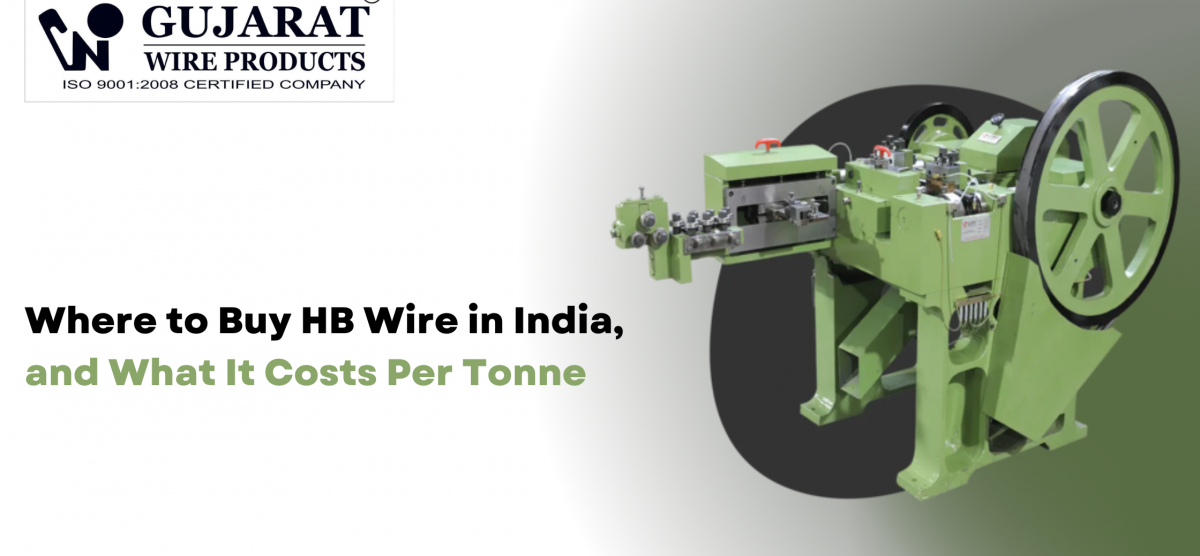
Where to Buy HB Wire in India, and What It Costs Per Tonne
Wire is 60 to 70 per cent of what it costs to make a nail. Buy it two rupees a kilo cheaper, and you have improved your margin more than any efficiency drive will manage; buy the wrong gauge or grade, and you will fight rejects for the life of the coil. Most first-time buyers ring one local trader, accept the quote, and never find out what the alternatives were. This piece covers what HB wire actually is, which gauge matches which nail, where the material comes from, and how to read a quotation properly.
What HB Wire Is — and What It Is Not
HB stands for hard bright. It is mild steel wire drawn down from wire rod through a series of dies, leaving it bright, hard and dimensionally consistent. That hardness is what lets a nail machine grip, head and cut it cleanly.
It is not the same as black annealed binding wire. Binding wire is deliberately softened so it bends and ties. Feed it into a nail machine and you get poor heads and bent shanks. Traders sometimes use the terms loosely, so confirm what you are actually buying.
The chain runs: billet → wire rod → drawn HB wire → nails. You can enter that chain at rod or at drawn wire. That decision is covered below.
Matching Gauge to Nail Size
Get this wrong and every other decision is wasted. Wire gauge in the Indian trade is quoted in SWG.
| Nail size range | Typical wire gauge |
| ½” to 2″ | 20–12 SWG |
| ¾” to 3″ | 14–9 SWG |
| ½” to 4″ | 11–8 SWG |
Two rules worth holding onto:
- Wire diameter sets the nail shank diameter. You cannot make a heavier nail from thinner wire.
- Your machine’s rated wire range is a hard limit, not a guideline. Forcing oversized wire damages dies and gearboxes.
Order gauge against your actual order book, not against the widest range your machine can handle. Holding four gauges you rarely run is working capital sitting on the floor.
Where the Material Comes From
India’s wire rod supply concentrates in a handful of belts, and where you buy affects both your rate and your reliability.
Raipur and Bhilai, Chhattisgarh
The dominant hub for wire rods and long products. Rates set here influence surrounding markets. Deep supply, competitive pricing, and a large concentration of secondary producers.
Durgapur, Jamshedpur and Bokaro, Eastern India
Primary steel belt. Better documentation and consistent grades, which suits buyers who need traceability. Rod rates here are widely quoted as a national reference.
Mandi Gobindgarh, Punjab
The re-rolling and induction furnace centre. Strong for secondary steel in North India, generally keener on price, more variable on consistency.
Regional Markets
Ahmedabad’s Odhav market serves Gujarat, with equivalent markets in Delhi NCR, Mumbai’s Kalamboli and Taloja, Peenya in Bengaluru and Bala Nagar in Hyderabad. For most small units these are where the wire is actually bought, because freight decides everything.
Local Drawing Units
Many nail units buy drawn HB wire from a regional wire drawing unit rather than sourcing rod. Convenient, shorter lead times, and you pay that unit’s drawing margin on every tonne.
What It Costs Right Now
As of August 2026:
- Wire rod, mill level: roughly ₹42,000–43,000 per tonne in Durgapur and Raipur for 5.5 mm.
- Wire rod, retail: ₹52–58 per kilo depending on grade, diameter and city.
- Drawn HB wire: above rod, because you are buying the drawing.
Rod prices move with billet rates and scrap availability, sometimes weekly. A quote is valid for days, not months. Build your costing on a live rate, not on a figure from a guide.
How to Read a Steel Quotation
This is where money is quietly lost. Three different numbers get called “the rate”.
- Basic rate — the material price before tax.
- GST-paid rate — basic plus 18%.
- Landed rate — what it costs delivered onto your floor, including freight, loading and unloading.
Compare landed rates only. A supplier two states away quoting a lower basic rate frequently lands dearer than the one down the road, because wire is heavy and freight is real.
Then confirm the things that turn a cheap quote expensive:
- Coil weight and count. Know exactly what a tonne consists of.
- Actual gauge, verified with a micrometer on arrival, not assumed from the invoice.
- Grade and carbon content, stated in writing.
- Rust and storage condition. Rusted wire drags in the dies and marks the nail.
- A proper GST invoice, so your input credit is not stuck.
Rod or Drawn Wire: The Real Decision
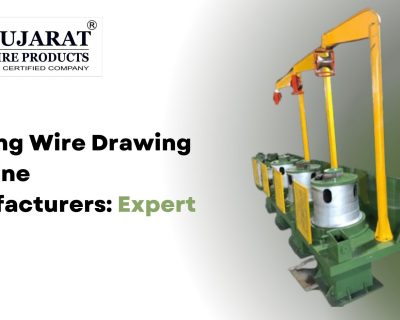
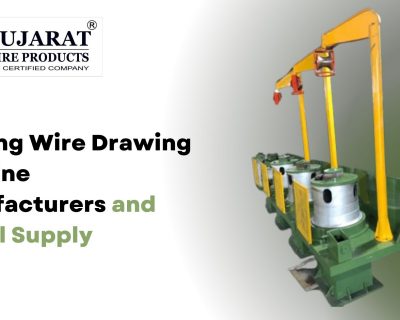
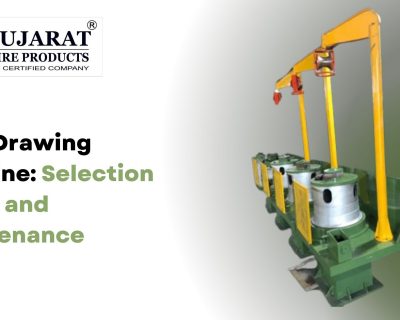
If you buy drawn HB wire, you pay someone else’s drawing margin on every tonne, permanently. If you buy rod and draw it yourself, that margin becomes yours.
On today’s input costs, where the spread between wire and finished nails is only a few rupees a kilo, this is not a small optimisation. It is frequently the difference between a unit that earns and a unit that merely turns over.
The trade-offs are honest ones:
- Drawing needs volume. Below steady consumption, the machine sits idle and the maths does not work.
- It needs power and floor space, both of which have to be planned for, not squeezed in.
- It needs dies and someone who understands them. Drawing is a skill, not just a machine.
Most units buy drawn wire in year one and revisit the decision once monthly tonnage is predictable. That sequence is sensible.
Storing Wire Without Losing Value
Wire deteriorates on the floor, and the damage is invisible until it reaches the dies.
Rust is the main enemy. Surface rust drags in the drawing and gripping dies, marks the nail, and accelerates tooling wear. In coastal and humid conditions — which covers most of Gujarat’s industrial belt — a coil left uncovered through a monsoon can be materially worse than the one that arrived beside it.
Practical measures that cost almost nothing:
- Keep coils off the floor. Pallets or timber sleepers, not bare concrete, which wicks moisture.
- Cover the stack, even indoors.
- Rotate stock first in, first out. Wire bought three months ago should run before wire that arrived last week.
- Store gauges separately and label them. Mixed-up gauges cause the kind of production error that only shows up after a few hundred kilos of bad nails.
Buy in lots you will consume within four to six weeks. Holding a quarter’s wire ties up cash, exposes you to price movement in both directions, and gives rust time to work.
Buying Practices That Save Real Money
- Get three landed quotes, not one. Rates between hubs and traders differ more than people expect.
- Buy against orders where you can. Holding large stock in a volatile steel market is a position, not an efficiency.
- Negotiate on payment terms as well as rate. Wire is your fastest cash outflow and your dealers pay in 30 to 60 days.
- Inspect before dispatch on large lots — rust, sizing and coil condition are cheaper to reject at the supplier’s yard.
- Track your consumption per tonne of nails. If your wire usage rises without your output rising, the problem is tooling, not the supplier.
FAQs
What is the difference between HB wire and binding wire? HB wire is hard bright drawn wire, made for forming and cutting. Binding wire is annealed to be soft and pliable. Nail machines need HB wire; binding wire produces poor heads and bent nails.
How much wire do I need per tonne of nails? More than a tonne. Recovery on rod typically runs 92–96%, with a further 2–5% lost at polishing, so plan on roughly 1,050 kg of wire per saleable tonne.
Should I buy from a mill or a trader? Mills suit volume and traceability; traders suit small, frequent lots and shorter lead times. Most small units buy from regional traders and are right to.
How often do wire prices change? Rod rates track billet and scrap and can move within a week. Re-quote before you commit to a large order.
Can I run any gauge on my machine? No. Every machine has a rated wire range. Exceeding it damages dies, punches and the gearbox, and voids most warranties.
Conclusion
Buy on landed rate, verify the gauge yourself, and re-quote often. Then work out honestly whether your monthly tonnage justifies drawing your own wire, because on current steel prices that is the largest lever you have.
Tell us your monthly wire consumption and the gauges you run, and we will tell you whether a wire drawing machine pays for itself at your volume — and what specification you would need.
About Gujarat Wire Products
We have manufactured wire drawing machines, wire nail making machines, grinders and tooling in Rajkot since 1975, supplying units across India and overseas. Fifty-one years of working alongside nail units means we understand the wire side of this business as well as the machine side.
Find out whether drawing your own wire makes sense for you. Send us your consumption figures and we will do the arithmetic with you.