Blog
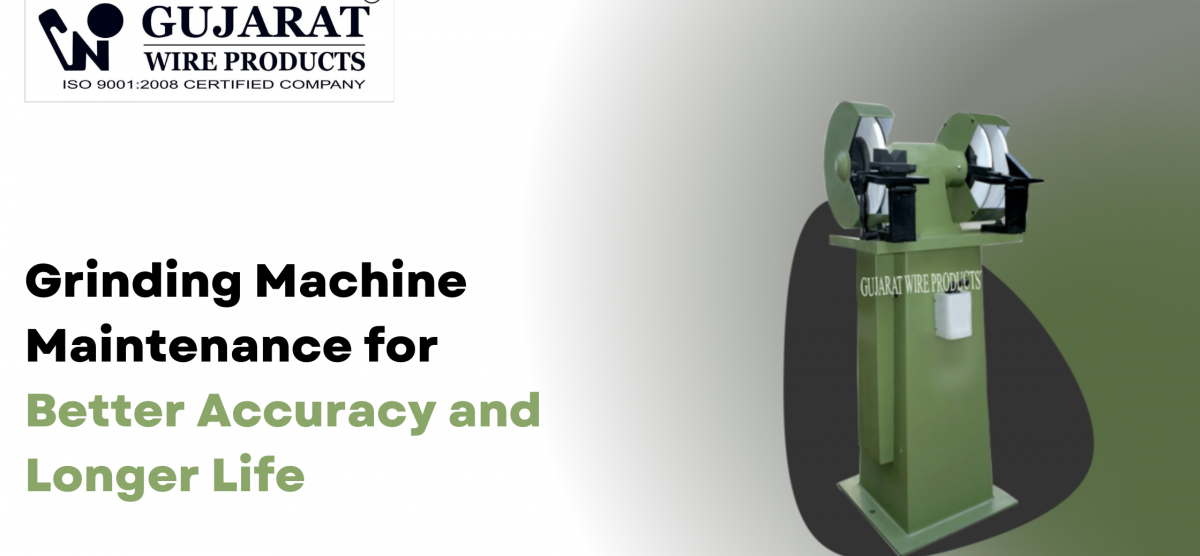
Grinding Machine Maintenance for Better Accuracy and Longer Life
Introduction
A grinding machine rarely fails overnight. It drifts. A 0.02mm runout becomes 0.05mm over six months, and nobody notices until a customer rejects a batch. By the time the spindle sounds “off” to the naked ear, the bearing has usually been running hot for weeks. That’s the pattern shops miss: precision loss is gradual, silent, and almost always preventable with a handful of routine checks.
We’ve supplied wire and nail manufacturing machinery, including grinding equipment, since 1975, and the maintenance failures we see on service calls repeat across plants of every size. This piece walks through the daily, weekly, and monthly checks that actually protect accuracy — plus the wheel care, lubrication, and coolant habits that add years to a machine’s working life. No filler, just the checklist that separates a machine running true at year ten from one that’s been “off” since year three.
Daily Checks That Protect Accuracy
Most accuracy loss traces back to skipped daily habits, not major failures. These take minutes and catch problems while they’re still cheap to fix.
Before You Start the Shift
- Wipe down the worktable and clear grinding dust from the work zone
- Inspect the grinding wheel for cracks, chips, or glazing
- Check lubrication oil levels at the sight glass
- Confirm coolant level, flow rate, and concentration
- Listen for spindle noise and feel for unusual vibration
- Test emergency stops and safety guards
Before You Shut Down
Clean the machine bed and guideways before dust settles into the slides overnight. A five-minute wipe-down prevents grinding swarf from embedding into ways and scoring them — damage that no amount of lubrication reverses later. Log anything unusual: a new sound, a slower table return, a coolant smell. That log becomes the early-warning system your maintenance team actually needs.
Weekly and Monthly Maintenance Tasks
Daily checks catch the obvious. Weekly and monthly tasks catch what’s building underneath.
Weekly Tasks
- Inspect belts, bearings, gears, and pulleys for wear or play
- Check guideway and lead screw movement for smoothness
- Clean coolant tanks, filters, and nozzles
- Test the automatic lubrication system’s cycle timing
Monthly Tasks
- Inspect hydraulic and pneumatic lines for leaks or pressure drop
- Open electrical cabinets and check for dust buildup or loose connections
- Inspect chucks, magnetic tables, and clamping fixtures for holding force
- Review the machine’s alarm history and maintenance log for repeat faults
Grinding Wheel Care That Actually Matters
The wheel is the single biggest lever on both accuracy and machine life, and it’s the most neglected component on most shop floors.
Getting Wheel Selection Right
Match wheel hardness and grit to the material you’re grinding, not to whatever’s already mounted. A wheel that’s too hard glazes over and starts rubbing instead of cutting — this generates heat that transfers straight into the spindle and workpiece, distorting both.
Dressing and Balancing
- Dress the wheel at set intervals, not only when the finish looks rough
- Check wheel balance and mounting before every changeover
- Verify wheel runout with a dial indicator after mounting
- Store spare wheels flat, away from moisture and temperature swings
Delayed dressing is the quiet cause behind most “sudden” chatter complaints. The wheel wasn’t sudden — it had been degrading for two weeks.
Lubrication and Coolant Systems
These two systems do more to determine machine lifespan than any other maintenance category, yet they’re the ones operators trust the most and inspect the least.
Lubrication Habits
Use only the lubricant grade the manufacturer specifies — mixing grades is a bigger risk than under-lubricating, because incompatible additives can break down film strength at the exact contact points that need protection most. Lubricate guideways, bearings, and lead screws on a fixed schedule rather than “when it seems dry.” Watch for leaks; a slow drip today is a starved bearing in three months.
Coolant Habits
- Maintain the correct concentration — too weak invites rust, too strong leaves residue on the workpiece
- Keep coolant flow aimed directly at the grinding zone, not just nearby
- Clean filters and pipes weekly to prevent nozzle blockage
- Replace coolant once it turns cloudy or develops odor, both signs of bacterial growth
Operating Habits That Extend Machine Life
Maintenance protects a machine from wear. Operating discipline protects it from damage.
Rules Worth Enforcing
- Never exceed the wheel’s rated RPM, even briefly
- Avoid side pressure on the wheel — grind straight into the work, not across it
- Set feed rate and depth of cut to the material spec, not to “what feels fine”
- Let hydraulic and spindle systems warm up before running to full-precision tolerance
- Train every operator to recognize early signs of trouble — a new vibration, a finish that’s slightly duller than usual, a coolant smell that wasn’t there yesterday
One detail that surprises most shop owners: machines run by two or three rotating operators wear out spindle bearings 20–30% faster than machines run by one consistent operator, simply because habits like warm-up time and feed discipline vary person to person. Standardizing the startup routine across shifts closes that gap without spending a rupee on parts.
Accuracy Inspection and Calibration
What to Check Periodically
- Spindle runout, using a dial indicator against a test bar
- Table flatness and straightness across full travel
- Table-to-spindle parallelism
- Backlash in axis movement
Schedule a full geometric calibration every six months, and always re-check the machine after any major repair — a replaced bearing or realigned guideway can shift tolerances even when the repair itself was done correctly.
FAQs
How often should a grinding machine be serviced?
Daily checks before every shift, weekly mechanical inspections, and a full geometric calibration every six months. Machines running multiple shifts or handling tighter tolerances benefit from a quarterly lubrication and component review as well.
What’s the fastest way to spot declining accuracy?
Track first-pass yield and surface finish consistency, not just final dimensions. A dip in either one, even before parts are outright rejected, usually points to spindle wear, wheel glazing, or a guideway alignment issue starting to develop.
When should a grinding wheel be dressed?
Dress it on a fixed interval based on your material and usage, not only when the finish looks rough. By the time finish quality visibly drops, the wheel has already been cutting inefficiently and generating extra heat for some time.
Does coolant really affect accuracy, or just finish?
Both. Coolant that’s too weak lets heat build in the grinding zone, which expands the workpiece and throws off dimensional accuracy the moment it cools back down. Concentration and flow direction matter as much as coolant quality itself.
Conclusion
Grinding machine accuracy doesn’t fail suddenly — it erodes through skipped checks, delayed dressing, and inconsistent operator habits. Build the daily, weekly, and monthly routines above into your shop’s schedule, and you protect both the tolerances your customers expect and the working life of the machine itself.
Gujarat Wire Products has supplied wire nail plant machinery, including grinding equipment, since 1975 — built for accuracy that holds and a service life that justifies the investment. If your grinding machine is due for a service review or you’re evaluating a new one, visitgujaratwireproducts.com and get in touch with our technical team for a direct recommendation.