Blog
Top High Speed Nail Making Machine Supplier in Maharashtra
Introduction
Across Maharashtra, nail manufacturing has shifted from manual and semi-automatic setups to high speed production lines. The reason is simple. Demand has grown faster than labor availability, quality expectations have tightened, and margins now depend on consistency more than volume alone. Many manufacturers face the same problem: older machines cannot keep up with order pressure without increasing downtime, rework, or operating costs.
High speed nail making machines solve this gap. They convert wire into finished nails at a predictable pace, with stable dimensions and minimal operator input. The result is not just faster output, but calmer operations—fewer stoppages, fewer quality disputes, and better cost control.
This article explains how high speed nail making machines work, what buyers in Maharashtra should evaluate before investing, and how to choose a supplier that supports production beyond installation. We will walk through machine fundamentals, buying criteria, local market realities, and practical decision points that directly affect ROI and day-to-day reliability.
What is a high speed nail making machine
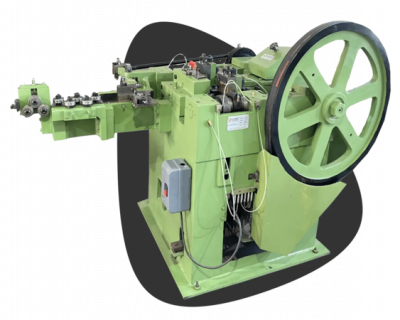
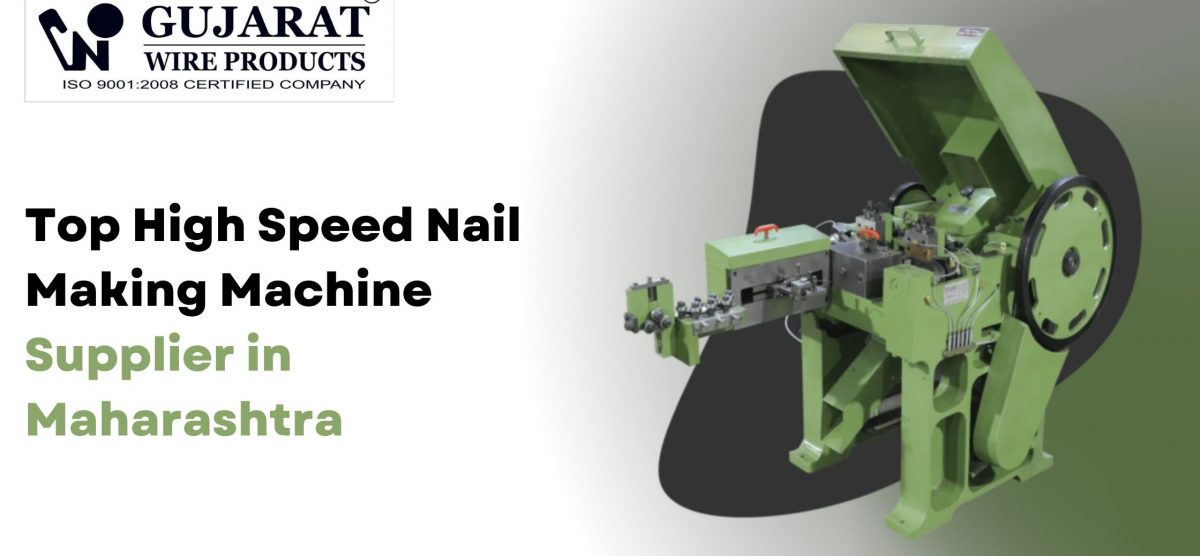
A high speed nail making machine is an automated system that converts wire coils into finished nails at high output rates. These machines integrate wire feeding, straightening, cutting, head forming, and ejection into a single continuous process.
They are designed for long production runs. Instead of frequent manual adjustments, the machine maintains length accuracy and head shape through fixed tooling and controlled motion.
Most high speed models are optimized for common nail sizes used in construction, packaging, pallets, and general hardware applications.
How high speed nail making machines work
Wire feeding and straightening
Wire is pulled from a coil and passed through straightening rollers. These rollers remove curvature and stabilize the wire before forming. Stable straightening reduces bending defects later in the process.
Nail forming and head shaping
The straightened wire moves into the forming zone. Here, the machine cuts the wire to length and forms the nail head in one synchronized motion. Timing accuracy matters. Small deviations compound quickly at high speeds.
Cutting and discharge
After head formation, the nail is cut and discharged into a collection tray or conveyor. Proper discharge design prevents jamming, which is a common hidden cause of speed loss in older machines.
Key features buyers should compare
Production speed and stability
High advertised speed is meaningless if the machine cannot hold it for long shifts. Buyers should look for stable output over eight to ten hours, not peak numbers measured in minutes.
Tooling life and changeover time
Frequent tool replacement increases downtime. Machines with hardened dies and simple changeover systems reduce stoppages and operator fatigue.
Power efficiency
Many manufacturers overlook power draw. In practice, energy cost differences become visible only after six to nine months of continuous use.
Operator dependency
High speed machines should reduce skill dependency, not increase it. Simple controls and clear fault indicators matter more than advanced screens.
Benefits of installing high speed nail making machines
High speed nail making machines deliver advantages that compound over time rather than appearing instantly.
- Output consistency reduces rejection rates in bulk orders
- Fewer operators are needed per shift
- Quality remains stable across batches
- Cost per nail drops as utilization increases
A less discussed benefit is scheduling confidence. When machines behave predictably, manufacturers accept tighter delivery timelines without stress. This directly improves client retention.
Maharashtra market overview
Maharashtra hosts a wide range of nail consumers, from infrastructure contractors to pallet manufacturers and exporters. Industrial clusters around Pune, Mumbai, Nashik, and Aurangabad demand both volume and reliability.
One observable pattern is that mid-sized manufacturers upgrade later than they should. Many delay investment until labor issues or quality complaints force action. Those who upgrade earlier often gain local market share quietly, without aggressive pricing.
Another pattern is space constraint. Factories in urban belts prefer compact, high output machines rather than multiple low-speed units.
How to choose the right supplier
Machine fit over machine size
The largest machine is rarely the right one. Buyers should match nail size range, wire diameter, and daily output targets to real demand, not future assumptions.
After-sales support structure
Machines do not fail often, but when they do, response time matters. Local service access and spare availability directly affect uptime.
Installation and training
Improper installation reduces output by 10–15% in the first year. Training should focus on setup discipline, not just basic operation.
Long-term parts compatibility
Suppliers who standardize parts across models simplify future expansion and reduce inventory headaches.
Why Gujarat Wire Products serves Maharashtra manufacturers well
Gujarat Wire Products focuses on machines that perform consistently under Indian production conditions. The emphasis is on durable assemblies, stable forming accuracy, and practical operating speeds rather than headline claims.
Our approach is direct. We recommend machines based on actual usage patterns, not catalog capacity. This avoids underutilized assets and protects cash flow.
Support is structured to extend machine life. From installation alignment to spare planning, the goal is steady output, not short-term performance spikes.
Case use patterns seen in the field
Manufacturers upgrading from semi-automatic lines often see output double without doubling labor. Quality complaints drop first, followed by smoother dispatch cycles.
Small units that add one high speed machine instead of three low-speed machines report fewer breakdowns and lower supervisory load. This operational calm is often the biggest hidden gain.
Frequently asked questions
Q: What production volume justifies a high speed machine?
A: If daily output exceeds manual handling capacity or requires multiple shifts to maintain, a high speed machine usually pays back faster than expected.
Q: Do high speed machines require skilled operators?
A: They require disciplined operators, not highly skilled ones. Consistent setup matters more than manual expertise.
Q: How much maintenance do these machines need?
A: Routine lubrication and periodic tool inspection are sufficient. Predictable maintenance schedules prevent sudden stoppages.
Q: Can one machine handle multiple nail sizes?
A: Yes, within a defined range. Tool changeovers should be evaluated during purchase, not assumed.
Conclusion
High speed nail making machines are no longer optional for manufacturers aiming to compete on reliability, not just price. The right machine simplifies production, stabilizes quality, and reduces long-term operating pressure.
If you are evaluating an upgrade or planning capacity expansion in Maharashtra, focus less on peak speed and more on sustained performance, support depth, and real-world fit.
Gujarat Wire Products supplies high speed nail making machines designed for stable output and long service life. We help manufacturers choose machines that match real demand, install them correctly, and keep them running without surprises.
Take the next step. Contact Gujarat Wire Products today to discuss your production needs and receive a machine recommendation built around your operation—not assumptions.