Blog
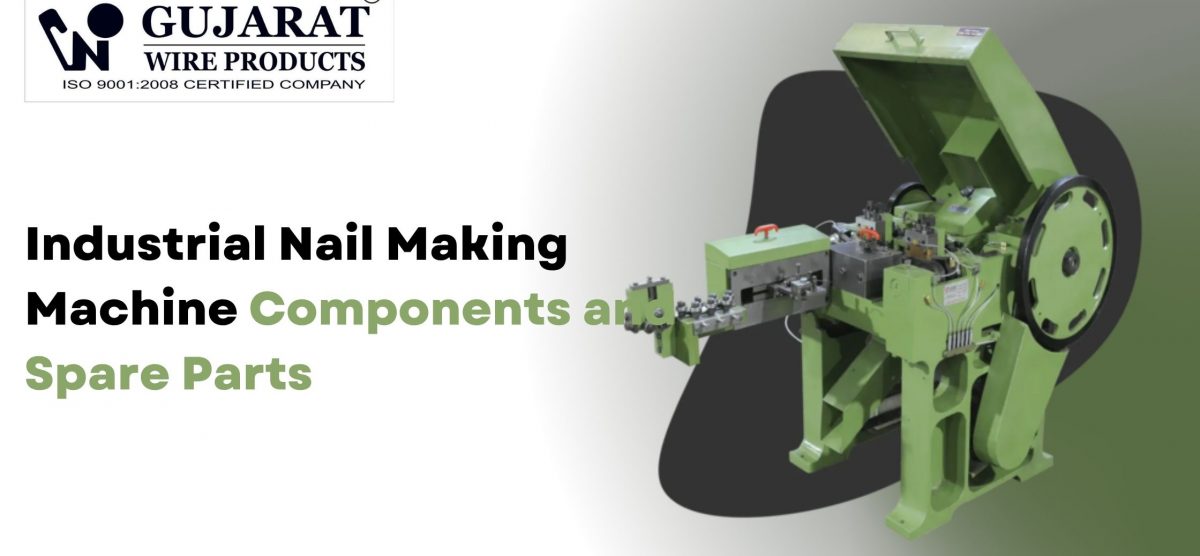
Industrial Nail Making Machine Components and Spare Parts
Introduction
Unplanned downtime in nail production rarely traces back to the machine itself. It traces back to a worn cutter that ran two weeks past replacement, a punch pin showing micro-cracks nobody caught during daily checks, or a gripper die held together with improvised shimming because the correct spare wasn’t in stock. A single eight-hour production stoppage on a machine running three shifts costs more in lost output than a full set of critical wear parts. Yet most nail plant operators run reactive parts strategies—ordering replacements after failure rather than before it. The result is predictable: avoidable stoppages, expedited freight charges, and output shortfalls on contract delivery dates. This guide covers every major machine assembly and its wear components, replacement cycle benchmarks, tooling material specifications, maintenance scheduling, and spare parts inventory strategy. The goal is to give plant operators and procurement managers the technical framework to sustain production uptime above 85% consistently.
Main Machine Assemblies
Drive System
The main crankshaft converts motor rotation into the reciprocating motion that drives the heading and cutting mechanisms. The auxiliary shaft synchronizes grip, cut, and head-forming sequences across the production cycle. Flywheel mass determines energy storage for the heading strike—inadequate flywheel inertia causes speed variation that affects head geometry consistency. Gears, belts, and bearings in this assembly require scheduled lubrication and periodic clearance checks.
Cutting and Gripping System
The wire grip mechanism pulls exact lengths of wire into the cutting zone. Grip pressure, jaw alignment, and jaw surface condition determine whether wire length stays within ±0.5mm tolerance. The cutter shears the wire against a fixed cutting block. Both surfaces—moving cutter and fixed block—wear simultaneously and require inspection as a matched pair.
Heading and Pointing Units
The punch pin (main hammer) strikes the wire end to form the nail head. The pointing die shapes the opposite end simultaneously. These two components bear the highest impact loads in the machine and wear faster than any other tooling. Head formation quality—concentricity, diameter consistency, and surface finish—depends entirely on punch pin and heading die condition.
Critical Wear Parts and Replacement Cycles
Die and Cutter Set
The core wear parts in every nail making machine:
- Nail gripper/grip dies: Hold wire during cutting; wear causes length variation and feed slippage. Inspect every 48 operating hours. Replace when grip surface depth drops below 0.3mm
- Nail cutters/knives: Shear wire to length; dull edges create burrs and increase heading die stress. Sharpen every 72 hours; replace when edge geometry can’t be restored by sharpening
- Punch pins/hammers: Form nail heads; wear shows as flattening of the striking face. Measure face diameter weekly; replace when diameter exceeds specification by 0.2mm
- Heading dies/moulds: Shape head profile; worn dies produce undersized or off-center heads. Replace at first sign of head diameter dropping below lower tolerance limit
- Wire straightening rollers: Flatten surface contact creates inadequate straightening. Rotate roller contact positions quarterly; replace when groove depth exceeds 0.5mm
- Ejection springs: Fatigue failure causes jams. Replace as a matched set every six months regardless of visible condition
Tooling Materials and Specifications
Carbide vs Tool Steel
Tungsten carbide tooling lasts 3–5 times longer than tool steel equivalents under identical production conditions. The upfront cost premium recovers within the first replacement cycle through reduced downtime and lower per-nail tooling cost. Tool steel remains viable for low-volume production or specialty nail sizes where carbide tooling isn’t available in standard dimensions.
Hardness specification matters more than material alone. Punch pins require 60–62 HRC for adequate impact resistance without brittleness. Grip dies need 58–60 HRC to balance wear resistance with the toughness to handle wire feed forces without chipping.
Maintenance Schedule
Daily Checks (Every Shift)
- Lubricate all oil points per manufacturer schedule
- Visually inspect punch pin face and cutter edge for visible chipping
- Check sample nails for head concentricity and length consistency
- Verify grip pressure setting hasn’t shifted from baseline
Weekly Tasks
- Clean die holders and remove metal particle buildup from cutting zone
- Measure cutter edge condition using feeler gauge or profile template
- Check straightening roller grooves for wear depth
- Inspect ejection spring tension and compression length
Monthly Procedures
- Full alignment check of cutting block and grip die relationship
- Lubrication system flush and fresh oil charge
- Bearing clearance verification on crankshaft and auxiliary shaft
- Complete dimensional audit of all tooling against specification records
Quarterly Deep Maintenance
- Replace ejection springs regardless of condition
- Inspect gear tooth wear patterns and backlash measurements
- Check flywheel key and keyway for fretting wear
- Calibrate speed control and verify cycle timing accuracy
Common Failure Modes and Diagnosis
Reading Defective Nails as Diagnostic Data
Every nail defect points to a specific component failure:
- Bent shanks: Wire straightening rollers worn or misaligned; check groove depth and roller positioning
- Off-center heads: Punch pin worn or misaligned; measure face runout against centreline
- Length variation beyond ±0.5mm: Grip dies worn or grip pressure too low; measure jaw surface depth
- Incomplete points: Pointing die worn; inspect die cavity profile against new die template
- Surface burrs on shank: Cutter edge dull; sharpen or replace cutter matched pair
- Random jams: Ejection spring fatigue or debris in nail path; clean ejection zone and test spring tension
Here’s the pattern most operators miss: multiple defect types appearing simultaneously almost always indicate a lubrication failure rather than coincidental wear on separate components. When two or more defects emerge within the same shift, check the lubrication system before replacing any tooling.
Spare Parts Sourcing and Inventory Strategy
OEM vs Aftermarket Parts
OEM parts from the machine manufacturer guarantee dimensional compatibility with the machine’s existing tooling geometry. Aftermarket parts vary significantly—some match OEM specifications closely, others introduce small dimensional differences that cause premature wear or alignment problems. The risk of aftermarket parts increases for precision components like punch pins and grip dies where ±0.05mm dimensional tolerance determines output quality.
Minimum Stock Levels
For a machine running two shifts daily, maintain:
- 2 complete cutter sets (moving cutter + fixed cutting block)
- 3 sets of grip dies for each nail size in production
- 4 punch pins
- 2 sets of straightening rollers
- 1 complete ejection spring set
- Bearing kit for crankshaft and auxiliary shaft
This inventory handles six months of normal wear without emergency procurement. Review and replenish quarterly.
Cost Management for Consumables
Tracking Parts Cost Per Ton
Divide monthly tooling spend by monthly nail output in tonnes. Benchmark: well-maintained machines with carbide tooling run ₹400–700 per tonne in consumable costs. Costs above ₹1,000 per tonne indicate either poor wire quality accelerating die wear, or reactive replacement patterns buying parts urgently at premium prices.
Bulk purchasing of cutters and punch pins—the highest consumption items—typically achieves 15–25% price reduction versus single-unit ordering. Store spare tooling in dry, labelled cabinets away from machine vibration to prevent surface rust and dimensional creep.
FAQs
How do I know when to sharpen versus replace a nail cutter?
Sharpen when the cutting edge shows rounding but the cutter body geometry remains intact. Replace when sharpening no longer restores a clean cut edge, when body thickness drops below minimum specification, or when cracks appear in the cutting face. Running a borderline cutter past its replacement point increases heading die stress and accelerates punch pin wear as a secondary effect.
Can I use spare parts from a different machine model on my nail making machine?
Only if dimensional specifications match exactly. Punch pins, grip dies, and cutters are precision-ground components where small dimensional differences—0.1mm in bore diameter or 0.05mm in face geometry—affect alignment and produce defective nails. Always verify part numbers and critical dimensions before installing parts from a different machine model or manufacturer.
What causes punch pins to crack rather than wear gradually?
Brittle fracture in punch pins typically traces to incorrect hardness—above 63 HRC creates excessive brittleness under impact loading. It can also result from misalignment between the punch pin centreline and heading die cavity, which creates eccentric loading on every strike. Check alignment before installing replacement punch pins when cracking occurs on multiple successive pins.
How often should I flush the lubrication system completely?
Flush and replace lubrication oil every 500–700 operating hours, or monthly in continuous three-shift operations. Metal particle contamination from normal wear accumulates in oil and accelerates bearing wear when recirculated. Use the recommended viscosity grade—substituting a different viscosity changes the oil film thickness at critical surfaces and reduces protection.
What’s the cost difference between carbide and tool steel tooling over 12 months?
Carbide tooling costs 3–4 times more per piece but lasts 3–5 times longer, making the per-nail cost lower. More significantly, carbide tooling reduces replacement frequency—fewer changeovers mean less production interruption and more consistent dimensional output between replacements. Plants switching from tool steel to carbide typically see 20–30% reduction in total annual tooling spend.
Conclusion
Spare parts management is a production strategy, not a procurement task. Track wear rates per component, maintain minimum stock levels for critical items, and replace on schedule rather than after failure. Request a spare parts audit from our technical team to identify gaps in your current inventory and set up a replenishment plan.
Gujarat Wire Products has manufactured nail making machines and supplied genuine OEM spare parts since 1975, serving plants across India, Africa, Europe, and Asia. Every component we supply—from tungsten carbide cutters to precision punch pins—is manufactured to the same specifications as our machines, ensuring dimensional compatibility and consistent production output. We stock the full range of wear parts for immediate dispatch and provide technical support on maintenance scheduling and failure diagnosis.
Visit gujaratwireproducts.com or contact our parts team today to review your current spare parts inventory, establish consumption benchmarks for your production volume, and set up a supply arrangement that eliminates emergency procurement costs.