Blog
Grinding Machine Guide: Definitions, Types, and Uses
Buyers consistently pick grinding machines based on size or price, then run into poor surface finishes, thermal damage, and wheel wear that far exceeds projections. Research from industrial equipment consultants indicates that nearly 55% of grinding-related scrap in small-to-mid manufacturing shops comes from wrong machine selection—not poor operator technique. A grinding machine isn’t a general-purpose cutting tool. It’s a precision finishing machine that removes material through abrasive action, not cutting geometry. Used correctly, it achieves tolerances as tight as 0.000025mm—tighter than any turning or milling operation. Used incorrectly, it burns surfaces, glazes wheels, and generates scrap batches that cost more to rework than remake. This guide defines what grinding machines actually are, classifies the key types by application fit, explains how they work at the component level, covers their best industrial uses, and outlines what to evaluate before buying.
What Is a Grinding Machine
A grinding machine uses a rotating abrasive wheel to remove small amounts of material from a workpiece surface. The process produces dimensional accuracy and surface finishes that turning, milling, and other cutting operations can’t achieve alone.
Grinding vs. Cutting
Grinding relies on abrasive grain micro-cutting rather than defined tool geometry. Each grain acts as a micro-cutting edge, removing chips at very high speeds. This makes grinding the go-to process for hardened materials and final-tolerance work where conventional cutting tools hit their limits.
Types of Grinding Machines
Precision Grinding
These machines handle dimensional accuracy and fine surface work:
- Cylindrical grinder: OD and ID grinding of shafts, rods, and bearing surfaces
- Surface grinder: Flat surface production via reciprocating or rotary table motion
- Centerless grinder: High-volume round part processing without centers; workpiece sits between grinding and regulating wheels
- Internal grinder: Bores and inner diameters to tight tolerances
- Tool and cutter grinder: Sharpens and reconditions drill bits, end mills, and milling cutters
- Jig grinder: Extreme precision for dies, molds, and complex geometries
- Thread and gear grinders: Purpose-built for threaded profiles and gear surfaces
Workshop and Rough Grinding
These machines handle general maintenance, deburring, and surface prep:
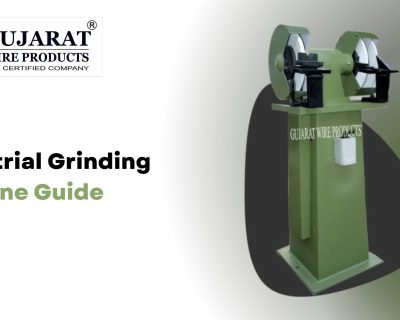
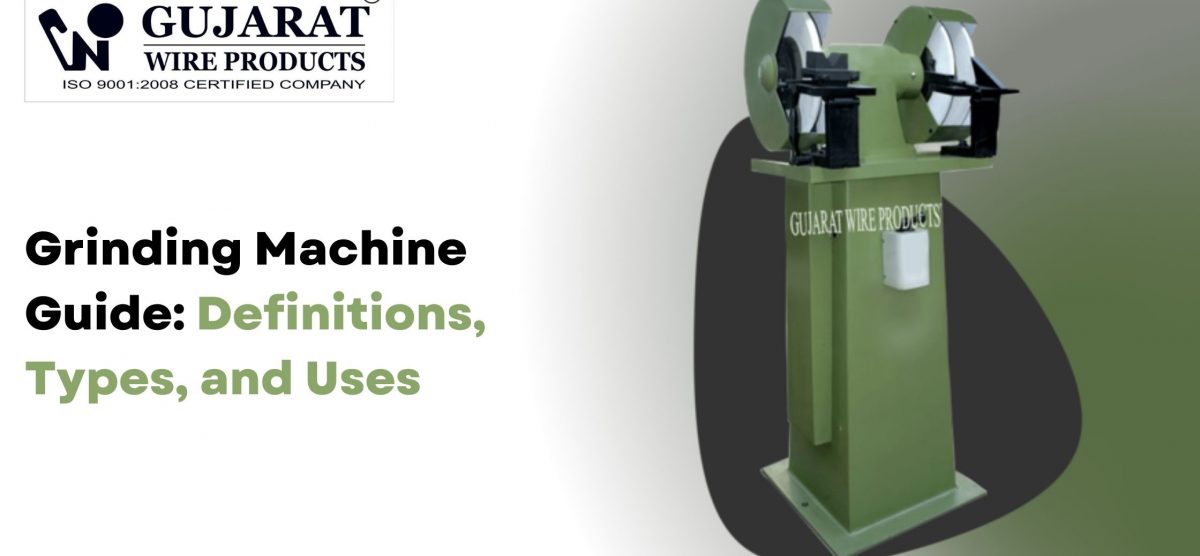
- Bench grinder: Tool sharpening, rough shaping, and edge dressing
- Belt grinder: Fast stock removal and polishing using abrasive belts on flat or contoured surfaces
- Angle grinder: Portable; weld cleanup, cutting, and on-site surface preparation
Key Components
Understanding what each component does helps you evaluate machine quality and predict maintenance demands:
- Grinding wheel: Defined by grain type, bond, hardness, and size; mismatched specs produce poor finishes and excessive wear
- Spindle: High-speed shaft holding the wheel; rigidity directly determines surface finish quality
- Worktable: Reciprocating or rotary; controls workpiece feed motion and positioning
- Headstock and tailstock: Support cylindrical workpieces through the grinding pass
- Feed mechanisms: Longitudinal and transverse feeds control depth of cut and pass direction
- Coolant system: Manages heat generated at the contact zone; inadequate flow causes thermal distortion and surface burn
Working Principle
Grinding removes material through abrasive grain micro-cutting at high wheel speeds. Each grain contacts the workpiece, removes a tiny chip, and generates heat. Managing that heat through coolant flow and feed rate determines surface quality, not wheel grade alone.
Process Sequence
- Mount and fixture the workpiece securely
- Dress and true the wheel for consistent geometry
- Set feed rate and depth of cut to match material and finish target
- Apply coolant at adequate flow rate throughout the operation
- Measure finished dimensions against tolerance before removing the workpiece
One insight most buyers overlook: wheel dressing frequency matters more than wheel grade. A well-dressed standard wheel consistently outperforms a neglected premium wheel on surface finish and dimensional accuracy.
Industrial Uses
Grinding machines serve critical finishing roles across multiple sectors:
- Wire and fastener manufacturing: Surface and cylindrical grinding for dies, tooling, and precision wire guides
- Automotive: Shafts, bearings, camshafts, gears, and pistons require grinding for final dimensional fits
- Tool and die making: Reconditioning worn tools and producing accurate die profiles
- Aerospace and medical: Parts requiring extreme accuracy where turning and milling fall short
- General metalworking: Slot grinding, cylindrical finishing, and flat surface production before assembly
Selection Guide
Three filters applied in order get you to the right machine every time.
Workpiece Geometry First
Flat workpieces need surface grinders. Round parts need cylindrical or centerless machines. Internal bores need internal grinders. No amount of skill compensates for a geometry mismatch—this filter eliminates wrong options before evaluating anything else.
Production Volume Second
Low-volume precision jobs suit cylindrical or jig grinders. High-volume round parts justify centerless setup costs despite higher initial investment. Rough grinding and tool maintenance fit bench and belt grinders.
Thermal Management Third
Higher material removal rates generate more heat. Machines without robust coolant capacity produce thermal distortion on thin or hardened parts. Verify coolant system capacity matches your intended production cycle before finalizing any purchase.
FAQs
What tolerances can grinding machines actually achieve?
Precision grinding achieves dimensional tolerances as tight as 0.000025mm. Surface grinders typically hold ±0.005mm on flat work under controlled conditions. Actual results depend on machine rigidity, wheel condition, and workpiece fixturing quality.
Why does thermal damage happen during grinding?
Heat builds when feed rates run too aggressive, coolant flow drops below requirements, or the wheel glazes and stops cutting cleanly. A glazed wheel rubs rather than cuts, generating friction heat that burns the workpiece surface and collapses dimensional accuracy.
Can one machine serve multiple grinding applications?
Universal grinders handle both cylindrical and surface work but compromise on throughput compared to dedicated machines. Use multi-purpose machines for tool rooms and low-volume mixed work. Dedicated machines justify themselves the moment you’re consistently running one workpiece type at volume.
What causes sudden spikes in wheel consumption?
Incorrect grain size for the material, running above rated wheel speed, inadequate coolant, or infrequent dressing. Track wheels consumed per batch—a sudden increase signals a process problem, not a consumable problem.
Conclusion
Grinding machines deliver precision that no other process matches—but only when machine type aligns with workpiece geometry, material, and production volume. Define those three parameters before evaluating any machine on the market. Contact us today to discuss your specific requirements and get a recommendation built around your actual production needs.
Gujarat Wire Products supplies grinding machines configured for wire processing, precision tool maintenance, and industrial finishing applications. We evaluate your part geometry, tolerance requirements, and production volume before recommending machine type, wheel specifications, and coolant setup. Our team provides commissioning support, operator training, and maintenance planning to ensure consistent output from day one. Visit
or reach out directly to schedule a production assessment and receive a matched grinding solution for your operation.