Blog
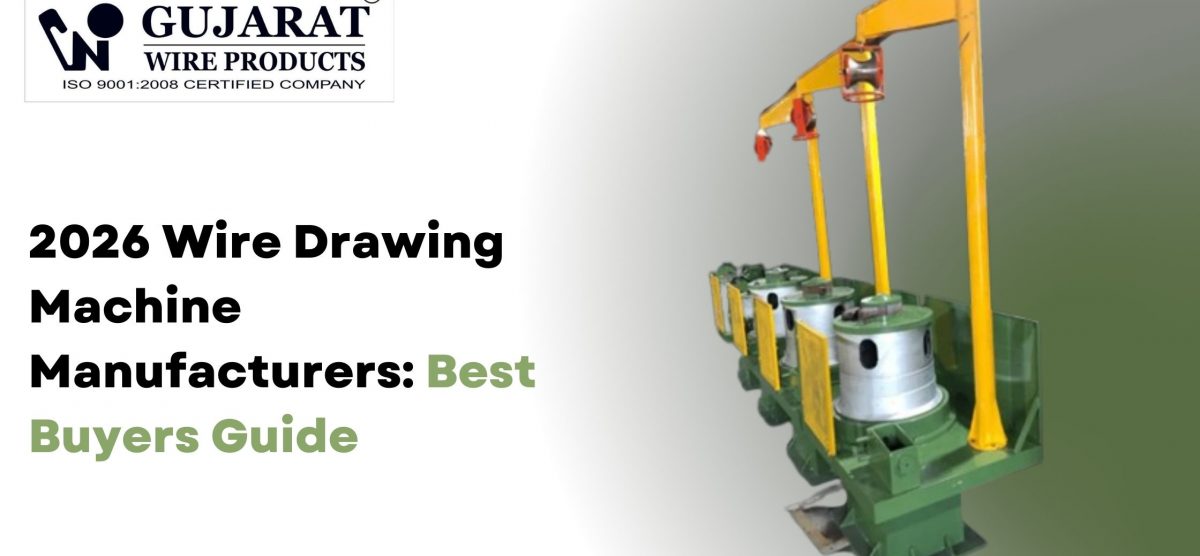
2026 Wire Drawing Machine Manufacturers: Best Buyers Guide
Introduction
Buyers who purchased wire drawing machines three years ago face a different market in 2026. PLC automation and servo-driven tension systems have become standard features, not premium add-ons. Meanwhile, import lead times from overseas suppliers stretch to 16-24 weeks while service response times lag months behind breakdowns. The wire drawing machinery market sits at USD 2.41 billion in 2025, expanding at 5.8% CAGR toward USD 3.59 billion by 2032, driven by construction demand, automotive wire requirements, and India’s infrastructure push. But market growth benefits buyers only when the machine they choose delivers sustained uptime across three-shift operations. Most purchasing decisions fail not on machine specifications but on service infrastructure, spare parts availability, and commissioning support—factors that don’t appear in brochures. This guide walks through machine types, evaluation criteria, 2026 technology benchmarks, and a five-step selection process that separates capable manufacturers from ones that disappoint six months after installation.
Machine Types and Capabilities
By Drawing Configuration
Match machine type to your inlet wire and target output specifications before evaluating manufacturers:
- Rod breakdown machines: Reduce 5.5-8mm rod to 2-3mm intermediate wire; high pulling force, lower speed
- Intermediate drawing machines: Process 2-3mm down to 0.8-1.5mm; balanced speed and tension
- Fine wire drawing machines: Sub-1mm applications for electronics, medical, and spring production; require advanced cooling and tension control
- Pulley type machines: Multi-stage oil-bath design, ideal for MS wire nail and mesh production
- Straight line machines: High-speed continuous drawing with inline annealing capability
- Bull block single-draw machines: Heavy-gauge reduction for construction and fencing wire
By Material Compatibility
Different metals demand different machine specifications. Copper drawing requires lower reduction ratios and more aggressive cooling than mild steel. Stainless steel’s work hardening characteristics need intermediate annealing capability. Confirm material compatibility before shortlisting manufacturers.
2026 Market Landscape
India vs Import Decision
Here’s an uncomfortable insight most buyers avoid: overseas machines appear cheaper at purchase price but carry hidden costs that surface within 18 months. Import duty, 16-24 week lead times, and service technician travel costs from China or Europe routinely add 25-35% to total ownership cost. India’s Rajkot and Gujarat manufacturing belt produces wire drawing equipment matching international precision standards, with same-week service response.
Technology Benchmarks for 2026
Any machine purchased this year should include:
- PLC-based tension and speed control with HMI interface
- Variable frequency drives (VFDs) delivering 20-30% energy savings
- Auto-stop on wire break, overload, and die failure
- Data logging for production tracking and shift reporting
Machines without these features belong to the previous decade. Buying them now means retrofitting expensive upgrades within three years.
Evaluation Criteria
Technical Specifications That Matter
Speed and reduction ratio tell only part of the story. Verify:
- Inlet/outlet wire diameter range across your full production mix
- Maximum tensile strength capacity (MPa rating)
- Compression ratio per pass (20-30% standard)
- Block speed range and adjustment granularity
- Cooling system design (oil bath, spray, water immersion)
Build Quality Indicators
Visit the manufacturing facility before committing. Check frame rigidity, die holder precision, capstan surface finish, and control panel layout. Ask to see machines running at full production speed—not just during a curated demo.
Support Infrastructure
Five questions that reveal true manufacturer capability:
- What’s your average service response time within 200km?
- Do you stock the top 20 wear parts for immediate dispatch?
- Who trains our operators and how long does commissioning take?
- What’s the warranty coverage and claim process?
- Can we visit an existing installation running our wire specification?
Manufacturers who deflect these questions reveal the service gaps that create downtime problems later.
Five-Step Selection Process
- Define wire specs: Document inlet diameter, target outlet diameter, material type, daily tonnage, and shift requirements
- Shortlist by machine type: Match configuration to your production profile—pulley for nail/mesh, straight line for high-speed mixed production
- Verify automation level: Confirm PLC/VFD specifications, HMI clarity, and integration capability with your factory controls
- Audit service infrastructure: Confirm spares stock, technician availability, and commissioning timeline
- Run production trials: Test your actual wire on the shortlisted machine; measure output rate, defect rate, and energy consumption
Technology Trends for 2026
Smart Automation Integration
PLC-equipped wire drawing machines now integrate with SCADA systems for plant-wide monitoring. Real-time tension data identifies die wear before quality degrades. Remote diagnostics allow manufacturers to troubleshoot control issues without on-site visits.
Energy Efficiency Standards
VFD-equipped machines reduce electricity consumption by 20-30% compared to fixed-speed systems. With industrial power costs rising, this advantage compounds over three-shift operations. Calculate energy savings over five years when comparing machine purchase prices.
Environmental Compliance
Pickling-free wire drawing lines eliminate acid treatment waste streams. Closed-loop coolant recirculation reduces water consumption. Manufacturers offering these integrated eco-upgrades align with tightening environmental regulations across Indian export markets.
FAQs
What’s the realistic service life of a well-maintained wire drawing machine?
Quality machines built with proper frame rigidity and precision components run 20-30 years with consistent preventive maintenance. The key cost variable is consumables—dies, bearings, and belts—not machine replacement. Track consumable costs per ton to monitor process health.
How do I compare Chinese vs Indian manufacturers objectively?
Request landed cost including import duty, freight, and insurance. Add estimated annual service costs based on technician travel from the manufacturer’s location. Indian machines from established manufacturers typically match technical specifications while delivering 40-60% lower total service costs.
What energy consumption should I expect per ton of wire produced?
Modern PLC-equipped machines consume approximately 40-60 kWh per ton for MS wire drawing, depending on inlet/outlet diameter ratio. Older mechanical-control machines consume 70-90 kWh per ton. The difference represents real monthly savings at industrial power rates.
How many operators does an automatic wire drawing machine require?
Modern automatic machines need one operator per two to three machines for monitoring, wire loading, and quality checks. Full automation with auto-loading extends this ratio to one operator per five machines. Labor efficiency depends heavily on control system quality and operator training.
What spare parts should I stock from day one?
Maintain inventory of drawing dies for each production diameter, feed rollers, drive belts, bearing sets for capstan spindles, and cooling system components. Request the manufacturer’s recommended spare parts list before installation and verify all items are available locally.
Conclusion
Buying a wire drawing machine in 2026 requires evaluating total ownership cost, not purchase price. Confirm PLC automation standards, audit service infrastructure, and run production trials before signing. Contact our team today to discuss your wire production requirements and get machine specifications matched to your exact needs.
Gujarat Wire Products has manufactured wire drawing and processing equipment since 1975, serving operations across India, Africa, Europe, and Asia. Our ISO 9001:2008 certified machines integrate PLC automation, VFD energy systems, and proven mechanical designs built for three-shift industrial environments. Based in Rajkot’s manufacturing hub, we provide installation supervision, operator training, and same-week service response backed by full spare parts inventory.
Request a technical consultation—visit gujaratwireproducts.com or call our engineering team to review your wire specifications and get a machine recommendation matched to your 2026 production targets.