Blog
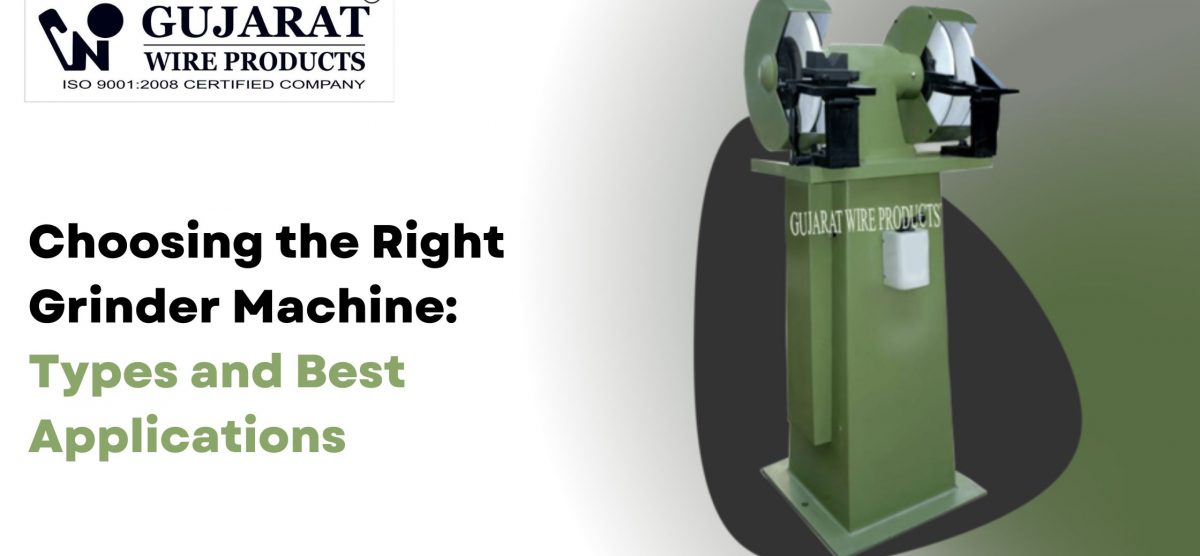
Choosing the Right Grinder Machine: Types and Best Applications
Most workshops buy grinders based on power ratings or price, then struggle with poor finishes, excessive wheel consumption, and cycle times that kill profitability. Industry data shows that 52% of grinding problems stem from using the wrong machine type for the job—not operator skill or maintenance lapses. An angle grinder won’t deliver the flatness a surface grinder achieves, and a bench grinder can’t match the throughput of a centerless machine on round parts. This guide clarifies which grinder types exist, what each does best, and how to choose based on your actual workpiece geometry, tolerance requirements, and production volume. You’ll learn why precision grinders cost more but deliver lower per-part costs in high-volume settings, which features separate general-purpose tools from specialized machines, and what wheel selection mistakes waste the most money. We’ll cover handheld, workshop, and precision grinder categories, application fit, selection criteria, and operating realities.
Types of Grinder Machines
Grinders fall into three broad categories based on precision level and typical use environment.
Handheld Grinders
Angle grinders handle cutting, deburring, rust removal, and weld cleanup. They’re portable and versatile but sacrifice precision for mobility. Die grinders work in tight spaces for detail grinding, sanding, and polishing small areas. Flexible shaft grinders extend reach on large fabrications where moving the workpiece isn’t practical.
Workshop Grinders
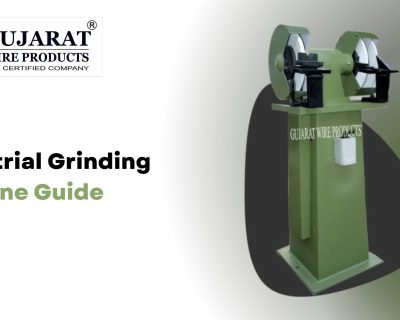
Bench grinders sit on workbenches for general sharpening, tool shaping, and light grinding before welding. Pedestal grinders use the same design but mount on floor stands for better access to larger parts. Belt grinders use abrasive belts instead of wheels for fast material removal on flat or contoured surfaces—ideal for deburring and shaping where stock removal speed matters.
Precision Grinding Machines
Surface grinders produce flat surfaces to tight tolerances using a rotating wheel and reciprocating table. They’re the workhorse machine for flat part finishing in tool rooms and machine shops. Cylindrical grinders handle external and internal diameters on shafts, rods, and tubes—critical for bearing surfaces and precision fits.
Centerless grinders process round parts at high volume without mounting them between centers. The workpiece sits between a grinding wheel and regulating wheel, making them ideal for batch production of pins, rods, and similar components.
Tool and cutter grinders sharpen and recondition drill bits, end mills, and other cutting tools. Jig grinders achieve extremely fine tolerances for complex geometries like dies and molds.
Best Applications by Grinder Type
Matching grinder type to workpiece geometry and finish requirements determines success.
Portable Work and General Maintenance
Angle grinders solve on-site problems: cutting metal, cleaning welds, removing rust, and edge deburring. They work where you can’t move the part to a shop. Bench grinders sharpen chisels, dress tool edges, and prepare surfaces before fabrication.
Precision Flat Surfaces
Surface grinders deliver flatness and finish that handheld tools can’t approach. Use them when tolerance stacks matter or when mating surfaces require consistent geometry across production runs.
Round Parts and Diameter Control
Cylindrical grinders machine bearing journals, hydraulic rod surfaces, and precision shafts. Internal grinders handle bores and holes to tight ID tolerances. Centerless grinders excel when you’re processing hundreds or thousands of similar round parts—setup time drops dramatically compared to cylindrical machines.
High-Volume Deburring
Belt grinders remove material faster than wheel grinders on flat stock. They’re the right choice for deburring stamped parts, smoothing weld zones, or blending surface transitions before coating.
Key Selection Factors
Five criteria drive grinder selection more than all others combined.
Workpiece Geometry
Flat parts need surface grinders. Round parts need cylindrical or centerless machines. Complex shapes or small features need jig grinders or die grinders. Mismatching geometry to machine type wastes time and money—you can’t economically grind a flat surface on a cylindrical machine.
Tolerance and Finish Requirements
General work tolerates rougher finishes that portable grinders deliver. Precision fits, bearing surfaces, and mating components demand dedicated grinding machines with rigid beds and controlled feeds.
Production Volume
One-off jobs favor manual or portable grinders. Batch production justifies dedicated precision machines. Continuous high-volume runs make centerless grinding economically attractive despite higher initial cost.
Material Hardness
Softer materials grind easily on lower-powered machines. Hardened steels, carbides, and ceramics require rigid machines with adequate power and appropriate wheel specifications.
Operating Environment
Shop-based precision work needs stationary machines with dust collection and stable mounting. Field work demands portable tools. The most common mistake is trying to force precision work from portable tools or expecting shop machines to solve field problems.
Grinding Wheel Selection
The wheel matters as much as the machine. Mismatched wheels reduce performance and increase costs.
Match grain size to finish requirements—coarse grains remove material quickly but leave rougher surfaces. Fine grains produce smooth finishes but grind slowly. Wheel hardness affects how quickly abrasive grains release when dull—hard wheels last longer but may glaze on soft materials.
Verify RPM ratings. Wheels rated below machine speed will fail catastrophically. Operating above rated speed risks wheel explosion. Check ratings before mounting any wheel.
Common Selection Mistakes
Three mistakes account for most grinder buying regrets.
Buyers choose maximum horsepower assuming more power solves all problems. Power requirements depend on material and removal rates, not assumptions. Overpowered machines cost more to buy and operate without improving results on light-duty work.
Underestimating consumable costs creates false economies. Cheap wheels wear faster and produce inconsistent finishes. Calculate wheel replacement frequency over the machine’s first year—the difference often exceeds 30% of machine purchase price.
Ignoring workflow integration wastes capacity. Portable tools need different supporting infrastructure than precision machines. Precision grinders require stable mounting, adequate power, and dust management—factors that add significant cost beyond the machine itself.
FAQs
Q: Can a surface grinder replace a cylindrical grinder?
A: No. Surface grinders produce flat surfaces using linear table motion. Cylindrical grinders rotate the workpiece while grinding, which is essential for maintaining roundness and concentricity on shafts and bores. The geometry fundamentally differs.
Q: Why choose centerless grinding over cylindrical grinding?
A: Centerless grinding eliminates workpiece setup time—no centering, mounting, or balancing. For high-volume production of similar parts, this saves significant cycle time. Cylindrical grinders suit low-volume work or parts requiring features that centerless setups can’t accommodate.
Q: What causes excessive wheel wear?
A: Incorrect wheel specification for the material, operating above recommended feed rates, insufficient coolant, or worn machine components that allow vibration. Wheel life should be predictable—if consumption spikes, investigate machine condition and operating parameters.
Q: How do I know if I need CNC grinding?
A: CNC grinding justifies itself when producing complex forms repeatedly, when manual setup time exceeds actual grinding time, or when tolerance requirements exceed manual capability. Simple flat or cylindrical work rarely needs CNC unless volume is extremely high.
Conclusion
Choose grinders by matching machine capabilities to workpiece geometry, tolerance requirements, and actual production volume. Precision machines cost more upfront but reduce per-part costs in appropriate applications. Contact us to discuss your specific grinding needs and receive application-matched recommendations.
Gujarat Wire Products helps manufacturers across Gujarat select grinding equipment based on actual workpiece requirements rather than specification sheets. We evaluate your geometry, tolerance targets, production patterns, and workflow to recommend machines that integrate into your existing process. Our team provides setup guidance, wheel selection support, and operating best practices to ensure you achieve the finish quality and cycle times your business needs. Visitgujaratwireproducts.com or call us today for a consultation on grinder selection and application support.