Blog
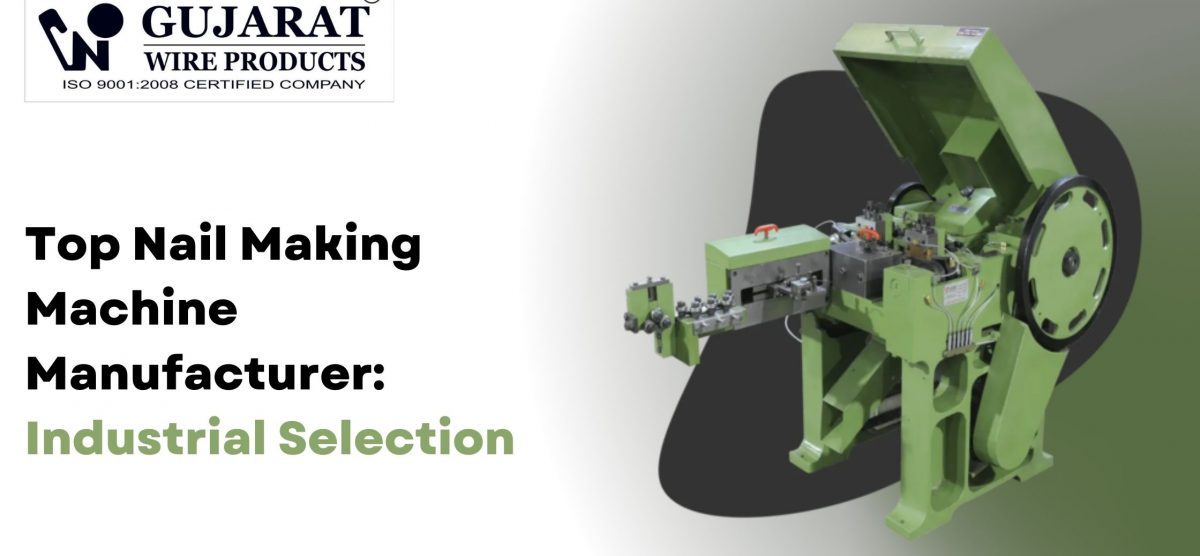
Nail Making Machine Manufacturer – A Guide
Introduction
Picking a nail making machine manufacturer based on the lowest quoted price or the highest rated speed is one of the most common and most costly decisions in this industry. Buyers who do this typically discover within the first six months that die consumption is double what was indicated, spare parts take weeks to arrive, and the “technical team” is unavailable after commissioning ends. The uncomfortable pattern: manufacturers with impressive catalog specifications often have shallow process knowledge—they cannot advise on wire reduction schedules, wire grade compatibility, or reject rate benchmarks because they build machines without running production lines. The right manufacturer solves your specific nail production problem, not just the equipment purchase. This guide covers how to define your actual industrial requirements, what separates technically strong manufacturers from catalog sellers, a practical evaluation checklist, and how to build an ROI model that accounts for the costs most buyers ignore entirely.
Machine Types and Industrial Fit
Nail machines split into distinct categories built around different forming requirements:
- Wire nail machines: Common construction and packaging nails from mild steel wire
- Concrete nail machines: Hardened steel wire, higher heading force, tighter point geometry
- Roofing and umbrella head machines: Specialised secondary pressing for wide-cap nails
- Coil and strip nail machines: Collated fasteners for pneumatic tool compatibility
- Specialty profile machines: Ring shank, twisted shank, and grooved nail variants
Matching machine type to your target industrial segment before evaluating manufacturers prevents the most expensive mismatch in nail plant planning.
Defining Industrial Requirements
Before approaching any manufacturer, establish these four parameters clearly:
- Nail portfolio: Full range of lengths, diameters, head types, point profiles, and any coating requirements
- Volume targets: Daily or monthly tonnage with 20–30% buffer for growth without full re-equipment
- Integration scope: Whether you need wire drawing, polishing, collating, and packing lines alongside forming machines
- Operating conditions: Shift structure, power supply stability, operator skill level, and maintenance capacity on-site
Manufacturers who skip this discovery process and jump straight to quoting models are revealing their approach to post-sale support as well.
What Separates Top Manufacturers
Technical Depth Over Catalog Depth
The signal that separates serious manufacturers from catalog suppliers is whether their team talks in terms of reduction schedules, wire hardness, die geometry, and reject rate benchmarks—or only in terms of machine dimensions and motor power. A manufacturer with genuine process knowledge identifies specification risks before they become production problems.
Build Quality for Continuous Duty
Industrial nail production runs 12–16 hour shifts. Machine frames, cam systems, bearings, and die boxes must absorb sustained impact loading without developing alignment drift. Cast frames with isolated mounting outperform fabricated steel frames in vibration control over multi-year production cycles—a distinction that rarely appears in specification sheets but shows up clearly after the first year of operation.
Manufacturer Evaluation Checklist
Verify these six factors before committing to a supplier:
- Installed base and export footprint: Reference plants in comparable operating environments validate performance claims
- Spare parts availability: Critical consumables—dies, cutters, cams—stocked domestically with confirmed lead times
- Technician response time: On-site service within 48–72 hours for Indian locations; longer response windows mean extended unplanned downtime
- Training and documentation: Operator manuals, setup SOPs, and commissioning checklists in usable format
- Factory acceptance testing: Machines run at specification before dispatch, with witnessed output data
- Lifecycle cost transparency: Stated die life, cutter replacement intervals, lubrication consumption, and power draw per ton
Machine Selection Criteria
Output Reality vs. Rated Speed
A machine rated at 400 nails per minute will deliver 260–300 nails per minute in sustained production once wire breaks, size changeovers, and die changes are included. Use net packed weight per shift as your selection metric, not peak cycle speed.
Size Window and Model Count
Each machine model has an economical nail size window. Operating consistently at the edges of that window—fine wire at minimum diameter or heavy wire at maximum—raises rejects and accelerates tooling wear. Operations producing a wide nail range from panel pins to 6-inch construction nails almost always benefit from two complementary models rather than one stretched machine.
Setup, Operation, and Optimisation
Pre-Installation and Commissioning
- Confirm floor layout, power capacity, and wire handling path before equipment arrives
- Run factory acceptance tests covering output rate, head quality, and point formation across your full nail size range
- Document baseline metrics at commissioning: reject rate, die life, and wire break frequency per size
Ongoing Optimisation
Scheduled audits on scrap percentage, downtime cause distribution, and die life trends reveal whether machines are running at their design capability or drifting. Most plants that report chronic underperformance have never measured these three metrics systematically—they only track output tonnage.
ROI and Hidden Cost Traps
Build your ROI model around five real cost components, not two:
- Raw wire cost and yield loss from rejects
- Power consumption per ton at actual operating speeds
- Die and cutter replacement frequency and unit cost
- Labour for operation, changeovers, and maintenance
- Downtime cost: hours lost multiplied by net margin per production hour
The plants that recover machine investment fastest share one pattern: they track first-pass yield weekly and treat any drop below 96% as a production alert, not a normal variance.
FAQs
How do you verify a manufacturer’s after-sales capability before purchasing?
Ask for contact details of three reference plants in your region and call them directly. Specifically ask about spare part lead times and whether the technical team returned for post-commissioning issues. Manufacturers confident in their service record share references without hesitation.
When does a nail plant need multiple machine models?
When the nail size range spans different wire diameter families—typically below 2.5mm and above 4mm—a single model cannot maintain optimal output and die life across both ranges. Splitting production across two matched models costs more upfront but recovers the difference through lower tooling consumption and higher yield within 12 months.
What lifecycle costs do buyers most commonly underestimate?
Die and cutter consumption on hardened or abrasive wire grades, and the cost of downtime during unplanned stoppages. Cheap machines with high die consumption often have a higher total cost per ton than well-engineered machines at 30–40% higher purchase price.
How important is operator training for production performance?
Untrained operators cause wire breakage rates above 8% and reject rates above 5% through incorrect tension settings and missed die inspections. Trained operators consistently hold breakage below 2% and rejects below 2%—a difference that, at scale, exceeds the cost of training investment within two months.
Conclusion
Industrial nail machine selection is a manufacturer partnership decision, not a one-time equipment purchase. The manufacturer’s process knowledge, build standards, and service infrastructure determine whether your production line performs to specification for one year or fifteen.
Gujarat Wire Products brings decades of focused engineering to wire nail and concrete nail machines built for industrial production—not catalog specification. Our application engineering team reviews your full nail portfolio, operating conditions, and volume targets before recommending models, tooling, and plant configuration. We stay engaged through commissioning, operator training, and ongoing performance audits because machine performance over years matters more to our business than the initial sale. Ready to match your production requirements to machines built for them? Visit gujaratwireproducts.com and share your nail specifications and volume targets for a tailored machine and plant recommendation.