Blog
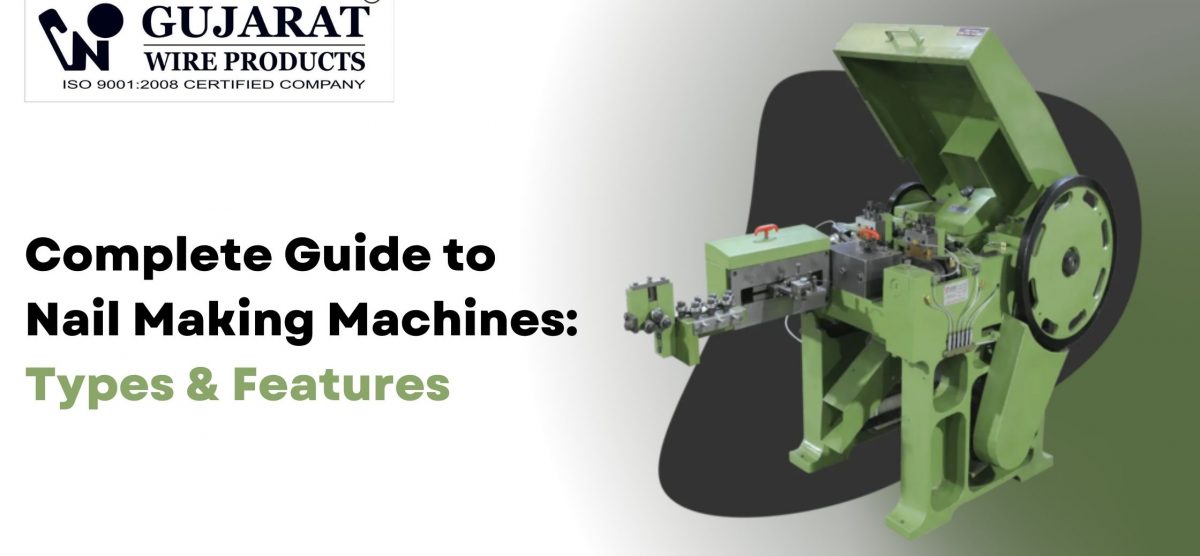
Nail Making Machine
Introduction
Most nail plant failures happen before the first coil of wire feeds through the machine. Buyers select equipment based on advertised speed figures without verifying whether that speed holds across their actual nail size range, or whether local service support exists when a critical die cracks on a Saturday night. The automatic nail making machine market grows at 6.1% CAGR, reaching USD 516 million by 2035, driven by construction demand across India, Africa, and Southeast Asia. Yet a significant share of new nail operations underperform capacity targets in the first year—not because of bad machines, but because of mismatched machine type, undersized tooling inventory, and gaps in operator training. This guide examines every machine type on the market, the core components determining output quality and uptime, performance specifications worth verifying, and a structured buying checklist that prevents expensive mismatches. Whether starting a new operation or upgrading existing equipment, these distinctions determine profitability at the production level.
Types
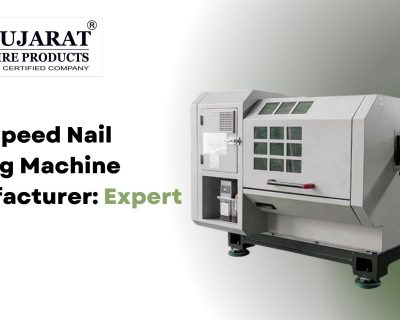
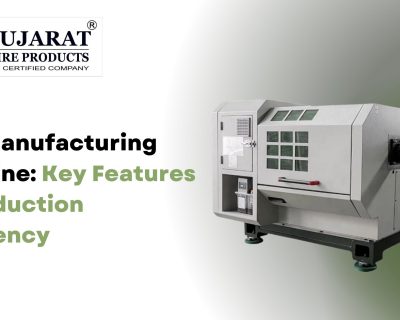
GHS90 Nail Making Machine
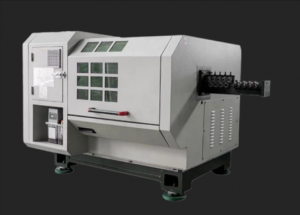
The GHS90 Nail Making Machine from Gujarat Wire Products is a high-speed industrial solution designed for efficient wire nail production. It excels in medium to large-scale manufacturing, delivering consistent output with advanced automation.
Technical Specifications
- Machine Weight: Approx. 2500 kg
- Operator Requirement: 1 skilled operator can efficiently manage up to 8 machines
- Control System: PLC-based system (Delta) for precise automation
- Drive System: High-performance AC Drive (Delta Make)
- Motor: Reliable motors from Siemens or Bharat Bijlee
- Lubrication: Automatic oil lubrication system
- Safety & Sensors: Equipped with 7 sensors for safety, control, and nail counting
| Model No. | GHS90 |
|---|---|
| Rated Power | 10 HP |
| Actual Power Rating | 6HP |
| Output | 760 Nails Per minute max. |
| Wire Diameter | 2.0-3.8mm |
| Nail Length | 40-90mm |
| Dimension | 1500x1300x1100mm |
| Machine Weight Approx | 2500 |
Production per 8 hours with 85% Efficiency
| Length(in mm) | Thick SWG | Thick mm | Production in kg per 8 hou | Nails per minute |
|---|---|---|---|---|
| 75 | 10 | 3.25 | 1350 | 650 |
| 63 | 10 | 3.25 | 1150 | 650 |
| 50 | 10 | 3.25 | 930 | 650 |
| 50 | 12 | 2.6 | 650 | 700 |
| 45 | 14 | 2 | 425 | 760 |
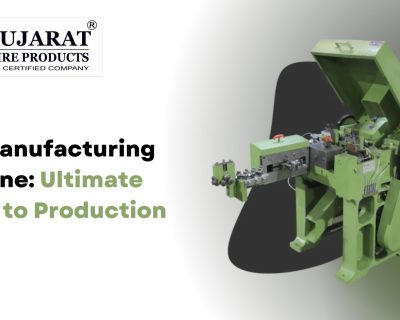
2. GHN3 Nail Manufacturing Machine
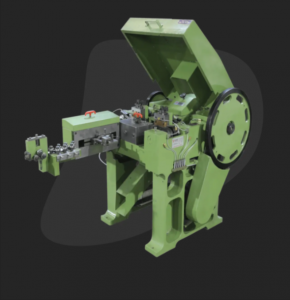
Gujarat Wire Products offers the GHN3 Nail Manufacturing Machine as a high-speed solution for efficient wire nail production. This machine excels in producing uniform nails for construction and hardware industries.
Technical Specifications
| Wire Diameter S.W.G.(mm) | 14-9/ (2.6-3.6) |
|---|---|
| Nail Length Inch (mm) | 1-3 / (25-75) |
| Max.Nail/min | 400 |
| Power Required hp/kw | 3 / 2.235 |
| Approx. nett Weight kgs. | 960 |
| Approx. gross Weight kgs. | 1400 |
| Case Size(mm) | 1325 x 1145 x 1155 |
| Approx.Floor Area(mm) | 1600 x 1020 |
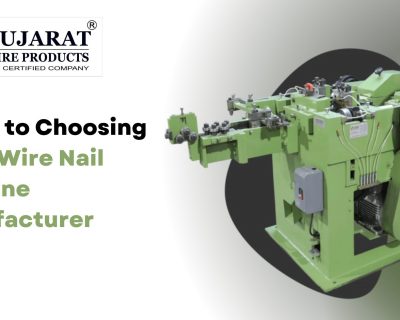
3. GHN4 Nail Making Machine
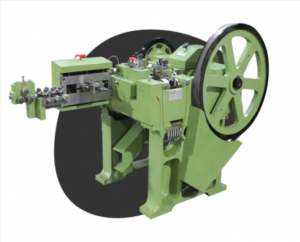
The GHN4 Nail Making Machine from Gujarat Wire Products is a high-speed, industrial-grade solution designed for efficient wire nail production. It excels in manufacturing robust nails suitable for construction and heavy-duty applications.
Technical Specifications
| Wire Diameter S.W.G.(mm) | 10-7/ (2.64-4.8) |
|---|---|
| Nail Length Inch (mm) | 1-5 / (25-125) |
| Max.Nail/min | 300 |
| Power Required hp/kw | 5 / 3.72 |
| Approx. nett Weight kgs. | 1350 |
| Approx. gross Weight kgs. | 1500 |
| Case Size(mm) | 1315 x 1140 x 1155 |
| Approx.Floor Area(mm) | 1610 x 1030 |
4. GHN2 Nail Making Machine
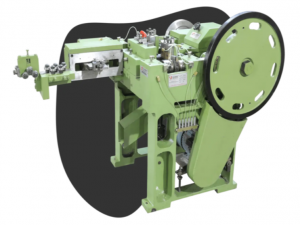
Gujarat Wire’s GHN2 Nail Making Machine is a high-speed, automatic model designed for efficient wire nail production in industries like construction and furniture. Produced by Gujarat Wire Products in Rajkot, India, it stands out for its precision, durability, and rapid output, making it ideal for large-scale manufacturing.
Technical Specifications
| Wire Diameter S.W.G.(mm) | 14-12 / (2-2.9) |
|---|---|
| Nail Length Inch (mm) | 1/2-2.5 / (12-65) |
| Max.Nail/min | 450 |
| Power Required hp/kw | 2 / 1.49 |
| Approx. nett Weight kgs. | 765 |
| Approx. gross Weight kgs. | 915 |
| Case Size(mm) | 1205 x 1125 x 1130 |
| Approx.Floor Area(mm) | 1375 x 950 |
Client Testimonials
- Salma Salma: The customer service was exceptional,as they kept me updated throughout the entire process. I had a question about the product,and their support team responded promptly and professionally.overall,my experience with GUJARAT WIRE PRODUCTS was outstanding.
- Sumit Pathak: Gujarat wire product India ke top company machine manufacturers hai yaha quality ki 100% guarantee milti hai inke machino ka jawab nhi or sabse khash baat hai ki inke machine me maintenance ka to baat hi nhi hai
- SANDEEP PRASAD: Good quality machines i am already using this company machine since last 8 years.
All staff and owner is cooperative - Kamil Koradiya: Nice machine batter experience
- jayesh dodiya: Best quality nail machine of Gujarat Wire Products
How Nail Making Machines Work
A nail making machine converts steel wire into finished nails through five sequential operations happening in a single continuous cycle. Understanding this sequence explains why each component matters and where quality problems originate.
- Wire feeding: An uncoiler releases wire at consistent tension into the machine
- Straightening: Rollers remove coil bends and surface kinks
- Cutting: A grip mechanism pulls exact wire length; the cutter shears to nail specification
- Heading and pointing: Heading dies form the nail head; pointing dies shape the tip simultaneously
- Ejection: The finished nail releases into the collection chute
Modern automatic machines complete this cycle 300-500 times per minute. One critical insight most buyers miss: the straightening stage determines downstream quality more than heading speed. Bent wire produces off-center heads regardless of die precision.
Nail Making Machine General Types
Standard Automatic Wire Nail Machines
These mechanical crank-driven machines handle 1-6 inch nails at 200-400 nails per minute. Crank and flywheel mechanisms deliver reliable force for heading operations. Most small-to-medium nail plants in India run this configuration. Setup simplicity and low spare parts cost make them the practical choice for operations producing mixed nail sizes in moderate volumes.
High-Speed Automatic Machines
Rotary and enclosed-frame high-speed machines reach 400-600 nails per minute for common sizes (1-3 inch). Enclosed frames suppress vibration and reduce operating noise from 85+ dB to under 75 dB—a significant factor for urban factory locations. The enclosed design also extends die life by containing lubrication within the cutting zone.
Coil Nail Machines
Coil nail production lines collate finished nails into wire or plastic strip coils for pneumatic nailers. These machines add a collation stage after standard nail forming. Construction markets consuming pneumatic nailing tools pay premium prices for coil nails—the equipment investment typically recovers within 14-18 months through better pricing on the same wire input.
Concrete and Specialty Nail Machines
Hardened nail production requires modified machines with heat treatment integration. Concrete nails need fluted shanks and extra-hard points that standard heading dies can’t form. Umbrella head roofing nail machines use wider heading tooling creating large-diameter heads in a single strike. These specialty machines serve narrower markets but face less price competition.
Nail Making Machine Buying Checklist
When buying a high speed nail making machine, focus on key factors like production capacity, power consumption, spare parts availability, and after-sales service to ensure reliability and cost-effectiveness for industrial use.
Production Capacity
Production capacity determines output efficiency, typically measured in nails per minute or kilograms per hour. High-speed models range from 300-700 nails per minute (or 150-760 kg in 8 hours), suitable for varying scales from small workshops to large factories. Match this to your demand—e.g., 500+ nails/min for high-volume needs—to avoid underutilization.
Power Consumption
Power usage impacts operational costs, with machines commonly requiring 3-10 HP motors (around 2-12 kW total). Monthly consumption might hit 400-440 units for standard models running 8-hour shifts. Opt for energy-efficient units under 5 kW if electricity costs are high in your region.
Spare Parts Availability
Reliable suppliers stock essentials like nail molds, cutters, dies, hammers, and feeding fingers, which wear out every 3 months. Indian manufacturers (e.g., Rajkot-based) offer comprehensive sets for Punjab/Rajkot models, ensuring quick replacements. Confirm local or long-term global supply to minimize downtime.
After-Sales Service
Strong support includes warranties (often 2 years, excluding wear parts), installation guidance, manuals, and on-site repairs. Providers in India and China emphasize technical consultations and maintenance for stable operation. Prioritize dealers with proven service networks, especially in industrial hubs like Rajkot or Chennai.
Key Machine Components
Die System
The die set—grip dies, heading dies, cutters, and pointing unit—determines nail dimensional accuracy and surface quality. Tungsten carbide dies last 3-5x longer than tool steel alternatives. Track cuts per die to establish replacement schedules before dimensional drift starts affecting product quality.
Drive and Control System
Mechanical cam systems suit standard-speed machines where simplicity and low maintenance matter most. PLC and VFD-equipped machines add programmable speed control, auto-stop on wire break, die failure alarms, and production counters. The PLC premium pays back through reduced scrap during startup and faster fault diagnosis when problems occur.
Lubrication and Cooling
Forced lubrication systems deliver oil to high-friction points—cutter guides, crank bearings, and heading mechanism—preventing heat buildup that accelerates wear. Machines without forced lubrication require operator-applied oiling every 30-60 minutes. Missed lubrication cycles are the single most common cause of premature machine wear in nail plants running three shifts.
Key Specifications Overview
Modern nail making machines handle a range of wire diameters from 2.0-4.1 mm (roughly 14-8 SWG), enabling production of nails from thin finishing types to heavier construction nails. Nail lengths commonly span 12-100 mm (0.5-4 inches), with some high-capacity models extending to 152 mm (6 inches) for specialized applications.
Production Capacity
These machines achieve output rates of 100-700 nails per minute, depending on size and model—for instance, smaller GN2 models hit 400 nails/min while larger ones like high-speed variants reach 500-600. Factors like wire thickness and automation level influence speed, with semi-automatic units at the lower end (100-200) and fully automatic ones higher.
Motor Power and Weight
Motor power typically ranges from 1.5-10 kW (2-10 HP), with 3-phase electric motors common at 1440 RPM for consistent performance. Machine weights vary widely from 450-2700 kg, reflecting size—compact units around 765 kg for entry-level production, up to 2500 kg for heavy-duty models.
Dimensions
Standard dimensions fall between 1200-2450 mm in length, 950-1500 mm in width, and 1050-1900 mm in height, requiring a floor area of about 1.4 x 1 m for smaller models. Larger machines demand more space, up to 2.5 x 1.5 m, impacting factory layout planning.
Price Range of Nail Making Machine
Entry-level semi-automatic models start around ₹80,000–₹1,50,000, suitable for small-scale operations producing 100–200 nails per minute. Mid-range automatic machines cost ₹1,50,000–₹4,00,000, while high-end fully automatic high-speed units exceed ₹5,00,000, up to ₹12–19 lakh for advanced setups.
Automation Level
Manual or semi-automatic machines (₹80,000–₹3,00,000) require more labor but suit startups with lower output needs. Fully automatic models (₹3,00,000+) use PLC controls and AC drives for minimal intervention, boosting efficiency in large plants.
Production Capacity
Basic machines output 100–300 nails per minute with 1–3 HP motors and weights around 1,000 kg. High-capacity versions produce 300–400+ nails per minute, ideal for industrial scales, often weighing 2,000+ kg with 10 HP power.
Brand and Quality Factors
Reputable brands like Gujarat Wire Products, Ekta Industries, and H P Singh offer durable alloy steel builds and warranties up to 12 months. Premium quality raises costs due to features like Siemens motors and precise automation, ensuring longevity over cheaper imports.
Raw Materials Used in Nail Making Machines
Nail making machines transform high-quality wire into durable nails through automated feeding, cutting, and forming processes. The choice of raw material directly impacts nail strength, corrosion resistance, and application suitability. Primary raw materials include mild steel wire, high carbon steel wire, and galvanized wire, each selected based on production needs like tensile strength and environmental exposure.
Mild Steel Wire
Mild steel wire, with low carbon content (typically 0.05-0.25%), serves as the most common raw material in nail making machines for general-purpose nails.
Key Properties: Excellent ductility for easy forming, weldability, and cost-effectiveness.
Applications: Construction, woodworking, and packaging where high strength isn’t critical.
Machine Compatibility: Ideal for high-speed nail making machines, producing smooth or barbed nails up to 6 inches long.
This wire feeds smoothly into the machine’s gripping dies, minimizing jams and ensuring consistent output.
High Carbon Steel Wire
For demanding applications, high carbon steel wire (0.6-1.0% carbon) delivers superior hardness and tensile strength in nail production.
Key Properties: High wear resistance and rigidity after heat treatment.
Applications: Heavy-duty concrete nails, roofing nails, and masonry fasteners that withstand shear forces.
Machine Compatibility: Suited for precision nail making machines with hardening capabilities, yielding nails with diameters from 2-5 mm.
Operators often pair it with annealing processes to balance brittleness during high-volume manufacturing.
Galvanized Wire
Galvanized wire, coated with a zinc layer via hot-dip or electro-galvanizing, enhances corrosion resistance for outdoor use in nail making machines.
Key Properties: Rust-proof surface (zinc coating of 40-100 g/m²), maintaining core steel strength.
Applications: Fencing, siding, and marine environments where moisture exposure is high.
Machine Compatibility: Works seamlessly in automated lines, producing shiny or ring-shank galvanized nails without coating damage.
This material extends nail lifespan by 3-5 times compared to uncoated steel.
Selecting the right nail making machine raw material optimizes production efficiency and product quality. Factors like wire diameter (1.9-5.5 mm standard) and coil weight (up to 2 tons) ensure uninterrupted operation.
Top Applications of Nail Making Machine
Nail making machines revolutionize production by automating the high-speed forming of nails from wire coils, enabling efficient output for diverse industries. These versatile machines produce common nails, roofing nails, finishing nails, and specialty types, meeting demands for durability and precision. Below, explore key applications where nail making machines drive productivity.
Construction Industry
In construction, nail making machines supply essential fasteners for framing, roofing, and structural assembly. They churn out galvanized or concrete nails that withstand harsh weather and heavy loads, reducing on-site delays. For instance, high-volume machines produce thousands of nails per hour, supporting large-scale projects like residential builds and infrastructure development, where reliable nail supply cuts costs by 20-30%.
Furniture Manufacturing
Furniture makers rely on nail making machines for crafting sturdy upholstery tacks, brad nails, and finish nails used in assembly lines. These machines ensure consistent size and finish, ideal for attaching frames, cushions, and decorative elements without splitting wood. Precision models minimize waste, boosting efficiency in mass production of chairs, cabinets, and sofas for retail and export markets.
Wooden Packaging
Nail making machines excel in producing ring shank or spiral nails for wooden crates, pallets, and shipping boxes. Their high-strength output secures loads during transport, complying with international standards like ISPM 15 for heat-treated wood packaging. Manufacturers benefit from customizable nail lengths, enabling rapid production for logistics firms handling everything from agricultural goods to industrial equipment shipments.
Hardware Supply Businesses
Hardware suppliers use nail making machines to stock diverse inventories, from box nails to masonry nails, meeting retail and wholesale needs. On-demand production allows quick adaptation to market trends, such as eco-friendly coated nails. This application supports small-to-medium enterprises by offering competitive pricing and bulk volumes, streamlining distribution to contractors, DIY stores, and online platforms.
Nail making machines thus enhance scalability across these sectors, with modern models incorporating automation for reduced labor and energy use.
Advantages & Benefits of Nail Making Machines
Nail making machines have revolutionized the hardware manufacturing industry by automating the production process, delivering superior efficiency and reliability compared to manual methods. These advanced machines produce nails in various sizes and types—from common wire nails to finishing nails—while minimizing waste and maximizing output. Below, we explore the key advantages that make them indispensable for modern nail production lines.
High Productivity
Nail making machines excel in high-speed operations, often producing up to 500-1,000 nails per minute depending on the model. This rapid output far surpasses hand-forging techniques, enabling factories to meet large-scale demands from construction, woodworking, and packaging sectors. For instance, a single automatic nail making machine can churn out millions of nails daily, scaling production without proportional increases in time or resources.
Low Labor Requirement
Unlike traditional nail production that relies on skilled laborers for each step—from wire feeding to cutting and heading—modern nail making machines automate nearly everything. A single operator can oversee multiple units, slashing labor costs by 70-80%. This reduces dependency on manual workforce, minimizes human error, and frees employees for quality checks or maintenance, making it ideal for small to medium enterprises.
Consistent Quality
Every nail produced by these machines maintains uniform dimensions, smooth finishes, and precise specifications, thanks to computerized controls and precision tooling. Variations common in manual processes—like irregular heads or uneven shanks—are eliminated, ensuring compliance with industry standards such as ASTM or ISO. The result? Superior nails that perform reliably in applications like roofing, framing, and furniture assembly.
Cost-Effective Production
Investing in a nail making machine yields quick ROI through reduced material waste (under 1%), lower energy consumption, and eliminated rework. Raw wire coils are efficiently transformed into finished products with minimal downtime, cutting overall production costs by 40-60% per unit. Long-term savings on labor and maintenance further enhance profitability, positioning these machines as a smart choice for competitive markets.
Nail Manufacturing Business Setup
Setting up a nail manufacturing business using a nail making machine offers a low-barrier entry into the construction materials sector, with steady demand from India’s booming infrastructure. This guide covers key requirements for a small-scale operation in India, focusing on investment, space, power, profits, and returns.
Investment Required
A basic wire nail manufacturing setup requires ₹5-15 lakhs total, including machinery (₹3-7 lakhs for a single automatic nail making machine), building (₹1.75 lakhs for basic structure), and working capital for raw materials like wire rods. Additional costs cover polishing, grinding machines, and initial inventory for 20 tons/month production. Entrepreneurs can start small and scale with profits.
Space Needed
Small workshops of 20-200 square meters suffice for one machine, with 750 sq ft minimum recommended for equipment placement and operations. Machines like GHN3 models need about 1.6m x 1m floor space per unit. Ventilation and worker movement require extra room in hot climates.
Electricity Requirements
A single machine typically needs 2-5 HP (1.5-3.7 kW, 3-phase 440V), with total plant usage at 8-30 kW based on scale. Energy consumption runs 40-90 kWh per ton of nails, favoring modern VFD-equipped models for savings. Backup generators are advised for power outages.
Profit Margins
Monthly profits reach ₹2-3 lakhs (USD 3,500) for 20 tons output after costs like materials (₹8-10 lakhs), labor (₹50k), and electricity (₹20k), yielding 20-30% margins. Sales at ₹75/kg vs. production costs enable this, driven by construction demand. Export potential boosts margins further.
ROI Estimate
Payback occurs in 3-4 months for equipment costs, with annual ROI up to 38% as sales grow. One project shows profits rising from ₹1 lakh to ₹2 lakhs yearly on ₹25 lakh sales. Scale to multiple machines for higher returns.
Maintenance & Troubleshooting
Nail making machines require regular maintenance to ensure smooth operation and high-quality output. Proper troubleshooting of common issues like nail bending, machine jamming, and uneven head formation prevents downtime and extends equipment life.
Routine Maintenance
Perform daily cleaning of the feed passage, molds, and dies to remove iron powder and debris, which helps avoid clogs and wear. Lubricate moving parts like rollers and cutters weekly, and inspect wire quality for rust or uneven diameter before feeding, as poor wire causes most defects. Monthly checks should include tightening fasteners, verifying alignments, and sharpening or replacing dull blades to maintain production speed.
This industrial nail making machine shows key components like the flywheel and forming dies that need regular inspection.
Nail Bending
Nail bending often stems from uneven wire tension, worn forming dies, or excessive machine speed, leading to curved shanks. Check wire straightness and roller gaps (typically 0.1-0.2 mm larger than wire diameter), then realign the forming mechanism to ensure even pressure. Replace damaged punches or adjust hydraulic balance if bending persists after wire quality verification.
Machine Jamming
Jamming usually occurs due to wire clogs in the feed system, buildup of impurities, or misaligned cutters blocking ejection. Stop the machine, clear the feed port of rust or oxide, and clean the entire passage; test roller rotation for looseness. Inspect for dull knives causing incomplete cuts and ensure proper lubrication to prevent overheating-related stops.
Uneven Head Formation
Uneven heads result from misaligned punches, worn dies, or inconsistent wire diameter, producing off-center or cracked heads. Realign the heading system for precise centering (within 0.3 mm) and sharpen pin punches to avoid splits during compression. Use diameter-consistent wire (±0.05 mm) and monitor die wear through visual checks to catch issues early.
Safety Guidelines
Nail making machines require strict safety protocols to prevent injuries from high-speed operations, sharp components, and metal debris. Operators must follow these guidelines for operator safety, machine handling precautions, and PPE usage to ensure compliance with industrial standards.
Operator Safety
Operators should receive training on machine principles, structure, and emergency procedures before use. Never place fingers near moving parts like the nail gun muzzle or impact hammer, as the high force can cause severe crushing or amputation injuries.
Keep hands clear of fasteners and wire feeds during operation, and maintain a tidy workspace to avoid slips from scattered nails. Always stop the machine immediately if abnormal sounds, vibrations, or overheating occur, and power off before any checks.
Machine Handling Precautions
Before starting, hand-turn the flywheel one full cycle to check for obstacles, loose bolts, or hazards, then verify power supply, earthing, and lubrication levels. Never adjust settings, clean, or lubricate while the machine runs, as this risks misalignment or entanglement.
Use only manufacturer-approved wire and accessories to prevent defects or jams, and monitor temperature in friction areas during runs. Shut down by stopping wire feed first, avoiding top-dead-center stops on sliders to prevent startup jams.
PPE Usage
Wear safety glasses to shield against flying metal shards, gloves for hand protection from sharp edges (ensuring they fit securely without loose fabric), and ear protection for noise reduction. Avoid loose clothing near moving parts, and use steel-toed boots for foot safety.
Replace PPE if damaged, and combine with training for proper donning—perform hand hygiene after adjustments. This setup minimizes risks from dust, impacts, and chemicals in nail production.
Comparison with Other Machines
Automatic vs Semi-Automatic Nail Making Machines
Automatic nail making machines handle the full production cycle—from wire feeding and cutting to nail forming and ejection—with minimal operator input, boosting efficiency for large-scale operations. They typically achieve outputs of 400-500 nails per minute and support nail thicknesses from 4-19 gauge. Semi-automatic models require more manual oversight, such as loading wire or clearing jams, making them suitable for smaller factories with production rates of 200-400 nails per minute.
Key Differences
Automatic machines excel in consistency and scalability, though they demand skilled maintenance for optimal performance.
High-Speed vs Standard Nail Making Machines
High-speed nail making machines optimize mechanical components like lighter reciprocating parts and advanced lubrication for outputs exceeding 500-1000 nails per minute, often with PLC controls for precision. Standard machines operate at 200-500 nails per minute, prioritizing simplicity and affordability for basic nail types up to 4 inches long. High-speed models reduce cycle times but require high-quality wire to avoid downtime.
Key Differences
High-speed variants shine in sustained operation but may underperform without proper setup, unlike reliable standard models.
Matching Machines to Nail Products
Different nail types require different machine configurations:
- 1-4 inch construction nails: Standard automatic machines handle this range efficiently
- Roofing/umbrella head nails: Wide heading die tooling, standard-speed machines
- Concrete nails: Hardened wire input, modified pointing mechanism, heat treatment line
- Coil nails: Standard nail machine plus collation attachment
- Fine finishing/brad nails: Specialized high-speed machines with fine-gauge wire handling
Running concrete nails on a standard construction nail machine damages the pointing die within hours. Tooling compatibility defines machine suitability more than motor size or frame weight.
Uptime and Operational Factors
Wire Quality Requirements
Input wire diameter must stay within ±0.1mm of specification. Surface rust, scale, or inconsistent tensile strength increases die wear and jamming frequency. Operations feeding poor-quality wire see 30-40% higher tooling costs and 15-20% lower effective uptime.
Changeover Time
Switching between nail sizes requires adjusting cutter length, swapping heading dies, and recalibrating the feed mechanism. Documented setup procedures reduce changeover from 45 minutes to 15-20 minutes. Batch similar nail sizes together to minimize daily changeover frequency.
Buying Checklist
Before signing a purchase order, verify:
- Wire diameter range supported across your full nail size mix
- Confirmed nails/min rate at your largest production nail size (not just peak speed)
- Control system: PLC/VFD vs mechanical cams—match to your operator skill level
- Die availability and replacement cost for your production sizes
- Service technician response time from the manufacturer’s location
- Spare parts inventory held by the manufacturer (ask for the top 20 wear items)
- Commissioning support: installation, operator training, trial run duration
Visit an existing installation running your target nail sizes. Sample production across a full shift, not just during a supervised demo.
FAQs
What production volume justifies upgrading to a high-speed machine?
Operations consistently running above 80% utilization on a standard-speed machine and facing capacity constraints benefit from high-speed equipment. If your standard machine runs below 70% utilization, improving uptime and tooling management on existing equipment delivers more output than purchasing additional machines.
Can one machine produce both wire nails and concrete nails?
Standard machines can’t effectively produce hardened concrete nails without tooling damage. Concrete nail production requires modified pointing tooling and hardened wire input that creates excessive wear on standard cutter geometries. Dedicated machines for each nail type protect tooling life and output quality.
How long do heading dies typically last?
Tungsten carbide heading dies produce 8-15 million strikes before requiring replacement, depending on wire hardness and machine speed. Tool steel dies last 2-4 million strikes. Track production counts against die condition to establish replacement schedules specific to your wire type and nail size mix.
What noise levels should I plan for?
Standard mechanical nail machines generate 85-90 dB at one meter distance. Enclosed high-speed machines reduce this to 72-78 dB. Indian factory regulations require hearing protection above 85 dB for extended exposure. Plan acoustic treatment or enclosed machine configurations for urban factory locations.
What’s the realistic first-year uptime for a new nail machine installation?
Plan for 65-75% utilization in the first three months while operators develop consistent setup and monitoring skills. Well-maintained machines with trained operators typically reach 80-85% sustained utilization after the first six months. Uptime below 70% after six months indicates tooling management or wire quality issues requiring attention.
Conclusion
Nail machine selection determines your production economics, tooling costs, and product range for the next decade. Match machine type to your specific nail mix, verify die availability, and test real production output before purchasing. Contact our team today for machine recommendations matched to your nail sizes and daily volume targets.
Gujarat Wire Products has manufactured nail making machines and wire processing equipment since 1975, serving operations across India, Africa, Europe, and Asia. Our ISO 9001:2008 certified machines cover the full range from standard automatic to high-speed enclosed models, with complete PLC/VFD control options. We provide installation commissioning, operator training, die selection guidance, and spare parts inventory support that keeps production lines running at specification.
Visit gujaratwireproducts.com or contact our engineering team to discuss your nail production requirements and receive machine recommendations matched to your specific nail range, wire specifications, and output targets.