Blog
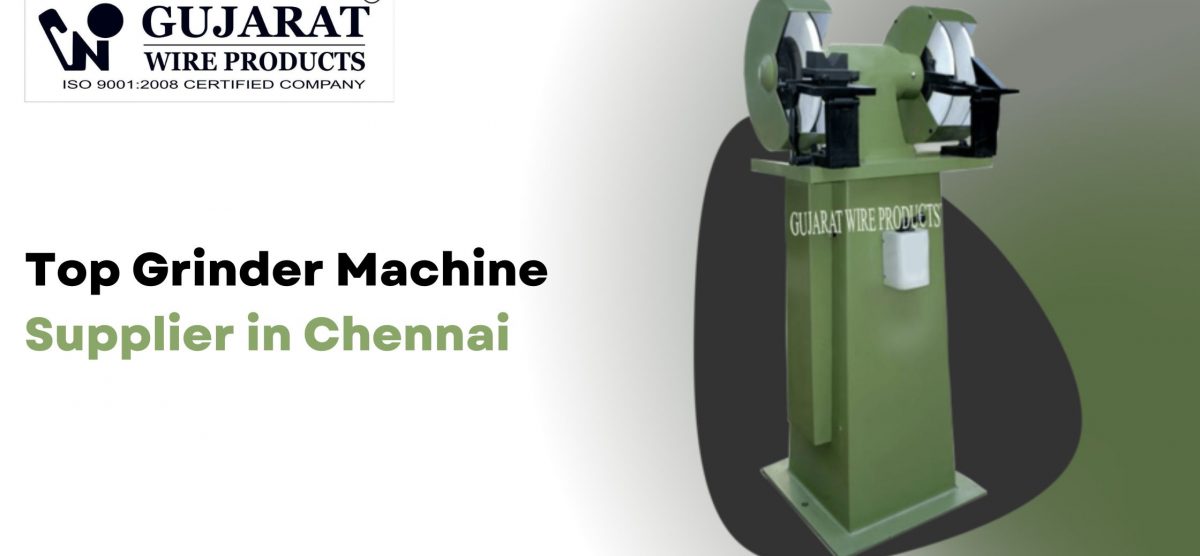
Top Grinder Machine Supplier in Chennai
Introduction
Grinding is often treated as a secondary operation. In reality, it decides final accuracy, surface finish, and part acceptance. Many workshops and factories in Chennai struggle with the same issues: inconsistent finish, frequent wheel dressing, overheating, and machines that lose precision over time. These problems usually do not come from operator error. They come from grinder machines that are not matched to the job, the duty cycle, or the production rhythm.
A well-chosen grinder machine changes this completely. It stabilizes tolerances, reduces rework, and shortens finishing time without pushing operators to work harder. The shift is not dramatic on day one, but it compounds quietly across weeks of production.
This article explains what grinder machines do, the main types used in industrial settings, and how Chennai-based manufacturers should evaluate machines and suppliers. We break down applications, feature trade-offs, and buying criteria in direct terms. The aim is simple: help buyers select grinder machines that deliver consistent output, not just acceptable results.
What is a grinder machine
A grinder machine removes material using a rotating abrasive wheel. Unlike cutting machines, grinders work at the micron level to refine shape and finish.
Grinding improves dimensional accuracy and surface quality after machining, casting, or forging. It is often the final operation before inspection or assembly.
In industrial use, grinders are expected to run repeatedly without losing alignment, balance, or rigidity.
Types of grinder machines
Surface grinding machines
Surface grinders produce flat, smooth surfaces. They are used for plates, blocks, and precision components.
Accuracy depends heavily on bed rigidity and table movement consistency.
Cylindrical grinding machines
These machines grind round components such as shafts and rods. Both internal and external diameters can be finished.
They are common in automotive, pump, and motor component production.
Centerless grinding machines
Centerless grinders support workpieces between a grinding wheel and a regulating wheel. There is no fixed center.
They excel at high-volume production of uniform cylindrical parts.
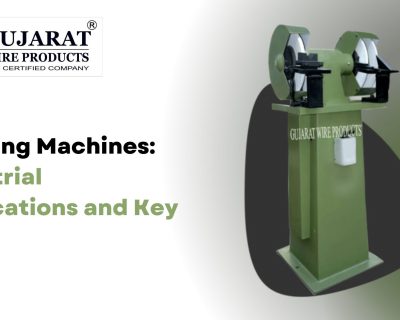
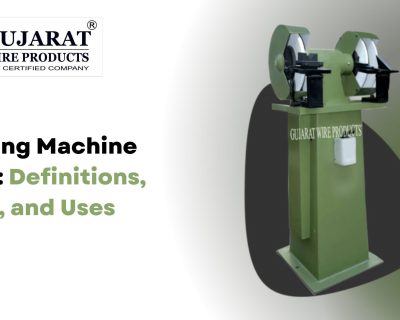
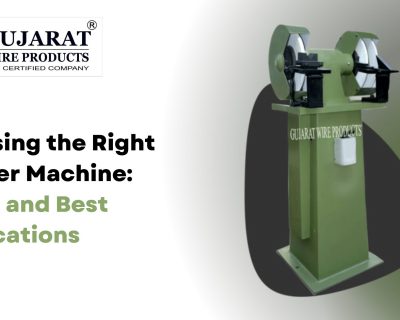
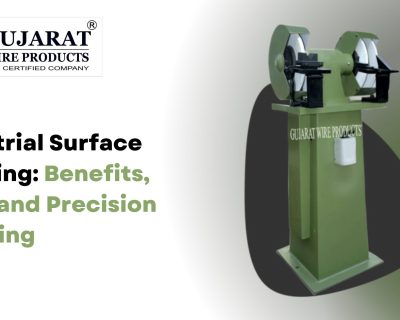
Bench and pedestal grinders
Used for tool sharpening, deburring, and general maintenance. They are simple but widely used.
In production environments, they support main grinding operations rather than replace them.
Specialized grinders
These include internal grinders, die grinders, and double-disc grinders. Each serves narrow but critical use cases.
Specialization often improves efficiency more than adding capacity.
How grinder machines work
Grinding wheel action
The abrasive wheel cuts through micro-fractures rather than chips. Wheel composition determines finish and heat generation.
Incorrect wheel choice causes most surface defects.
Feed control and precision
Controlled feed rates prevent chatter and burn marks. Precision grinders rely on stable feed mechanisms.
Manual feed works for low volume. Automated feed improves repeatability.
Cooling and lubrication
Coolant removes heat and debris. Without proper flow, wheel life drops and surface finish degrades.
Many defects appear hours after grinding due to thermal stress, not visible sparks.
Industrial use cases
Metal fabrication and finishing
Grinding removes burrs and prepares surfaces for coating or assembly. Consistency matters more than speed.
Surface grinders dominate this segment.
Automotive and precision components
Tight tolerances define acceptance. Cylindrical and centerless grinders are widely used.
Small variations here lead to noise, wear, or failure later.
Tool rooms and maintenance
Sharpening and reconditioning tools extend machine life. Bench and surface grinders support this work.
Accuracy reduces tool replacement costs quietly over time.
Heavy engineering and fabrication
Large parts require stable machines with high torque and rigid frames.
Light-duty grinders fail early in these environments.
Key features to compare
Power and wheel capacity
Higher power supports steady grinding under load. Oversized wheels reduce frequent changes.
Matching wheel size to job length improves productivity.
Precision and rigidity
Machine rigidity defines finish quality. Vibration shows up as chatter marks long before breakdown.
Heavier frames often outperform lighter machines at the same power.
Controls and automation
Basic automation improves repeatability. Over-automation complicates maintenance.
Simple, clear controls usually deliver better uptime.
Safety and guarding
Effective guards and emergency stops reduce accidents and downtime.
Safety failures often halt production longer than mechanical ones.
Benefits of high-quality grinder machines
Well-built grinder machines create advantages that compound quietly.
- Stable surface finish across batches
- Lower rejection and rework rates
- Reduced wheel consumption
- Less operator fatigue
An uncomfortable insight is that many shops accept surface variation as normal. In reality, it often comes from machine instability, not process limits.
Supplier selection criteria in Chennai
Application understanding
Suppliers who ask detailed questions deliver better outcomes. Generic recommendations usually miss key constraints.
Job mix matters more than advertised capacity.
Local service access
Grinding machines need periodic alignment and wheel setup support. Local service reduces downtime.
Response time often matters more than warranty length.
Spare parts and consumables
Standardized components simplify maintenance. Custom-only parts increase dependency.
Ease of sourcing affects long-term cost.
Installation and training
Poor installation causes early precision loss. Training should focus on setup discipline, not just operation.
This is where many machines quietly lose performance.
Comparing models and configurations
Entry-level grinders handle light duty but struggle with continuous production. Heavy-duty machines cost more but deliver stable output.
Manual machines offer flexibility but depend on skill. Semi-automatic machines reduce variation without complexity.
In real workshops, moderately powered, rigid machines often outperform high-speed designs over long shifts.
Maintenance practices that matter
- Dress wheels before finish degrades
- Balance wheels after every change
- Monitor bearing noise, not just heat
- Keep coolant clean and flowing
Plants that follow these basics extend grinder accuracy far beyond expected service life.
Frequently asked questions
Q: Which grinder suits precision flat work?
A: Surface grinders are best for flatness and finish. Machine rigidity and table movement quality matter more than power.
Q: Does higher RPM always improve finish?
A: No. Excessive RPM increases heat and burn risk. Correct wheel and feed settings matter more.
Q: How often should grinding wheels be replaced?
A: Replacement depends on material and usage. Surface finish deterioration is a better indicator than time.
Q: Are automated grinders always better?
A: Automation improves consistency, not skill. For variable jobs, manual control can still be effective.
Conclusion
Grinder machines define final part quality. The right machine delivers consistent finish, predictable accuracy, and stable production flow. The wrong one hides losses inside accepted variation.
If you are sourcing grinder machines in Chennai, focus on rigidity, application fit, and service support—not just price or power rating.
Gujarat Wire Products supplies grinder machines built for industrial consistency and long-term reliability. Our focus is matching machine capability to real workloads, ensuring proper installation, and supporting steady performance over time.
Take the next step. Contact Gujarat Wire Products today to discuss your grinding application and receive a recommendation aligned with your production needs.