Blog
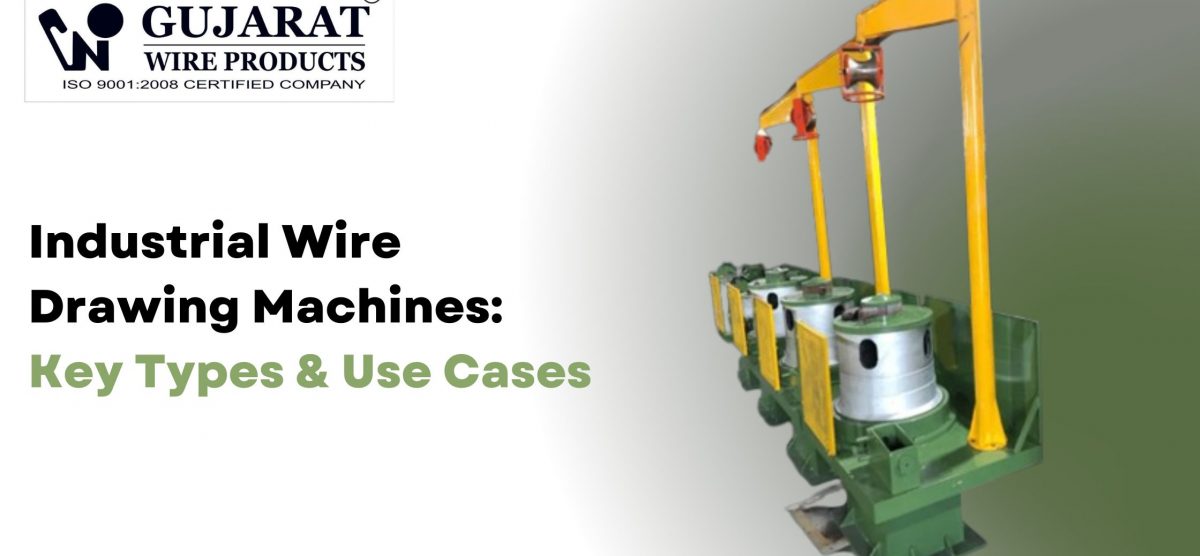
Industrial Wire Drawing Machines: Key Types & Use Cases
Introduction
Industrial wire drawing sits at the center of many manufacturing chains, yet it is often treated as a background operation. That is a mistake. When wire quality fluctuates, every downstream process feels it—nail making, welding, cabling, springs, reinforcement, and precision components. Many plants try to fix quality issues later, not realizing the root cause sits at the drawing stage.
Modern industrial wire drawing machines change that dynamic. They bring control where there was variation and repeatability where there was adjustment by instinct. The shift is not dramatic on day one, but it is decisive over time. Scrap falls, rework slows, and planning becomes easier.
This article explains what industrial wire drawing machines do, how they work, and which types suit different use cases. It breaks down machine categories, operating characteristics, and selection logic in plain terms. The goal is simple: help buyers choose equipment that matches real production needs, not theoretical capacity.
What is wire drawing
Wire drawing is a cold working process that reduces the diameter of metal wire by pulling it through precision dies. Each pass reduces thickness while improving dimensional control.
As the wire is drawn, tensile strength increases. Surface quality depends on die condition, lubrication, and tension balance.
In industrial settings, wire drawing is not a single step. It is a controlled sequence that prepares wire for consistent downstream processing.
How wire drawing machines work
Wire feed and tension control
Wire enters the machine from a payoff system that regulates unwinding force. Stable tension at this stage prevents sudden stress spikes.
Uncontrolled payoff is one of the most common causes of hidden defects, especially in long runs.
Die trains and reduction stages
The wire passes through one or more dies arranged in a defined sequence. Each die performs a calculated reduction to avoid cracking or surface damage.
The machine’s rigidity and alignment determine how evenly this reduction occurs.
Take-up and coiling
Finished wire is collected on spools or coils. Proper take-up geometry prevents edge damage and uneven layering, which often shows up later during feeding.
Key types of industrial wire drawing machines
Single block wire drawing machines
These machines use one capstan and are suited for limited reduction or batch production. They are simpler and easier to maintain.
Single block machines work well where flexibility matters more than volume.
Pulley type wire drawing machines
Pulley type machines use multiple capstans arranged in a loop. They are commonly used for medium-scale production.
They balance cost and output but require careful tension monitoring.
Straight-line wire drawing machines
Straight-line machines align dies and capstans in a linear path. This reduces wire bending and improves surface finish.
They are preferred for continuous, high-volume production with tight tolerances.
Wet wire drawing machines
Wet machines immerse dies and wire in lubricant. This reduces friction, heat, and die wear.
They are widely used for fine wire and applications where surface finish is critical.
Dry wire drawing machines
Dry machines rely on surface lubrication only. They are simpler and well-suited for larger diameters.
They require closer monitoring of temperature and die condition.
Detailed characteristics of each type
Diameter range and material behavior
Fine wire demands precise lubrication and tension control. Larger diameters tolerate simpler setups but generate more heat.
Matching machine type to wire size is more important than matching it to peak speed.
Speed versus stability
Higher speed does not always mean higher output. Many plants run below rated speed to protect quality.
Machines that stay stable at moderate speeds often outperform faster machines over long shifts.
Energy and heat management
Energy losses often show up as heat. Machines with poor cooling consume more power and shorten die life.
This becomes visible only after months of continuous operation.
Industrial use cases
Steel and ferrous wire
Used in nails, fasteners, reinforcement, and general hardware. These applications value diameter consistency over mirror finish.
Straight-line and multi-pass machines dominate this segment.
Copper and aluminium wire
Electrical and cable applications require surface integrity and conductivity. Wet drawing machines are commonly used.
Small surface defects here cause large downstream losses.
Fine wire for precision parts
Electronics, springs, and specialty components rely on fine wire with strict tolerances.
Any vibration or tension fluctuation shows up immediately in rejection rates.
Construction and infrastructure wire
Volume matters more than finish. Machines must handle long runs with minimal stoppage.
Reliability under dust and heat conditions becomes a deciding factor.
Choosing the right wire drawing machine
Define the dominant product, not the exception
Many buyers select machines based on occasional orders. This leads to underutilized capacity.
The dominant wire size and material should drive machine selection.
Match output rhythm to downstream processes
A drawing machine that outpaces downstream equipment creates bottlenecks, not efficiency.
Balanced line design matters more than isolated speed.
Evaluate service access and spares
Downtime costs often exceed energy costs. Local service reach and standardized parts protect uptime.
This is where long-term performance is decided.
Performance enhancements and operating practices
- Monitor wire temperature, not just speed
- Maintain consistent lubricant quality
- Track die wear by surface finish, not time
- Replace payoff guides before visible damage
Plants that follow these basics often delay major upgrades longer than expected.
Comparative analysis
Across factories, a consistent pattern appears. Machines with moderate speed, strong mechanical structure, and simple controls outperform complex systems in real use.
Another uncomfortable insight is that many “high-capacity” machines spend most of their life running below potential. Stability, not headline numbers, defines usable output.
Conclusion
Industrial wire drawing machines shape the quality ceiling of wire-based manufacturing. The right machine delivers predictable diameter, stable surface finish, and calm production flow. The wrong one creates problems no downstream process can fix.
If you are evaluating equipment for expansion or replacement, focus on use case fit, mechanical stability, and long-term service support.
Gujarat Wire Products designs and supplies industrial wire drawing machines built for consistent output and real factory conditions. Our focus is practical performance—machines that match your wire profile, run reliably, and stay serviceable over time.
Take the next step. Contact Gujarat Wire Products to discuss your application and receive a machine recommendation aligned with your production needs.