Blog
Grinding Machine Guide: Definition, Types, Uses & Industries
Most manufacturing operations treat grinding as an afterthought—a finishing step to fix what earlier processes got wrong. That mindset costs money. Smart shops know that grinding isn’t cleanup work; it’s precision engineering that determines whether your tooling lasts six months or six weeks, whether your wire products meet spec or get rejected at inspection, and whether your maintenance budget stays predictable or spirals out of control. A bench grinder sharpening draw dies isn’t glamorous, but it’s the difference between consistent wire diameter and scrap rates that eat your margin. This guide covers what grinding machines actually do, which types deliver results in wire and metal product manufacturing, and how to choose equipment that pays for itself in tool life and quality consistency. You’ll walk away knowing exactly which machine solves which problem—and when to skip the grinder entirely.
What Is a Grinding Machine?
A grinding machine removes material using an abrasive wheel spinning at high speed. Unlike cutting tools with defined edges, grinding wheels use thousands of tiny abrasive grains bonded together. Each grain acts as a micro-cutter, shaving off microscopic chips.
The wheel rotates on a motorized spindle while the workpiece either feeds past it or stays fixed, depending on the machine type. Most setups use coolant to control heat, prevent burn marks, and flush away swarf. Grinding achieves tolerances down to microns and surface finishes smoother than what milling or turning can produce.
Why Grinding Works Differently?
Grinding isn’t rubbing metal until it wears down. Each abrasive particle has sharp cutting edges. The process generates significant heat—enough to change metal hardness if you don’t manage it. That’s why coolant flow and wheel choice matter more than spindle horsepower.
Types of Grinding Machines
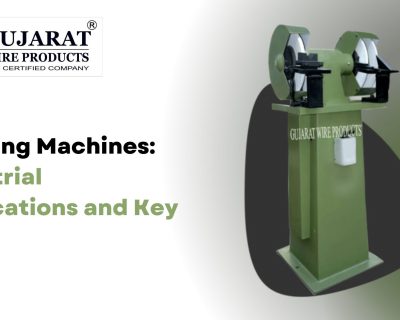
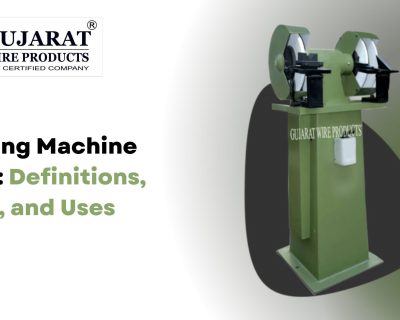
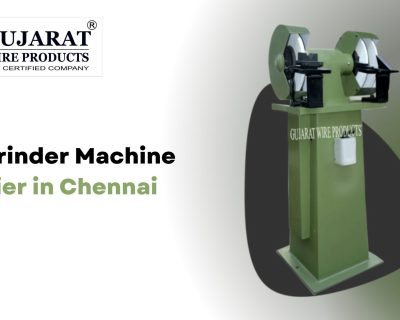
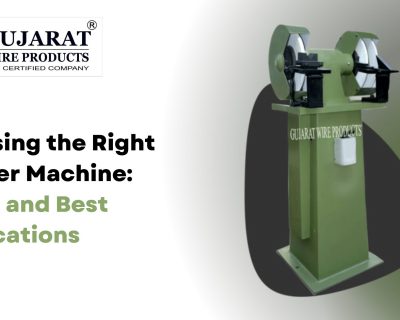
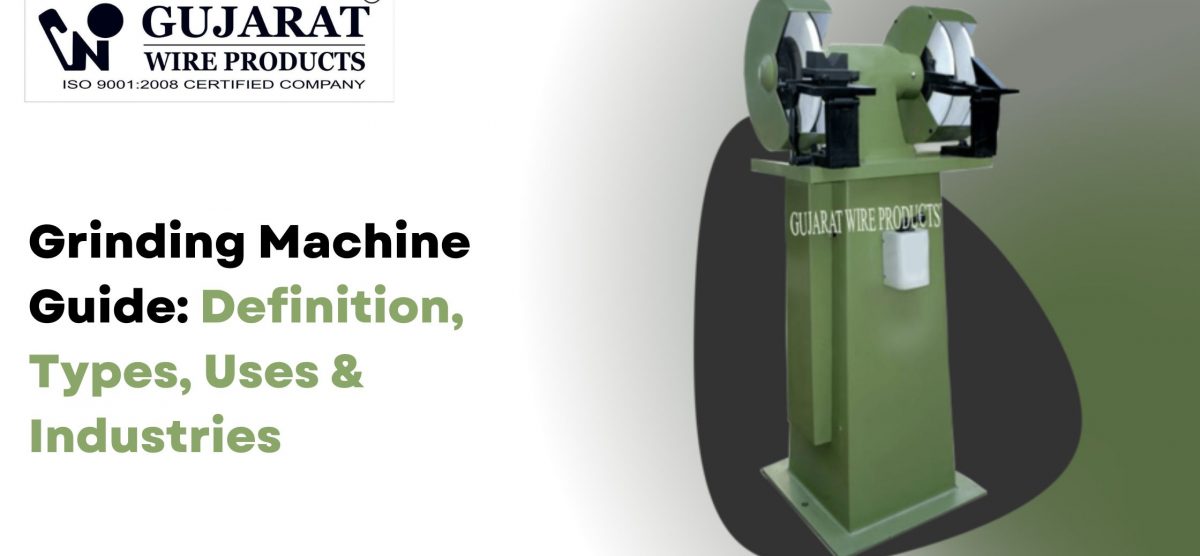
Bench and Pedestal Grinders
These bolt to workbenches or stand on the floor. Wire shops use them to sharpen cutting tools, deburr wire ends, and clean up weld spatter on fixtures. They’re fast, cheap, and require zero setup time. If your crew grinds freehand more than once a shift, you need one within ten steps of every workstation.
Surface Grinders
Surface grinders flatten and finish large areas—think die plates, tool blocks, or fixture bases. The workpiece sits on a magnetic chuck or clamps to a reciprocating table. The wheel traverses across the surface, removing material in passes measured in thousandths of an inch. Wire drawing operations use surface grinders to recondition die holders and maintain flatness on anvil surfaces.
Cylindrical Grinders
These machines grind round parts—shafts, rolls, pins, and mandrels. The workpiece spins between centers while the wheel feeds across its length. Wire processing equipment depends on cylindrical grinding for bearing surfaces, guide rolls, and capstan drums where runout or surface roughness kills wire quality.
Centerless Grinders
Centerless machines grind cylindrical parts without clamping them. The workpiece rides between a grinding wheel and a regulating wheel, supported by a work rest blade. Production shops use centerless grinding for high-volume rod and wire finishing because it’s fast and eliminates clamping time. One study found centerless grinding cuts cycle time by 40% compared to cylindrical grinding for parts under 50mm diameter.
Tool and Cutter Grinders
These specialized machines sharpen and recondition cutting tools—drills, end mills, reamers, and custom form tools. For wire manufacturers, that includes draw dies, slitter blades, and shear knives. Sending tools out for regrinding costs time and money. Bringing it in-house keeps tooling in rotation and gives you control over edge geometry.
Uses in Wire and Metal Manufacturing
Wire production involves dozens of tools that wear, dull, or burr. Grinding machines handle most of this maintenance work and several direct production tasks.
- Tool sharpening and reconditioning keeps draw dies, cutters, and shear blades performing. Dull tooling creates surface defects, increases drawing force, and shortens die life. Regular regrinding extends tool life by 3× to 5×.
- Surface preparation removes scale, rust, and oxidation before coating or packing. Clean surfaces improve adhesion and reduce customer complaints.
- Precision finishing brings components to tight tolerances. Guide rolls, capstans, and bearing surfaces need consistent diameter and smooth finish to prevent wire marking.
- Deburring and edge work cleans up sheared wire ends, removes flash from machined fixtures, and smooths sharp edges that snag or scratch.
How to Choose the Right Machine?
Match the machine type to your most frequent operation. If you sharpen tooling daily, a tool grinder pays back in months. If you recondition bearing surfaces quarterly, rent the cylindrical grinder when needed.
Consider Workpiece Size and Geometry
Flat parts need surface grinders. Round parts need cylindrical or centerless machines. Small hand tools work fine on bench grinders. Measure your largest and smallest parts, then pick a machine with 20% extra capacity.
Evaluate Tolerance and Finish Requirements
Bench grinders get you close. Surface and cylindrical grinders hit ±0.0005″ and Ra 32 finishes. CNC grinders do ±0.0001″ with consistent repeatability. Don’t overbuy precision you’ll never measure.
Factor in Volume
Manual machines suit maintenance work and small batches. CNC equipment makes sense above 100 parts per week. Centerless grinders become cost-effective above 500 pieces per shift.
Safety and Maintenance Essentials
Always inspect wheels before mounting. Tap them gently—a cracked wheel rings dull. Replace it immediately. Never exceed the rated RPM stamped on the wheel.
Dress wheels regularly to expose fresh abrasive and maintain geometry. A glazed wheel generates heat and produces poor finishes. Keep coolant clean and topped up. Contaminated coolant causes rust and reduces cooling effectiveness.
FAQs
Q: Which grinding machine does a wire manufacturing shop need first?
A: Start with a quality bench grinder for daily tool maintenance and a surface grinder if you machine your own dies or fixtures. These two handle 80% of grinding needs in a small to mid-size wire operation.
Q: How often should grinding wheels be replaced?
A: Replace wheels when they wear down to the minimum diameter marked on the label, develop visible cracks or chips, or when dressing no longer restores cutting performance. Usage patterns vary, but most production wheels last 3–12 months.
Q: Can you grind stainless steel wire products?
A: Yes, but use aluminum oxide or ceramic wheels designed for stainless. Standard wheels glaze quickly on stainless. Keep coolant flowing to manage heat and prevent work hardening.
Q: What causes burn marks during grinding?
A: Excessive heat from dull wheels, insufficient coolant, too much depth of cut, or too slow feed rates. Burn marks indicate metallurgical damage—the surface hardness changes and cracks may form subsurface.
Make Grinding Work for Your Operation
Grinding machines aren’t optional equipment for wire and metal product manufacturers. They’re core maintenance tools that protect your capital investment in dies, cutters, and processing equipment. The right grinder extends tool life, reduces scrap, and keeps production moving.
Gujarat Wire Products delivers precision wire and metal products backed by in-house tooling capability and rigorous quality control. Our grinding operations ensure every component meets dimensional specifications and surface finish requirements.
Ready to source wire products from a manufacturer that controls quality at every step? Contact our technical team atgujaratwireproducts.com or call for samples and specifications.